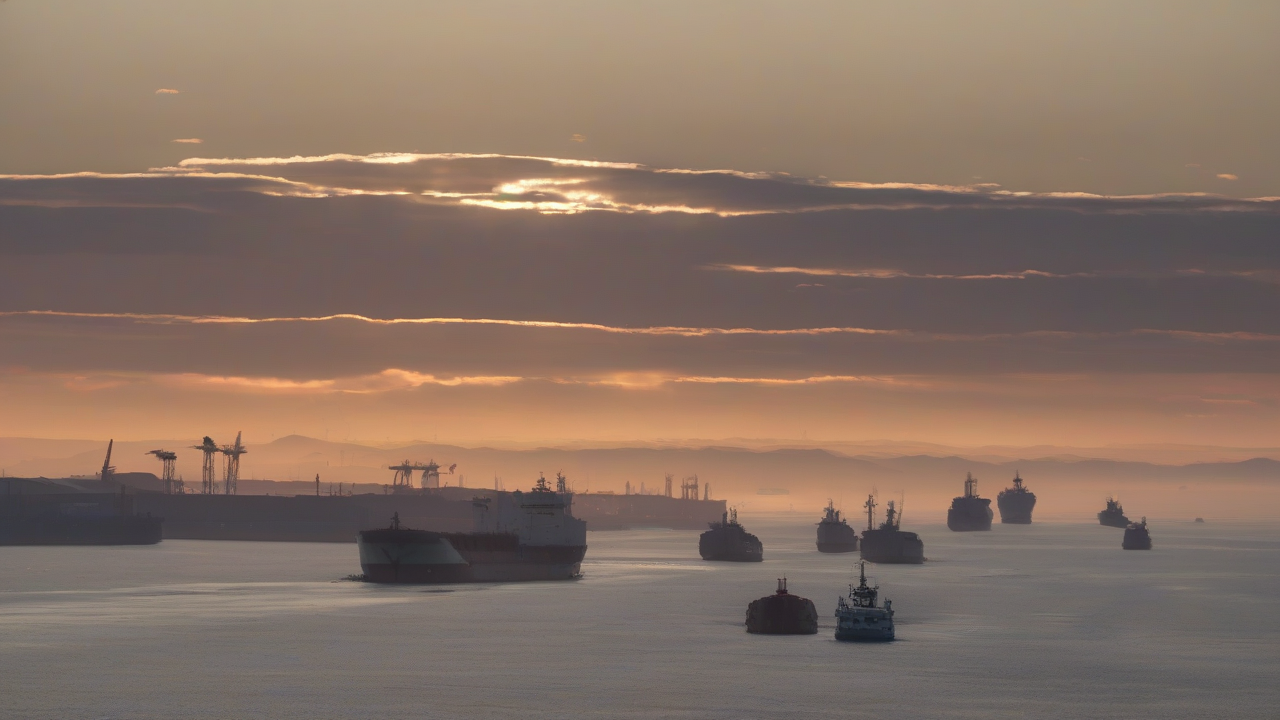
The boring receipts arrived, and they all point one way. On July 5, IMF PortWatch recorded 34 vessel transits through the Strait of Hormuz against a pre-crisis baseline of 83 a day — 41 percent of normal, the dullest and most damning number available. [2] War-risk insurance for tankers now prices at roughly eight times its pre-crisis level, with six protection-and-indemnity clubs having withdrawn cover entirely. [2] After the July 7 attacks, four more oil and gas tankers turned back. More than 550 vessels remain stranded on either side of the chokepoint. [2]
None of this is what "open" looks like. The paper has argued for weeks that the strait's condition cannot be settled by adjectives, and Wednesday's escalation gave that argument its physical test. On July 7 the tanker attacks and the revoked oil waiver read as one instrument, and the strait's answer was to empty further. On July 6 the paper carried transit at roughly one-third as the memorandum's window shrank; the sharper July figure — 41 percent, with named insurer withdrawals — moved away from ordinary passage, not toward it, after the strikes.
Two labels, one operating record
The June 17 memorandum called the strait reopened. Parts of X call it closed. Both are labels; the record is neither. A strait carrying 41 percent of normal traffic, with insurers charging eight times to underwrite the risk and six clubs refusing to write it at all, is not conducting ordinary passage — but ships are moving, so it is not shut. It is a chokepoint operating at a fraction of capacity under a war-risk premium, which is a condition, not a slogan.
The gap the paper works is precisely this one. Mainstream coverage splits Hormuz into a shipping story, an insurance story, an oil story, and a diplomacy story. The Lloyd's Market Association framed the reduced traffic as safety-driven — vessel operators choosing not to sail, rather than being unable to obtain cover. [1] The National reported the war-risk repricing that made the arithmetic real, with ships facing insurance costs thousands of times above the pre-war baseline. [2] On X, tanker-tracking and open-source accounts posted AIS diversions and declared the strait effectively closed. Each side holds a piece; none holds the whole. The whole is a number: 34 of 83.
The reopening promise made in June has never been matched by the receipts that would confirm it. Al Jazeera's own account of the memorandum noted the distance between declaring safe passage and ensuring it — the mines, the insurer hesitation, the absence of a safe-channel map. [3] Analysts quoted at the reopening estimated it would take four months of incident-free operation before insurers deemed the risk acceptably reduced, and mine-clearance verification alone was put at two months. [3] Wednesday's strikes, which the paper covers alongside the president's declaration that the memorandum is over, reset that clock rather than advanced it. [4]
What the numbers mean and what they do not
Two disciplines are worth keeping. First, the multiplier: the war-risk figure is eight times pre-crisis, not more, and the paper states it as roughly 8.0x — 34 transits divided by an 83-vessel baseline yields 41 percent, and the two figures should not be conflated into a single dramatic number. Second, freshness: the 34-of-83 count is dated July 5, before the July 7 attacks. If anything, the post-strike direction is downward — four tankers turned back, the composite crisis-pressure gauges spiked — but the paper will not assert a July 8 transit count it cannot source. What can be said with confidence is the trend: the operating record moved further from normal after the strikes, and no port circular, insurer downgrade, or safe-channel map has appeared to reverse it.
Oil moved with the news, and here too the paper holds a line. After the president called the memorandum over, Brent jumped roughly 6 percent intraday, trading near $78 to $79 a barrel. [5] That is an intraday quote, not a settle. The paper will not print a July 8 closing price until a NYMEX or ICE close is confirmed; the honest statement is that oil rose about 6 percent on the day's news, superseding the prior session's lower level.
The strait, then, is where the paper has said it would be: not the memorandum's reopened, not X's closed, but 41 percent and falling with attacks in the water. Measure it by traffic counts, insurer notices, and port circulars — the receipts, not the labels. On July 8 the receipts read one number above all: 34 of 83.
-- DARA OSEI, London