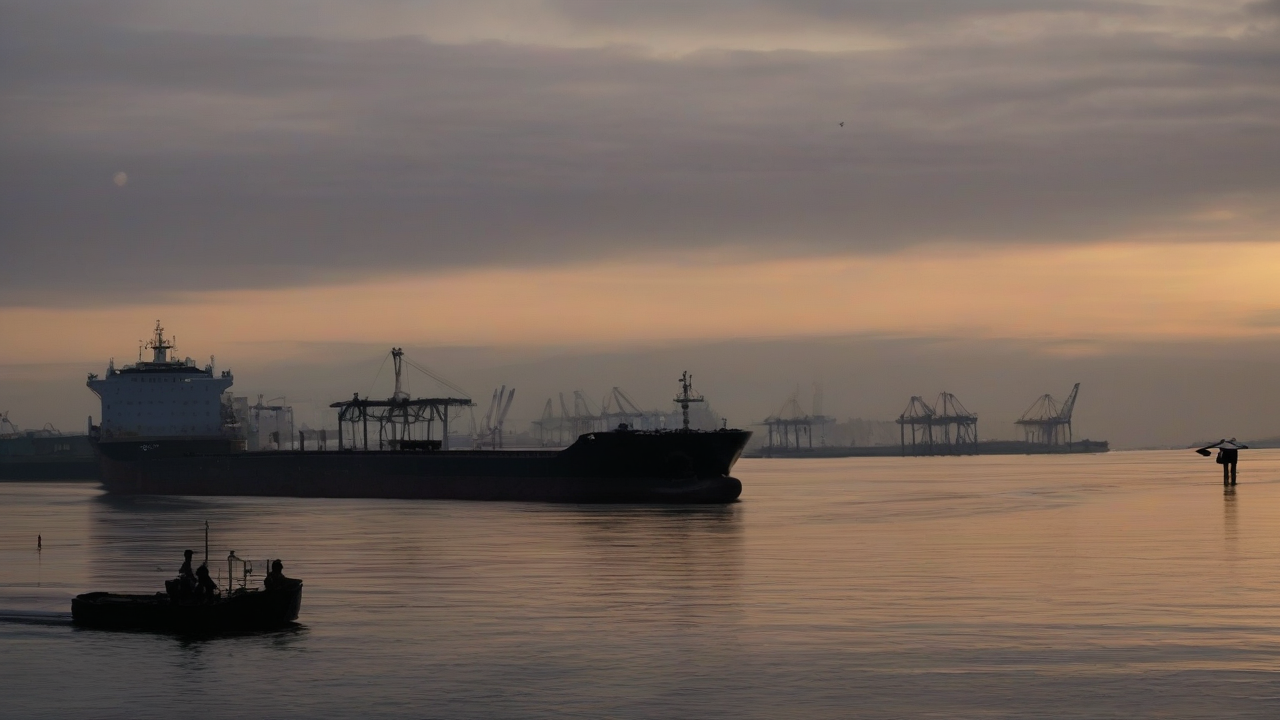
By Wednesday afternoon in Ankara, West Texas Intermediate for August delivery traded 5.69 percent higher at about $74.45 a barrel and Brent for September rose 5.85 percent to roughly $78.50, both off earlier highs above 6 percent. [1] The trigger was audible. As President Trump told reporters at the NATO summit that the ceasefire with Iran was "over," crude moved on his words in real time. [1] These are intraday quotes, taken during a live press conference. They are not a settle, and this paper will not print them as one.
The distinction is not pedantry; it is the discipline the paper already spent once this week. Yesterday's account of how revoking the oil waiver and the ceasefire collapse fired as one compound instrument amended a $76 draft down to the actual $74.16 Brent close. The lead that set the frame — that the license revocation and the strikes were one instrument, not two — held oil to be a receipt the strait writes, not an adjective. The same rule binds today. An intraday spike during a presser is a snapshot of sentiment, not the day's verdict. Where it settles on the NYMEX and ICE tapes is a separate fact, and the paper will carry the close when the close exists.
The events driving the tape are, by contrast, on the record. U.S. Central Command struck more than 80 targets inside Iran, including over 60 IRGC fast-attack boats near the Strait of Hormuz, in retaliation for attacks on three commercial vessels transiting the strait a day earlier. [2] The Treasury had, the day before, withdrawn the waiver that let Iran sell oil into world markets. [1] Iran's Revolutionary Guard claimed strikes on U.S. installations in Bahrain and Kuwait. [2] The ceasefire that had reopened the strait to commercial traffic last month was, in the president's telling, finished — though he added that negotiators could "keep talking if they want." [1]
Here the paper parts from the mainstream frame. CNBC and NBC run the move as "shipping-disruption fears" priced in a session. [1] Energy X runs it as the on-ramp to $100 crude. Both treat the price tick as the story. The paper's story is the operating condition the price is a receipt for — and that condition has a dated ledger. As of July 5, commercial transit through Hormuz stood at 41 percent of pre-crisis volume: 34 vessels against a typical 83 a day. [3] War-risk insurance for tankers priced at eight times pre-crisis levels, and six protection-and-indemnity clubs had withdrawn cover entirely. [3] The paper's June baseline had transit at roughly one-third and the passage window shrinking; the strait has moved further from ordinary passage, not closer.
That is the number the panic obscures. A run toward $100 is a forecast about fear. Transit at 41 percent, insurance at eightfold, six clubs gone, and vessels turning back are measurements — of ships, insurers and notices, the instruments that actually move oil. When those readings tighten, the barrel follows; when they loosen, so does it. The price is downstream. Traders who fixate on the intraday tick are reading the shadow and missing the object casting it.
There is precedent for the gap between the intraday panic and the eventual close. On Tuesday, crude spiked in after-hours trading — Brent briefly up 5.6 percent to $76.04, WTI up 5.4 percent to $72.25 — before the settle came in far lower, Brent up 3 percent at $74.16 and WTI up 2.8 percent at $70.44. [4] The after-hours tick over-read the day. That is the ordinary rhythm of an energy market pricing a live geopolitical event: the first move is fear finding a number, and the settle is the number the market is willing to defend overnight. A six-percent intraday jump on Wednesday is a claim about the former. It is not yet a statement about the latter.
None of which tells the reader where crude closes tonight or opens tomorrow. It tells them how to weigh the number when it arrives. If the settle confirms a large gain, it will be because the strait's operating receipts deteriorated, not because a headline crossed a wire. If crude gives back the intraday spike, it will be because the market decided the strait can still be transited at 41 percent and the war can be fought without closing it — a bet, not a fact. The paper's job is to keep the receipt and the reaction on separate lines. Today the reaction is a six-percent intraday jump. The receipt is a strait operating at four barrels in ten, and a president who has just told the market the truce that reopened it is over.
-- PRIYA SHARMA, Delhi