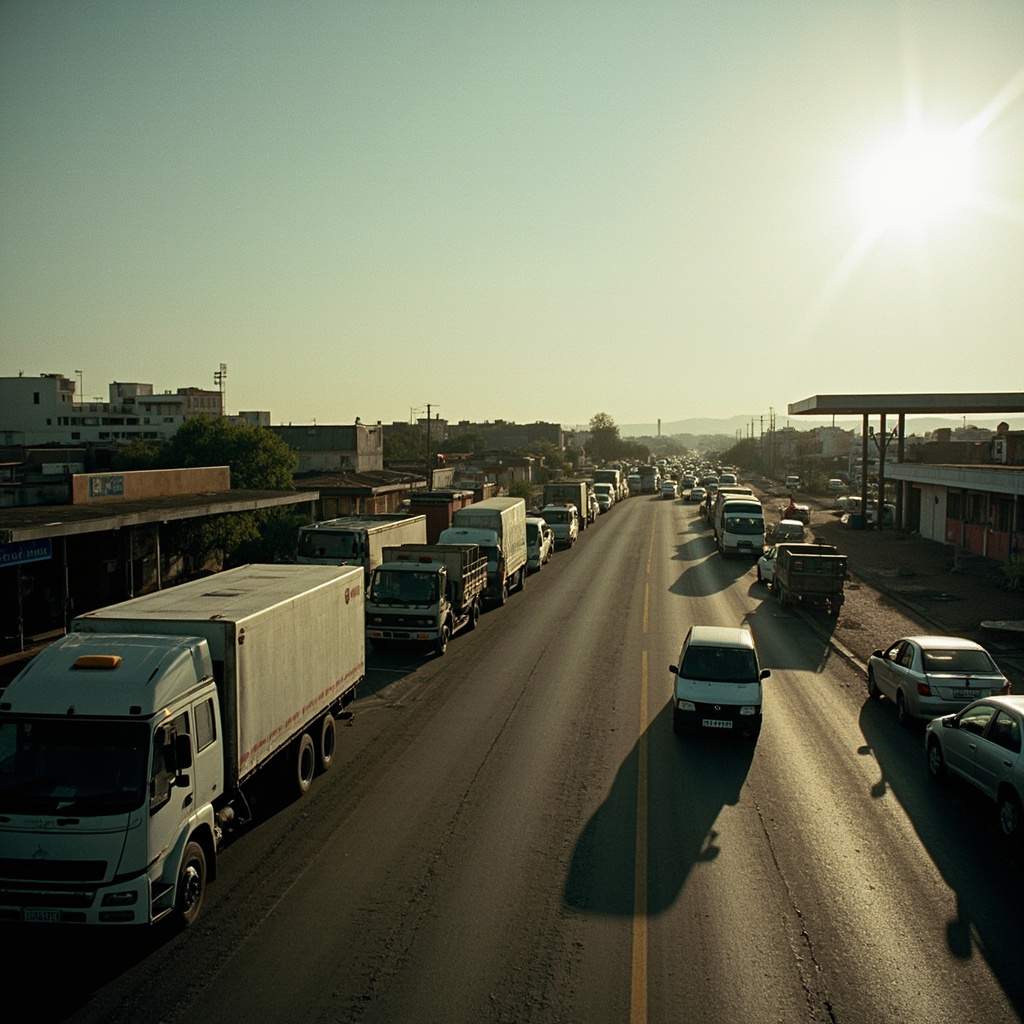
South African motorists wake up tomorrow to what forecasters are calling the steepest fuel price increase in the country's history. Petrol is set to rise by up to R5.70 per litre and diesel by more than 80 cents, a double blow driven by the war in Iran and a scheduled fuel tax increase that takes effect on April 1 [1].
As we reported in our previous coverage, the fuel crisis has been deepening across the African continent for weeks, with Zambia and South Africa among the hardest hit. The April 1 increases push South Africa's pain to a new level.
The numbers are staggering. The Department of Mineral Resources and Energy confirmed that 93-octane unleaded petrol in Gauteng will cross R30 per litre for the first time, while diesel could approach R29 at the coast [2]. The South African government news service reported that ongoing instability in global oil markets, driven by the Iran conflict, has compounded the impact of the rand's weakness against the dollar [3].
Fuel stations across the country have already reported unusual demand. Central News reported Monday that some stations in Gauteng and KwaZulu-Natal are "deliberately running dry" ahead of the hike, with owners choosing to restock at higher prices to avoid selling existing inventory at a loss [4]. The Fuels Industry Association of South Africa denied coordinated hoarding but acknowledged that supply chains are under extraordinary pressure [5].
Agricultural economist Wandile Sihlobo warned on X that the fuel shock will flow directly into food prices. "Fuel prices remain a major upside risk" to consumer food price inflation, he wrote, noting that transport costs account for a significant share of what South Africans pay at the grocery store [6].
The timing is brutal. South Africa's Reserve Bank had been cautiously optimistic about inflation slowing in 2026, but the war has upended those projections. MyBroadband reported as early as March 6 that the combination of the Iran conflict and the April 1 fuel levy increase would produce a price surge, and the final numbers have exceeded even those pessimistic forecasts.
For the country's poorest households, which spend a disproportionate share of income on transport and food, the April 1 increase is not an abstraction. It is the difference between getting to work and staying home, between feeding a family and going without. AshrafGarda on X called the coming increases "potentially historic," and the data supports the description.
-- DARA OSEI, Johannesburg