President Donald Trump took the United States to war with Iran on February 28 without a vote of support from Congress. Twenty-two days later, the Pentagon has asked Congress for $200 billion to continue. [1] The request, confirmed by Defense Secretary Pete Hegseth on Thursday, is the largest single wartime supplemental since the early years of the Iraq war. It arrived on Capitol Hill the same week that lawmakers in both chambers began preparing new war powers votes — not because the first ones succeeded, but because the price tag has made avoidance impossible. [2]
This paper reported yesterday that the Senate blocked war authorization but the war got bigger anyway — that the constitutional mechanism designed to check presidential war-making had been tested and found weightless. The Senate's war powers resolution failed 47-53 on March 4, largely along party lines. [3] The war expanded regardless. Today the question is different. Congress could not stop the war. The question is whether Congress will fund it.
"It takes money to kill bad guys," Hegseth told reporters at the Pentagon on Thursday, explaining the request. "We're going back to Congress and our folks there to ensure that we're properly funded for what's been done, for what we may have to do in the future, ensure that our ammunition is refilled, and not just refilled, but above and beyond." [4] The number, he said, "could move." The direction was left unstated.
The Forcing Function
The $200 billion is the forcing function that war powers resolutions were not. Abstract constitutional arguments about authorization can be deflected with appeals to executive prerogative and the 60-day clock of the War Powers Act. A funding request cannot be deflected. It requires a vote. It requires a number. And the number is staggering.
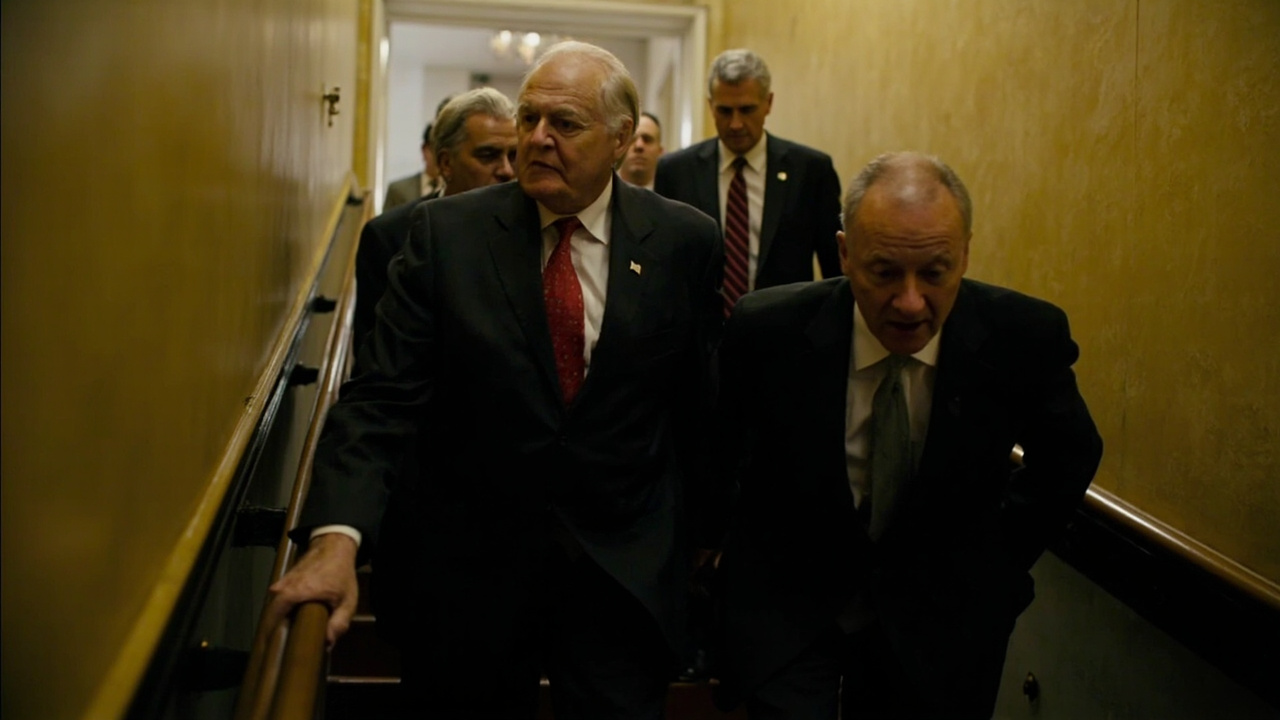
Sen. Susan Collins of Maine, the Republican chair of the Appropriations Committee, said the figure was "considerably higher than I would have guessed." [4] She has called for a bipartisan spending bill rather than folding the war funding into the party-line reconciliation package — a move that would force both parties to take ownership. [5] Sen. Lisa Murkowski of Alaska, another Republican who has broken with the administration on process, said her constituents in Alaska have been asking how long the war will last and how much it will cost. "The answer on most of this is, I don't know," she admitted. "I think we need to have open hearings." [6]
Murkowski went further. "We are three weeks into a war that we have seen escalate beyond military targets. The United States is not hitting the non-military targets, but what we are seeing happen as a consequence of this, which should have been easily predicted — the non-military assets being hit, the oil assets that are being hit, the impact on the Strait of Hormuz. The world is feeling the impact of this war." [6] She added that she has been getting updates on the war through the press instead of the Administration. "That's not how you inform Congress," she said. [6]
The Republican discomfort is not yet rebellion. But the distance between discomfort and rebellion narrows when the bill arrives.
The Democratic Case
Democrats have been more direct. Sen. Ed Markey of Massachusetts, who has been tracking the war's daily cost since it began, put the figure into a sentence that has circulated widely: "We are spending a billion dollars a day on this illegal, reckless war." [7] The math is roughly accurate. Kevin Hassett, director of the National Economic Council, confirmed on March 9 that $12 billion had been spent in the first twelve days. [6] The $200 billion supplemental, if approved, would fund operations well beyond the 60-day window that the War Powers Act provides for unauthorized military action.
Rep. Thomas Massie of Kentucky, a Republican who has broken with Trump on multiple issues, identified the question the number forces: "How long do they plan to be there? What are the goals? Is this the first $200 billion? Does this turn into a trillion?" [6] Rep. Chip Roy of Texas, who supports the president's authority to act, said he nonetheless needs specifics: "The American people don't want to be involved in a long-term war. $200 billion is a lot of money. He needs to come and tell us, is this to replace munitions? Rebuild our stockpile? Or are we talking about a long-term engagement? We need to know before we can write a blank cheque." [6]
House Minority Leader Hakeem Jeffries accused Republicans of funding a war while gutting domestic programs. "It's our responsibility right now to end this reckless war of choice, to end the fact that billions of dollars have already been spent," he said, charging that the same party backing the supplemental has "ripped Medicaid away from millions of people." [6]
Rep. Lauren Boebert of Colorado, not typically aligned with Jeffries on anything, was equally blunt: "I've already told leadership, I am a 'no' on any war supplementals. I am so tired of spending money elsewhere. I am tired of the industrial war complex getting all of our hard-earned tax dollars." [6]
The War Powers Clock
The War Powers Act gives the president 60 days to conduct military operations without congressional authorization. That clock started February 28. Sen. Thom Tillis of North Carolina, a Republican, told the AP that Trump has latitude under the act to continue — "but that will soon shift. When you get into the 45- to 60-day range and there's been no authorization, that changes the calculation significantly." [1] The 60th day falls on April 29.
Both chambers are now preparing new war powers votes. The House already rejected a resolution on March 5, largely along party lines. [3] But the calculus has changed. In early March, the war was two weeks old and the price tag was abstract. Now the price tag is $200 billion and concrete. The AP reported Friday that even some Republicans who voted against the earlier resolution are "increasingly questioning whether the conflict can be sustained without broader buy-in from Congress." [1]
Sen. Mark Warner, the top Democrat on the Senate Intelligence Committee, has pressed for classified briefings on the war's objectives, timeline, and costs — briefings that have not materialized with the detail Congress says it needs. [1] Speaker Mike Johnson, meanwhile, has framed the conflict as "all but done" — a characterization that sits uncomfortably alongside a $200 billion funding request for what is apparently finished. [8]
What the Money Is For
The supplemental request covers three categories: replacement of munitions already expended, procurement of new weapons systems, and operational costs for a continued campaign. [2] The Washington Post reported that the figure "would far surpass the costs of the U.S. airstrike campaign to date and aims to boost production of critical weapons depleted in the campaign." [9] This is not the language of a war winding down. It is the language of a war restocking.
Sen. Chuck Schumer placed the request in domestic context: "If Trump wants $200 billion, it means he believes we will be at war for a very, very long time. That's the last thing Americans want." [6] Sen. Dick Durbin called it "not acceptable" and said Trump would have "a lot of persuading" to do. "Yesterday, we voted on the floor not to even discuss publicly this invasion of Iran. Now comes a $200 billion price tag." [6]
Rep. Betty McCollum of Minnesota captured the procedural absurdity: "The President chose on his own to go to war with Iran and spend very expensive munitions, and then turns around and says to Congress: 'Oh, here's the bill.' That's not how it works." [6]
It is, in fact, exactly how it works when a president goes to war without authorization. The war creates the costs. The costs create the request. The request creates the vote. And the vote is the authorization debate Congress avoided in February, arriving now in the form of an appropriation. You cannot fund a war you have not authorized without implicitly authorizing it. The $200 billion supplemental is an AUMF dressed in fiscal clothing.
Congress has twenty-two days of unauthorized war behind it and thirty-eight days until the War Powers clock expires. The exit plan the AP says lawmakers are demanding has not been presented. The bill has.
-- SAMUEL CRANE, Washington