TL;DR
Iran proved it can hit Diego Garcia at 4,000 kilometers — a range that covers Rome, Berlin, and Paris — and the UK Parliament has not held a single dedicated debate on the implications.
MSM Perspective
DW led with the strategic implication — 'Europe within Tehran's reach' — while The Guardian focused on UK domestic politics around base-sharing permissions.
X Perspective
OSINT accounts are drawing range-ring maps showing European capitals inside Iran's proven 4,000 km missile radius, while Westminster fixates on the Chagos sovereignty question.
Two Iranian intermediate-range ballistic missiles flew approximately 4,000 kilometers to reach Diego Garcia [1]. They missed. The base suffered no damage [2]. And yet the failed strike may be the most consequential demonstration of Iranian capability in the history of the conflict, because as DW News observed with admirable directness, that range puts central Europe within Tehran's reach [3].
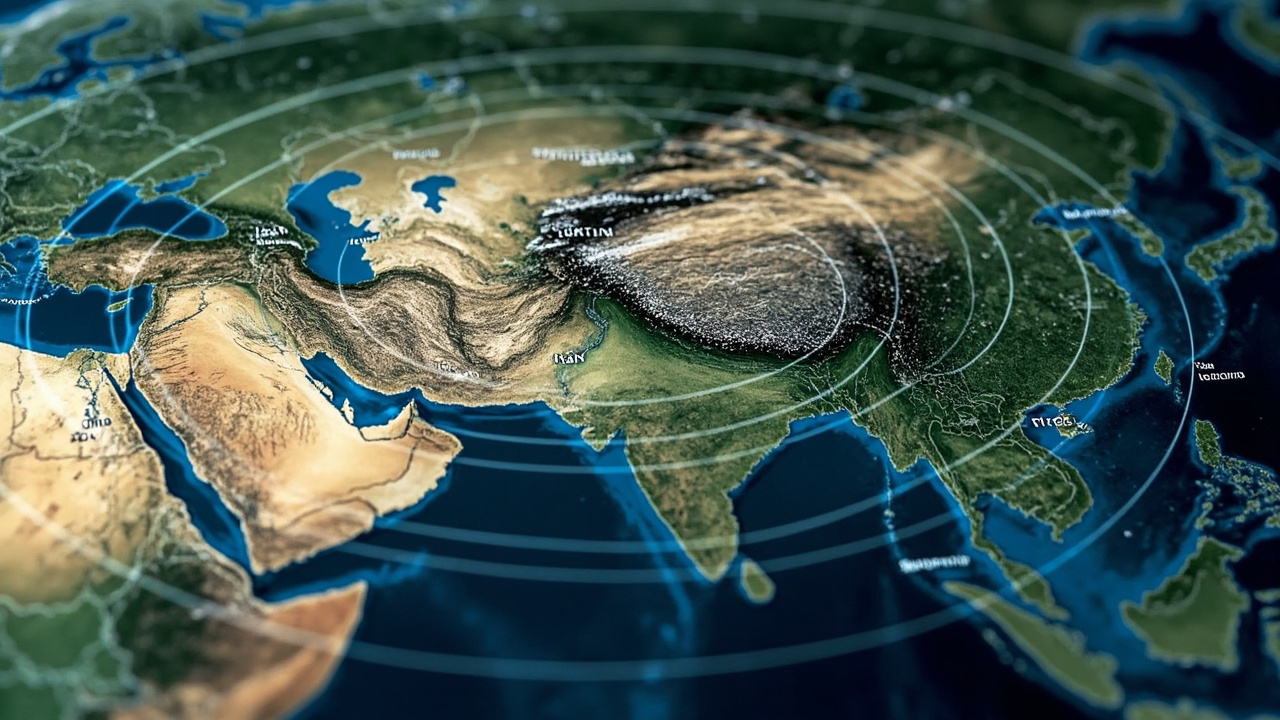
We noted when the missiles were launched that the war had left the Middle East. What we did not fully reckon with was the geometry. Draw a circle of 4,000 kilometers from Tehran. Rome falls inside it. Berlin falls inside it. Paris falls inside it [4]. This is not speculation about future development programs or extrapolation from satellite photographs of launch facilities. Iran fired the missiles. They traveled the distance. The capability is demonstrated fact.
The Aviationist confirmed the weapons were intermediate-range ballistic missiles, not the shorter-range systems Western intelligence had publicly attributed to Iran's arsenal [5]. Visegrad24 put the matter plainly: Iran likely has IRBMs with a minimum range of 4,000 kilometers [6]. The word "likely" is doing less work than usual in that sentence, given that the missiles actually flew.
One might expect that a NATO member's parliament — one whose territory sits comfortably inside the newly demonstrated range ring — would find time to discuss this. One would be wrong. UK Parliament Hansard records show that Diego Garcia was debated on February 25, 2026, but the session concerned itself almost entirely with the Chagos Islands sovereignty question, as though the more pressing issue were who owns the atoll rather than what just flew over it [7]. A broader Middle East debate on March 17 revealed that the UK had granted permission for US forces to use RAF Fairford and Diego Garcia for "defensive" operations [8] — a permission that Keir Starmer had earlier blocked when the question was offensive strikes [9][10]. The distinction between "defensive" and "offensive" use of a base from which a country is being bombed is the sort of semantic exercise that keeps parliamentary draftsmen in employment and strategic thinkers in despair.
What has not occurred, in the weeks since Iran proved it can reach European distances, is a single dedicated parliamentary debate on the range implications for the United Kingdom and its allies. Not one. The green benches have been occupied with other matters. Piers Morgan, not typically a man one cites for strategic analysis, managed the observation that eluded the House of Commons: "A 4,000 km range from Tehran draws a circle that reaches Paris, Rome, and Berlin. And still the UK Parliament says nothing" [4].
The gap between the strategic reality and the political response is not merely embarrassing. It is dangerous. When a state demonstrates an intercontinental-class capability and the target continent's legislatures decline to discuss it, something has broken in the democratic feedback loop between threat and response. Bloomberg reported the strike under the headline "Iran's Strike Attempt on Diego Garcia Reveals Missile Range" [2] — the verb "reveals" carrying the appropriate weight of an intelligence failure made public by the enemy's own ambition.
Iran did not need to hit Diego Garcia to change the strategic calculus. It needed only to reach it. The missiles traveled 4,000 kilometers, and the political class of Europe has traveled not one inch toward acknowledging what that means. The demonstrated range is a fact. The parliamentary silence is a choice. Neither will age well.
-- CHARLES ASHFORD, London
Sources & X Posts
News Sources
X Posts