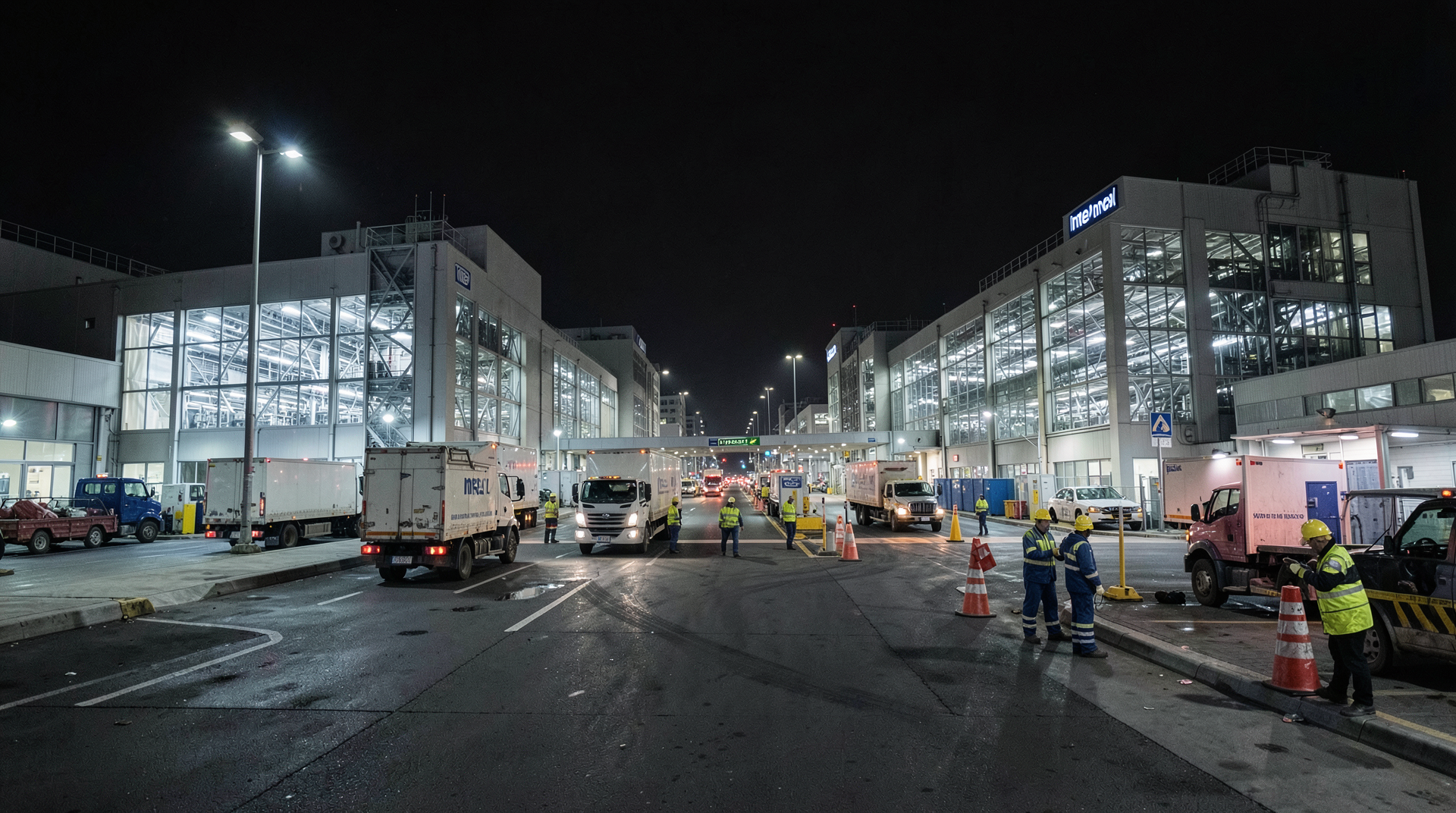
Intel Operational Beat Breaks the One-Time-Benefits Critique
Intel's quarter beat because volumes and mix moved, not because accounting did, giving markets a clean falsification case after Tesla's one-time-benefit debate.
You're offline. Previously read public pages remain available; new requests will resume when you reconnect.
The news. The narrative. The timeline.
Intel's quarter beat because volumes and mix moved, not because accounting did, giving markets a clean falsification case after Tesla's one-time-benefit debate.
A Supreme Court ruling, a CBP portal, and a 166 billion dollar ledger have turned every Q1 call into a judgment call on what to book now and what to defer.
The headlines reaffirmed the year; the footnotes marked down the F-16 program and swung free cash flow to minus 291 million dollars in a single quarter.
Billings up 9 percent, Platinum fee hike sticks with retention intact, and the $895 card is priced inside a wartime quarter that is supposed to be compressing discretionary spend.

Record revenue and all-time premium load factors, next to a Q2 guide that assumes $4 jet fuel and brackets break-even — the war tape pays and takes back.
Cerebras opens the S-1 price-range window one week after refiling as CBRS, with the OpenAI customer-lender-shareholder triangle still the clearing-price question.
SpaceX buys a right to acquire Cursor for $60B with a $10B floor — the largest IPO-adjacent right-to-acquire in venture history drops in the middle of the SpaceX roadshow week.
HCA's Friday print is less about headline EPS than whether hospital volumes keep outrunning labor inflation in a higher-acuity mix.

NSC reports before the bell with the key question unchanged: can intermodal stabilize without sacrificing mix quality.

Three smaller pre-market prints offer an early signal on remittance stress, children's apparel demand, and specialty-input pricing power.
Tesla's post-earnings second day traded as the quality-of-earnings critique moved from Electrek into Fortune and Motley Fool framing.

Three trading days and a Memphis close later, no public bank commitment artifact has appeared for SpaceX's valuation framing.

The June 2025 Amazon-Cursor demand signal has now matured into a second-quarter enterprise penetration pattern worth tracking.