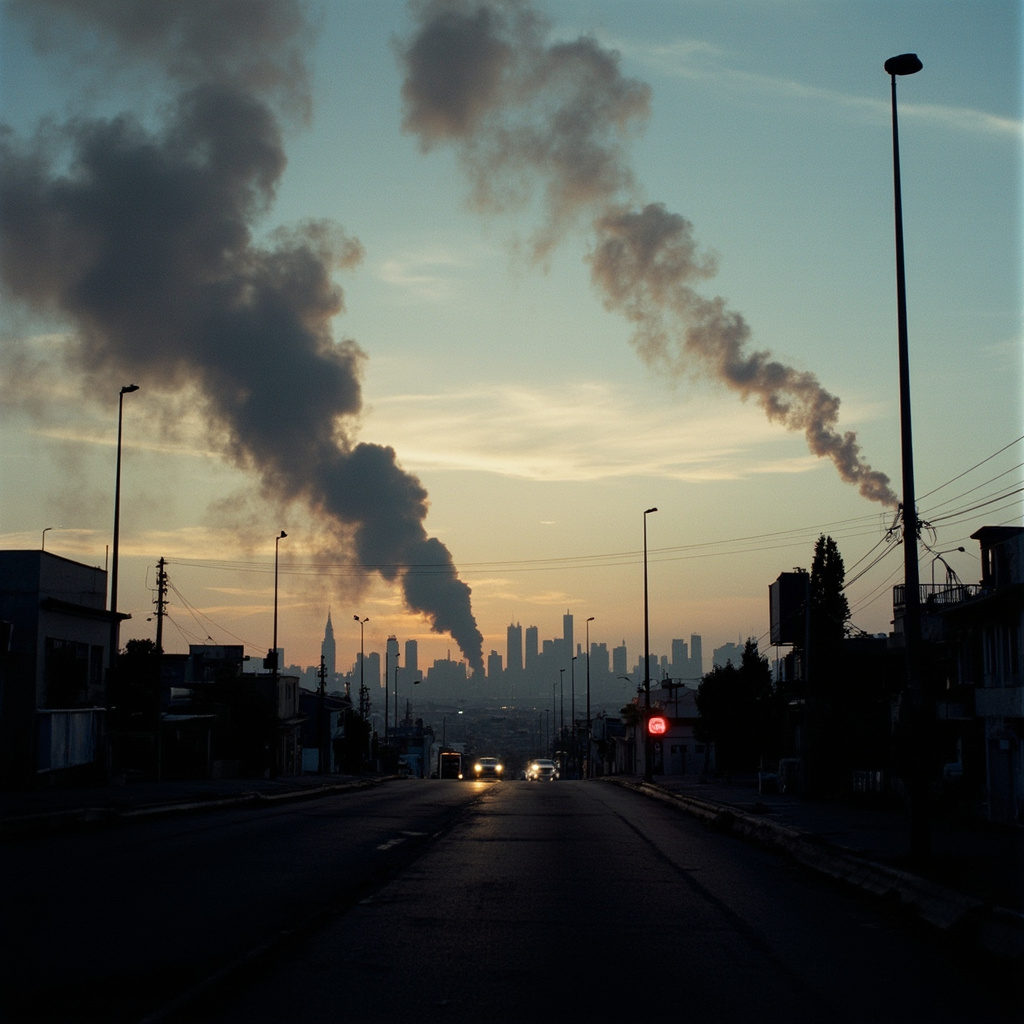
Yemen's Houthi forces launched a ballistic missile at the Israeli city of Beersheba on Saturday morning, followed hours later by a combined cruise missile and drone wave targeting southern Israel. It was the Houthis' first direct attack on Israeli territory since the war began twenty-nine days ago, and it meant the conflict that started with American strikes on Iranian power plants now stretches from Tehran to the Red Sea, from the Strait of Hormuz to the Negev Desert. The war has no borders. It is acquiring new ones. [1] [2]
On the same day, in the same country that is directing this war, approximately nine million Americans marched in the largest single day of protest in the nation's history. The No Kings rallies spanned all fifty states, more than 3,100 events, and ten countries. This paper covered the scale of the March 28 mobilization as it happened -- the organizing infrastructure, the 90-day build, the shift from anti-ICE grievance to anti-war demand. The question Saturday was whether size would translate into consequence. The White House answered that question before the last marcher reached the Capitol steps. [3] [4]
"We do not think about the protest at all," a senior administration official told MS NOW on Saturday afternoon. [5]
Two days earlier, this paper's lead argued that the deadline that keeps moving is no longer a deadline -- that the mechanism of extending pauses had become the mechanism of avoiding decisions. The Houthi entry into the war is the operational consequence of that avoidance. A deadline that keeps moving does not compel restraint; it invites others to test the space the deadline was supposed to close. The Houthis did not attack in spite of the pause. They attacked because of it.
The gap between these two stories is the story. A government that simultaneously expanded a war and dismissed its largest domestic protest exists in a state of strategic dissociation -- fighting on multiple fronts abroad while insisting the home front does not require its attention. The Houthis opened a second front from Yemen. Nine million Americans told their government the war lacked authorization, legitimacy, and public support. And the government's response to both was the same: studied indifference.
The Houthi attack was not a surprise. Yemen's Ansar Allah movement had signaled its intentions for days. On Thursday, Houthi military spokesman Yahya Saree warned that any expansion of strikes against Iran would trigger Yemeni retaliation. On Friday, as Israel struck the Arak heavy-water plant and the Yazd uranium facility, the Houthis mobilized. The first ballistic missile launch toward Beersheba came at 6:14 a.m. local time on Saturday. Israeli air defenses engaged. No casualties were reported. The second wave -- cruise missiles and armed drones -- came seven hours later, targeting the southern Negev. Israel's military said it intercepted all projectiles. [1] [2] [6]
But interception is not the metric. The metric is reach. The Houthis demonstrated that they can strike Israeli territory from 1,800 kilometers away, through airspace that American and allied forces nominally control. The Trump administration's May 2025 ceasefire with the Houthis -- the one that ended the Red Sea shipping campaign -- included a provision that the Houthis would not attack American assets. Saree's statement on Saturday was precise: "Our operations target the Zionist entity, not the Americans. The ceasefire with Washington remains intact." The legal architecture is absurd. The United States is fighting alongside Israel. The Houthis are attacking Israel. And both the Houthis and the United States insist their bilateral ceasefire still holds. [2] [7]
The war is now being fought on four axes: the American-Israeli air campaign against Iran, the Iranian missile and drone retaliation against Israel and Gulf bases, the Houthi front from Yemen, and the frozen Lebanese front where the ambassador expulsion deadline arrived on Sunday with no visible enforcement. Each axis has its own logic, its own escalation ladder, and its own actors who believe they can control what happens next. None of them can.
The No Kings protests arrived into this expanding war with a specificity previous iterations lacked. The first two rounds -- June 2025 and October 2025 -- were about immigration enforcement, DOGE cuts, and the erosion of institutional norms. March 28 was about the war. NPR's coverage documented protesters in multiple cities carrying signs that read "End the Wars" alongside "Stop ICE." At the St. Paul rally, projected to draw more than 100,000 people, speakers from Veterans for Peace shared the stage with immigration lawyers. The war gave the movement a legal claim that cultural grievance alone could not provide: the president deployed 8,000 troops without a congressional vote. [4] [8]
The administration's dismissal was not spontaneous. It was strategic. The quote -- "We do not think about the protest at all" -- arrived through MS NOW's weekend desk, attributed to a senior official who declined to be named. The phrasing echoes a well-established playbook: acknowledge the protest by refusing to acknowledge it. The message to the marchers was not disagreement but irrelevance. You exist. We do not care. [5]
The markets had already delivered a version of this message to the administration itself. On Friday, stocks fell 1.2 percent after Trump extended the Iran strike pause to April 6 -- a sell-off on ostensibly good news that this paper documented as the market's loss of confidence in the deadline mechanism. On Saturday, with the Houthis attacking Israel and nine million people in the streets, futures contracts pointed lower. Brent crude climbed above $103 in overnight trading. The war premium that Goldman Sachs estimated at $25-$32 per barrel is no longer a premium. It is the price. [9] [10]
The congressional opposition that cracked open on Thursday has not closed. Six Republican members, including Lisa Murkowski and Bill Cassidy, have called for public hearings on the war's scope and authorization. Representative Nancy Mace repeated her claim that the justifications presented publicly "were not the same military objectives we were briefed on privately." The House passed a third DHS funding bill on Friday evening that the Senate is expected to block -- a parallel dysfunction that means the government funding 8,000 troops abroad cannot fund TSA agents at home. The DHS shutdown is now in its forty-third day, the longest partial government shutdown in American history. [11] [12]
The juxtaposition is not ironic. It is structural. The war operates under Article II authority and existing defense appropriations -- the president does not need Congress to deploy Marines or drop bombs. Domestic security funding requires an act of Congress. The result is a government that can fight a multi-front war without democratic consent but cannot keep airport screening lanes open with it. The Houthis can strike Israel from Yemen. The administration can extend deadlines indefinitely. But the Senate cannot pass a DHS funding bill, and the president cannot acknowledge that nine million of his citizens believe the war he is fighting lacks legitimacy.
Iran's counter-proposal -- the five-point demand delivered on March 25 that included halting all aggression, paying reparations, and recognizing Iranian sovereignty over the Strait of Hormuz -- remains unanswered on the table. The deadline extension to April 6 produced no diplomatic response from Tehran. Araghchi has not spoken publicly since Wednesday. The silence from Tehran is now matched by silence from Washington: no response to Iran's proposal, no acknowledgment of the Houthis' stated position, no engagement with the nine million Americans who showed up and were told they do not exist. [13]
Pakistan announced on Saturday that it will host the foreign ministers of Saudi Arabia, Turkey, and Egypt in Islamabad on Sunday and Monday for quadrilateral talks on the war. The meeting is the first multilateral diplomatic effort since the conflict began that does not include the United States or Israel at the table. Reuters reported that Islamabad is positioning itself as a venue for US-Iran mediation, but the structure of the talks -- four Muslim-majority nations convening without the belligerents -- suggests something different: a diplomatic track that has decided American participation is the obstacle, not the solution. [14]
The war is one month old today. The deadline to April 6 is eight days away. The Houthis have demonstrated they can reach Israel. The protesters have demonstrated they can fill every state in the union. The administration has demonstrated it will treat both with the same posture: the war expands, the deadlines extend, and the citizens who object are told they are not thought about at all.
The gas price tells the same story from a third angle. The national average hit $3.98 per gallon on Wednesday -- exactly one dollar higher than the pre-war price -- and held there through Saturday. At $3.98, the war is no longer an abstraction viewed through cable news footage. It is a number on a sign at every intersection, a line item on every credit card statement, a daily tax on the act of driving to work. The Hormuz blockade that produced this price shows no sign of lifting. The strategic petroleum reserve releases and the Treasury's licensing of sanctioned oil have cushioned the impact but not reversed it. Goldman Sachs estimated the war premium at $25 to $32 per barrel. That premium is now the baseline, not the exception. [9]
The global periphery is absorbing costs that dwarf what American consumers face. The Philippines declared a national energy emergency after discovering it has forty-five days of fuel inventory remaining. Zambia's president directed emergency procurement of alternative oil supplies. Cuba's electrical grid collapsed again. Cape Town is reporting fuel shortages. The war's longest arm reaches not through missile trajectories but through supply chains -- every country that depends on Gulf oil is now paying for a war it had no part in starting, conducted by a government that does not acknowledge it has started one.
Israel's strikes on the Arak heavy-water plant and the Yazd yellowcake facility on Friday added nuclear escalation to the picture. The attacks were the first Israeli strikes on Iranian nuclear infrastructure since the war began. Iran declared that its retaliation "will no longer be proportional" -- a departure from the calibrated tit-for-tat that has prevented the war from spiraling for four weeks. If proportionality is abandoned, the escalation ladder that both sides have used to manage the conflict collapses. Nuclear strikes during a declared pause. Disproportionate retaliation promised in response. The mechanisms of restraint are failing at the same rate as the mechanisms of governance.
This paper has tracked the war's stated aims shifting at least four times since March 1. On March 1, the aim was "disabling Iran's nuclear capacity." By March 10, it was "restoring stability in the Gulf." By March 22, Secretary Bessent told Bloomberg the goal was "a comprehensive settlement." Each formulation is broader than the last, and each makes the conditions for ending the war more demanding. The operational question a week ago was whether the deadline mechanism could survive another extension. The operational question today is whether a government that simultaneously expands a war across new fronts, dismisses its largest domestic protest, cannot fund its own security apparatus, and watches the price of gasoline climb toward four dollars is governing at all -- or merely performing the gestures of governance while the consequences accumulate beyond anyone's control.
The Houthis fired from Yemen. The marchers filled the streets. Washington pretended not to notice either one.
-- YOSEF STERN, Jerusalem