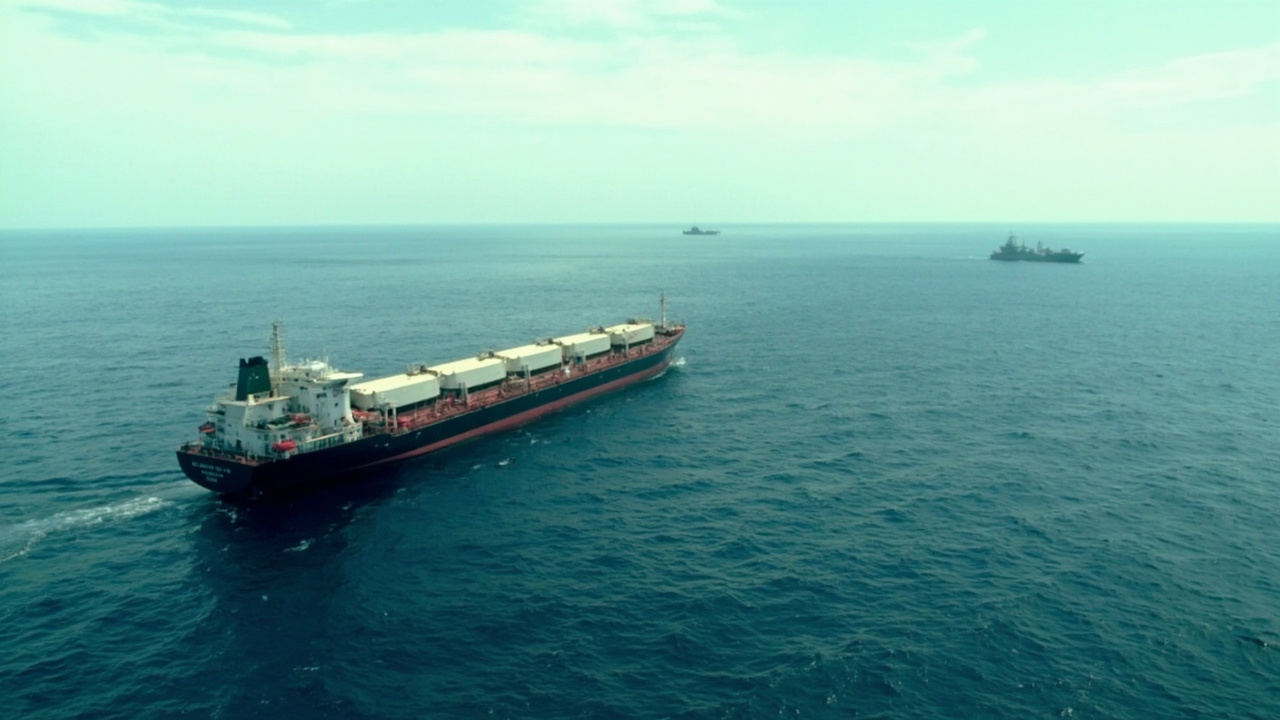
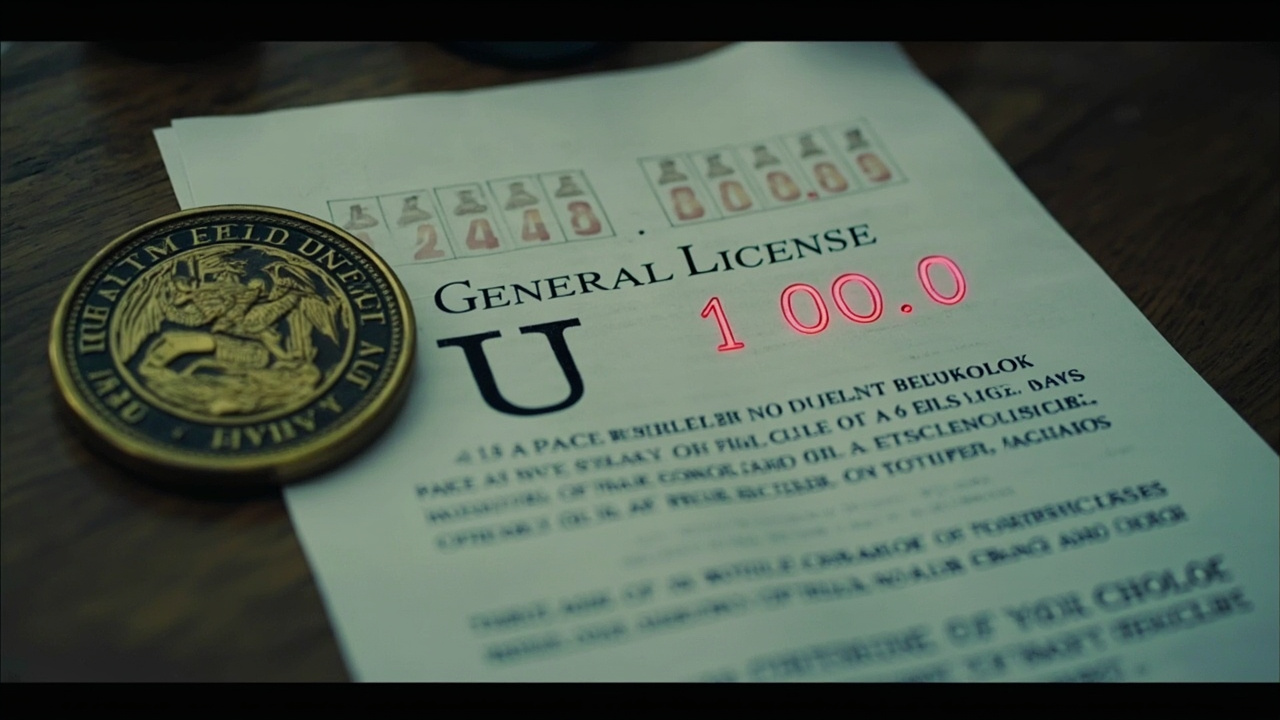
On Friday evening, after markets closed, the Treasury Department's Office of Foreign Assets Control posted a document to its website. It was titled "General License U" and it authorized the delivery and sale of Iranian-origin crude oil and petroleum products loaded on vessels as of March 20, 2026. [1] The license expires April 19. It covers approximately 140 million barrels. The United States is at war with Iran.
This paper wrote yesterday that the market called the war's bluff — that Treasury had to release the very oil America was bombing because the war created the shortage. The loop, we said, closed in twenty days. Today it is not a loop. It is policy. General License U is the institutionalization of a contradiction so naked that even the administration's allies struggle to dress it. The United States is licensing the sale of its enemy's petroleum while conducting active military operations against that enemy's petroleum infrastructure. The document was posted at the close of business on a Friday, the Washington hour reserved for things you hope nobody reads.
And as this paper noted when central banks abandoned the fiction that the energy shock was temporary, the price of Brent crude is no longer a spike to be waited out. It is a structural repricing. At $112 a barrel on Friday, up 53 percent in the year and roughly 50 percent since Operation Epic Fury began on February 28, the market has settled into a range that punishes consumers and destabilizes monetary policy across the industrialized world. [2] General License U is what a government does when the market will not cooperate with the war.
The Anatomy of a Waiver
The mechanics are precise. OFAC authorized transactions "ordinarily incident and necessary" to the sale, delivery, and offloading of Iranian crude already loaded on ships as of March 20. [1] The license covers not just the sale itself but docking, anchoring, crew safety, emergency repairs, bunkering, insurance, classification, and vessel management. It permits imports into the United States if directly tied to these transactions — the first time Iranian oil could legally enter American ports since the 1979 revolution, though administration officials say no imports are expected. [3]
Cuba, North Korea, and Russian-occupied parts of Ukraine are excluded. Everyone else is invited.
Treasury Secretary Scott Bessent framed the move in martial language. "In essence, we will be using the Iranian barrels against Tehran to keep the price down as we continue Operation Epic Fury," he wrote on X. [4] The formulation is worth examining. "Using the Iranian barrels against Tehran" implies the oil is a weapon. But a weapon presupposes control. The 140 million barrels exist because sanctions stranded them and war destroyed the infrastructure that would have moved them. They are not a weapon. They are debris.
Bessent insists Iran will "have difficulty accessing any revenue generated" and that maximum pressure will continue. [2] This claim drew immediate skepticism. David Tannenbaum, director of Blackstone Compliance Services, a consultancy specializing in maritime sanctions, told the BBC the idea was "bananas." "Essentially we're allowing Iran to sell oil, which could then be used to fund the war effort," he said. [2]
Rachel Ziemba, adjunct senior fellow at the Center for a New American Security, offered a more measured but no less damning assessment. "I don't think it's a game changer and it raises a whole lot of questions," she said. The U.S. government, she added, is "definitely in an every-barrel-counts situation because of the scale of the supply shock. They're looking to find additional oil wherever they can." [2]
The Third Waiver in Three Weeks
General License U is not an isolated act of desperation. It is the third time in slightly more than two weeks that Treasury has waived sanctions on oil from American adversaries during wartime.
The first came on March 5, when OFAC issued a 30-day waiver allowing Indian refiners to purchase Russian crude stranded at sea — a concession designed to free up approximately 130 million barrels for the global petroleum supply. [5] The second, on March 19, replaced and expanded the Russian waiver, extending its terms through April 11. [6] Now comes Iran.
Three waivers. Two adversaries. Approximately 270 million combined barrels released or authorized for release. And Brent crude has not come down.
The pattern reveals what the administration will not say: every conventional instrument for managing oil prices has been deployed and exhausted. The Strategic Petroleum Reserve release — 172 million barrels ordered earlier this month, coordinated with international allies for a total of 400 million — is underway but has not arrested the rise. [3] The Jones Act waiver, allowing foreign-flagged vessels to move fuel between U.S. ports, is in effect. [7] Domestic production is at record levels. None of it has been enough.
CNN reported that administration officials now "privately estimate that the higher prices triggered by the war could linger for months," and that the remaining options range from "largely ineffective to deeply unpalatable." [3] A former senior Trump Energy Department official, Neelesh Nerurkar, put it plainly: "This is the biggest disruption to the oil markets that you can imagine. The shortfall is so large that the measures available are dwarfed by how much oil is not reaching the market." [3]
The Hormuz Problem
Every measure Treasury has taken operates on the same assumption: that additional supply, however sourced, can be moved to market. The Strait of Hormuz makes that assumption precarious.
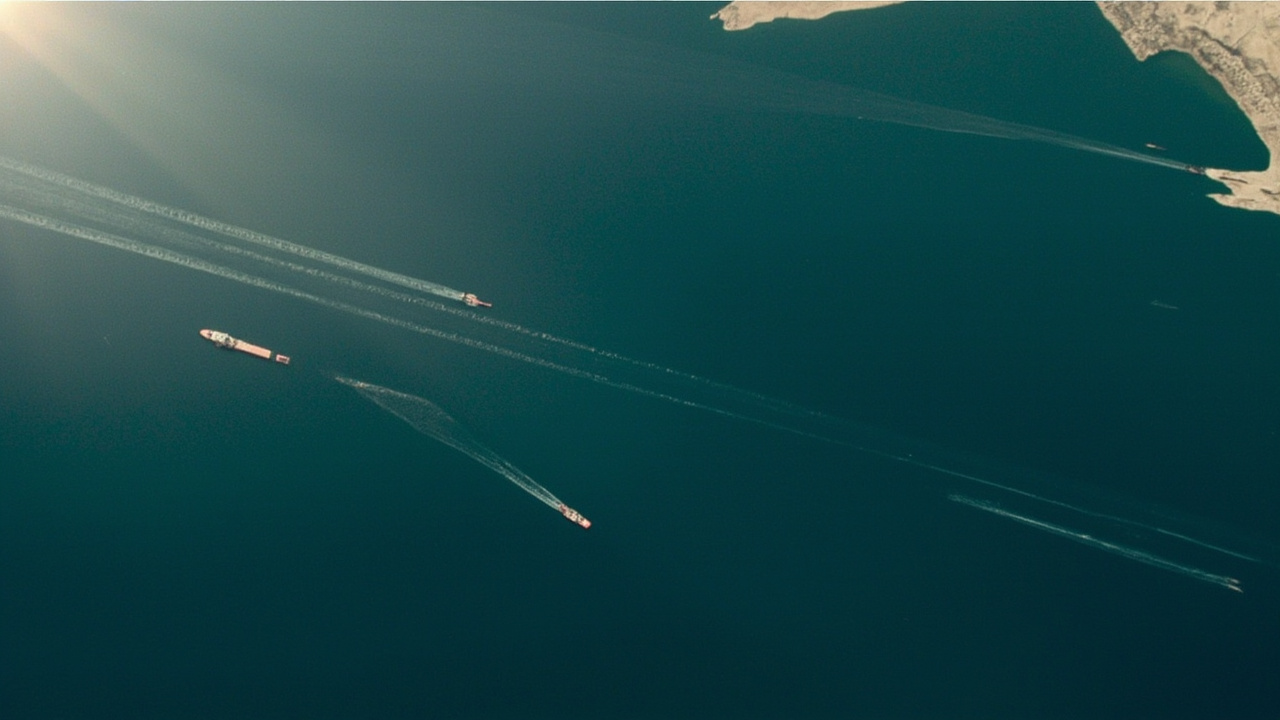
Roughly one-fifth of the world's crude oil and liquefied natural gas transits the strait between Iran and the Arabian Peninsula. Iran has effectively closed it with mines, small boats, drones, and anti-ship cruise missiles. [2] Commercial shipping through the strait has come to a halt. The disruption has knocked an estimated one-tenth of global oil supply out of the market. [2]
Energy analysts have said flatly that no sanctions waiver, no reserve release, and no Jones Act suspension will meaningfully affect prices until the strait reopens. Brent Erickson, managing principal at Obsidian Risk Advisors, told CNBC that "the easing of sanctions raises concerns about the rapid depletion of Washington's economic toolkit. If we've reached the point of loosening sanctions on the country we are at war with, we're really running out of options." [7]
Trump, asked Friday about the strait, said "at a certain point, it'll open itself." [3] He said he wanted other countries to lead the effort to reopen it. "If asked, we will help these Countries in their Hormuz efforts, but it shouldn't be necessary once Iran's threat is eradicated," he wrote on Truth Social. [8]
The strait is not going to open itself. And General License U is not going to open it.
Who Benefits
The immediate beneficiary is China. Before the war, Chinese refiners were the primary purchasers of Iranian crude, buying through sanctions-evasion networks at steep discounts. Bessent has argued that licensing the oil for sale to other countries — India, Japan, Malaysia, Thailand, Vietnam — will force China to pay market price instead. [2] [3]
But the logic inverts itself. If the oil reaches market at or near the current Brent price of $112, Iran receives substantially more per barrel than it was getting from discounted Chinese sales before the war. The war that was supposed to destroy Iran's revenue base has, through the mechanism of the waiver, potentially increased it. Bessent's claim that Iran will have "difficulty accessing" the revenue depends on the continued enforcement of financial sanctions — sanctions that the same administration is now selectively suspending on the commodity side.
Gregory Brew, senior analyst at Eurasia Group specializing in oil and gas, identified the logical endpoint. "If they pursue this strategy and allow buyers to buy off this oil on the water, it'll go quickly," he told CNN. "Then we'll be faced with the interesting proposal of dropping sanctions on Iranian oil generally." [3]
One hundred and forty million barrels is roughly one and a half days of global oil consumption. [3] It is a buffer, not a solution. When the buffer runs out, the strait will still be closed, the war will still be underway, and the price will still be set by the gap between what the world needs and what the world can move.
The Politics of the Pump
Brent at $112 is not an abstraction. It is $4-a-gallon gasoline. It is midterm elections in November. It is Republican congressional margins that erode with every cent at the pump.
The administration knows this. CNN reported that White House worries about oil prices center explicitly on November, when Trump's fellow Republicans hope to retain control of Congress. [3] The Iranian waiver, like the Russian waiver before it, is an electoral instrument disguised as a market intervention.
But the market is indifferent to electoral calendars. The 140 million barrels, even if fully absorbed, provide Bessent's own estimate of 10 to 14 days of price relief. [7] After that, the same structural deficit reasserts. The strait is closed. Iranian export infrastructure is degraded. Iraqi force majeure declarations have removed additional supply. The supply shock is not 140 million barrels wide. It is the Strait of Hormuz wide.
Trita Parsi, executive vice president of the Quincy Institute, distilled the irony on X: "Iran has worked for years to get sanctions relief through diplomacy. It took a war to get it." [9]
April 19
The license expires in thirty days. The administration will then face the choice it has been deferring since the war began: extend the waiver and formalize the admission that maximum pressure cannot coexist with maximum war, or let it lapse and absorb the economic consequences of a supply shock it cannot mitigate.
Landon Derentz, a former national security and energy official who served under Obama, Trump, and Biden, offered what amounts to an epitaph for the administration's options. "The nuance here is there isn't nuance," he told CNN. "Nobody else has a bright idea." [3]
Mark Dubowitz, CEO of the Foundation for the Defense of Democracies — an organization that spent years building the sanctions architecture now being suspended — praised the waiver as "a smart move." [7] When the architects of maximum pressure call the suspension of maximum pressure smart, the vocabulary of the policy has been emptied of meaning.
General License U is a document of sixteen paragraphs. It authorizes the sale of oil belonging to a government the United States is bombing. It was posted on a Friday night. It expires on a Saturday. It solves nothing that the strait's closure does not immediately undo. It is the most honest document the administration has produced since the war began, because it says, in the dry language of sanctions law, what no official will say aloud: the war broke the market, and the market will not be fixed until the war ends or the strait opens, and neither is happening soon.
The United States bombed Iran's oil. Then it released Iran's oil. Now it has licensed Iran's oil. The policy is not evolving. It is retreating, one waiver at a time, toward the recognition that you cannot wage economic war and kinetic war against the same country at the same time and expect both to succeed.
The market understood this three weeks ago. Treasury understood it on Friday. The rest is paperwork.
-- PRIYA SHARMA, Delhi