TL;DR
The Pentagon wants $200 billion to continue a war Congress never authorized — and the price tag has united fiscal hawks, antiwar Democrats, and MAGA populists in a coalition of sticker shock.
MSM Perspective
NOTUS reported bipartisan 'surprise' at the figure; Politico led with Republicans 'balking at going it alone'; the Washington Post first broke the $200 billion number.
X Perspective
Left and right populist accounts are posting the same $200 billion number with opposite framing but identical outrage — a rare convergence where Ro Khanna and Lauren Boebert agree.
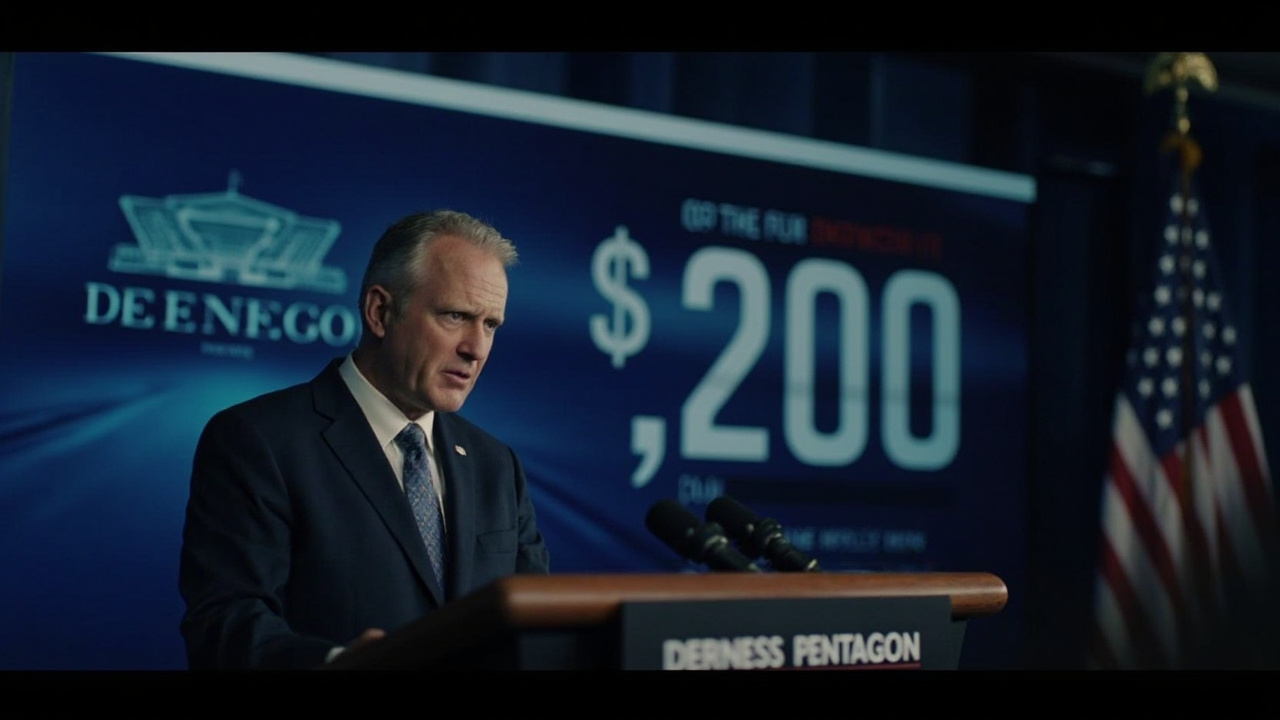
Defense Secretary Pete Hegseth stood at a Pentagon podium on Thursday and explained the $200 billion supplemental war funding request in seven words: "It takes money to kill bad guys." [1] The line was delivered with the flat confidence of a man who believes the argument is self-evident. Congress does not appear to agree.
This paper's account of the congressional demand for an exit plan documented the growing unease on Capitol Hill as Operation Epic Fury entered its fourth week without a clear strategic objective or timeline. The $200 billion request, first reported by the Washington Post on Tuesday and confirmed by Hegseth on Thursday, has converted that unease into something rarer and more consequential: bipartisan fury. [2]
The number is extraordinary by any measure. Fortune calculated that at the war's current burn rate — roughly $1.38 billion per day — $200 billion would fund approximately 145 more days of operations. [3] The request exceeds the peak annual cost of the Iraq war, which topped out at approximately $140 billion in 2008. [4] It is larger than the total U.S. commitment to Ukraine over four years. It arrived on Capitol Hill less than three weeks after the first bombs fell, in a war that Congress has neither authorized nor, until now, been asked to finance.
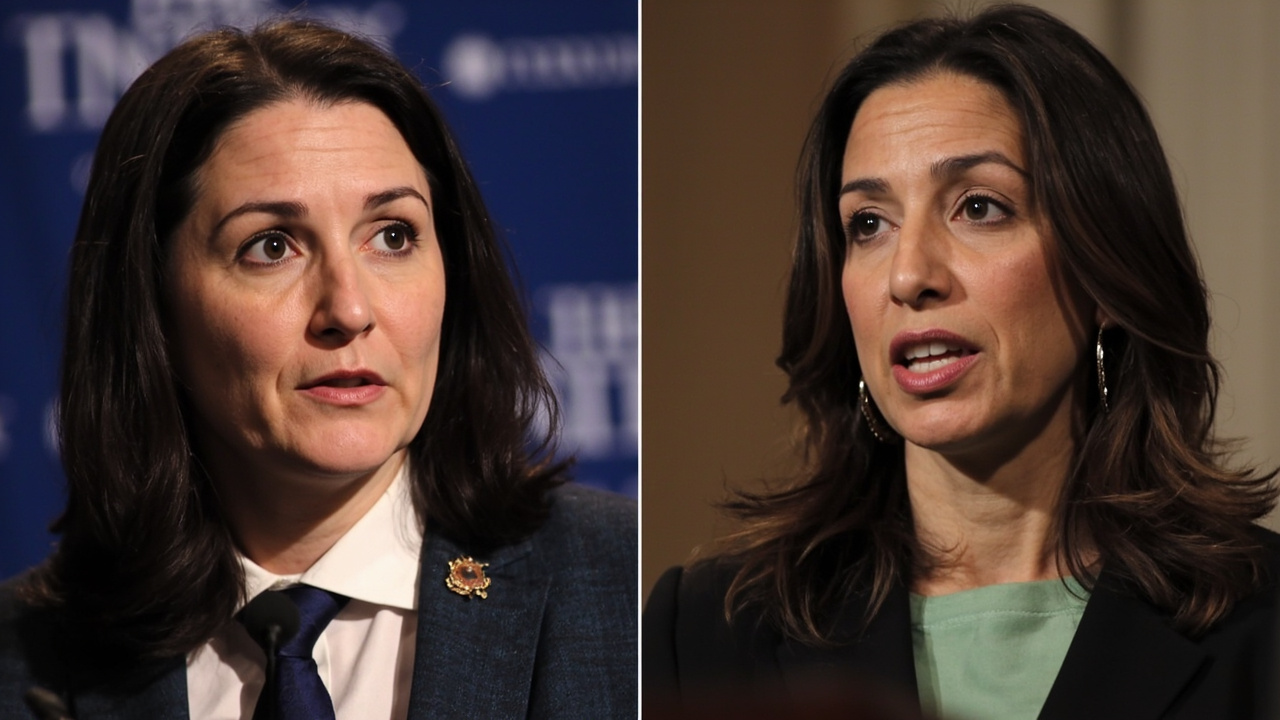
The reaction from Democrats was immediate and categorical. Representative Rosa DeLauro of Connecticut, the ranking Democrat on the Appropriations Committee, issued a statement that captured the party's position: "With no clear objective, no apparent strategy, and no end in sight, the Trump Administration reportedly wants another $200 billion from the American people for an unauthorized war." [5] The Responsible Statecraft think tank reported that Democratic leaders have adopted a blanket position: "We will not approve one more cent for this war." [6]
Senator Adam Schiff of California told Time that Democrats plan to use the funding debate as leverage: "You want $200 billion? Then come to Congress, make your case, get authorization." [7] The supplemental provides what the war powers vote did not — a binding mechanism. Congress cannot be ignored on a funding bill the way it was ignored on authorization.
The surprise is on the Republican side. Politico reported Thursday that "congressional Republicans are confronting serious doubts they can pass Iran war funding on their own." [8] The reconciliation process, which allows budget measures to pass with a simple majority, is already overloaded with the party's domestic agenda — Medicaid cuts, energy deregulation, tax extensions. Adding $200 billion in war funding to the reconciliation vehicle would require either dropping other priorities or accepting a package so large that deficit-conscious Republicans would rebel.
Representative Lauren Boebert of Colorado captured the populist wing's objection with characteristic directness: "I've already told leadership, I am a 'no' on any war supplementals. I am so tired of spending money elsewhere. I am tired of the industrial war complex getting all of our hard-earned tax dollars." [9] Representative Thomas Massie of Kentucky, who co-sponsored the bipartisan war powers resolution with Democrat Ro Khanna, asked the question the number forces: "How long do they plan to be there? What are the goals? Is this the first $200 billion? Does this turn into a trillion?" [9]
Senator Susan Collins of Maine, who chairs the Appropriations Committee, called the figure "considerably higher than I would have guessed" and proposed a bipartisan spending bill rather than a party-line reconciliation package — implicitly acknowledging that the war cannot be funded through partisan power alone. [10]
"The American people don't want to be involved in a long-term war," said Representative Chip Roy of Texas. "$200 billion is a lot of money. He needs to come and tell us: is this to replace munitions? Rebuild our stockpile? Or are we talking about a long-term engagement?" [9]
The structural problem is that the request confirms what antiwar critics have argued since February 28: this is not a limited strike. The Pentagon does not ask for $200 billion to replenish Tomahawk missiles after a weekend air campaign. Hegseth's own language confirmed as much — the money is for "what's been done, for what we may have to do in the future, ensure that our ammunition is refilled, and not just refilled, but above and beyond." [1] The words "above and beyond" suggest stockpiling for an escalation the administration expects but has not publicly described.
Hannah Arendt observed that the most dangerous political moments are not those when citizens disagree about values, but when they discover that the facts they were given do not match the commitments they are being asked to fund. The $200 billion request is that moment. The administration described a limited operation. The Pentagon priced an open-ended war. The gap between the description and the price is where bipartisan coalitions form — not out of shared ideology, but out of shared arithmetic.
The War Powers Act gives the president 60 days of unauthorized military action. The clock started February 28. Day 60 falls on April 29. The funding debate will almost certainly extend beyond that date, creating a constitutional collision: a president conducting unauthorized military operations while Congress debates whether to pay for them. The supplemental is not merely a budget line. It is the authorization debate Congress avoided in February, returning in the form of an invoice.
-- ANNA WEBER, Washington
Sources & X Posts
News Sources
X Posts