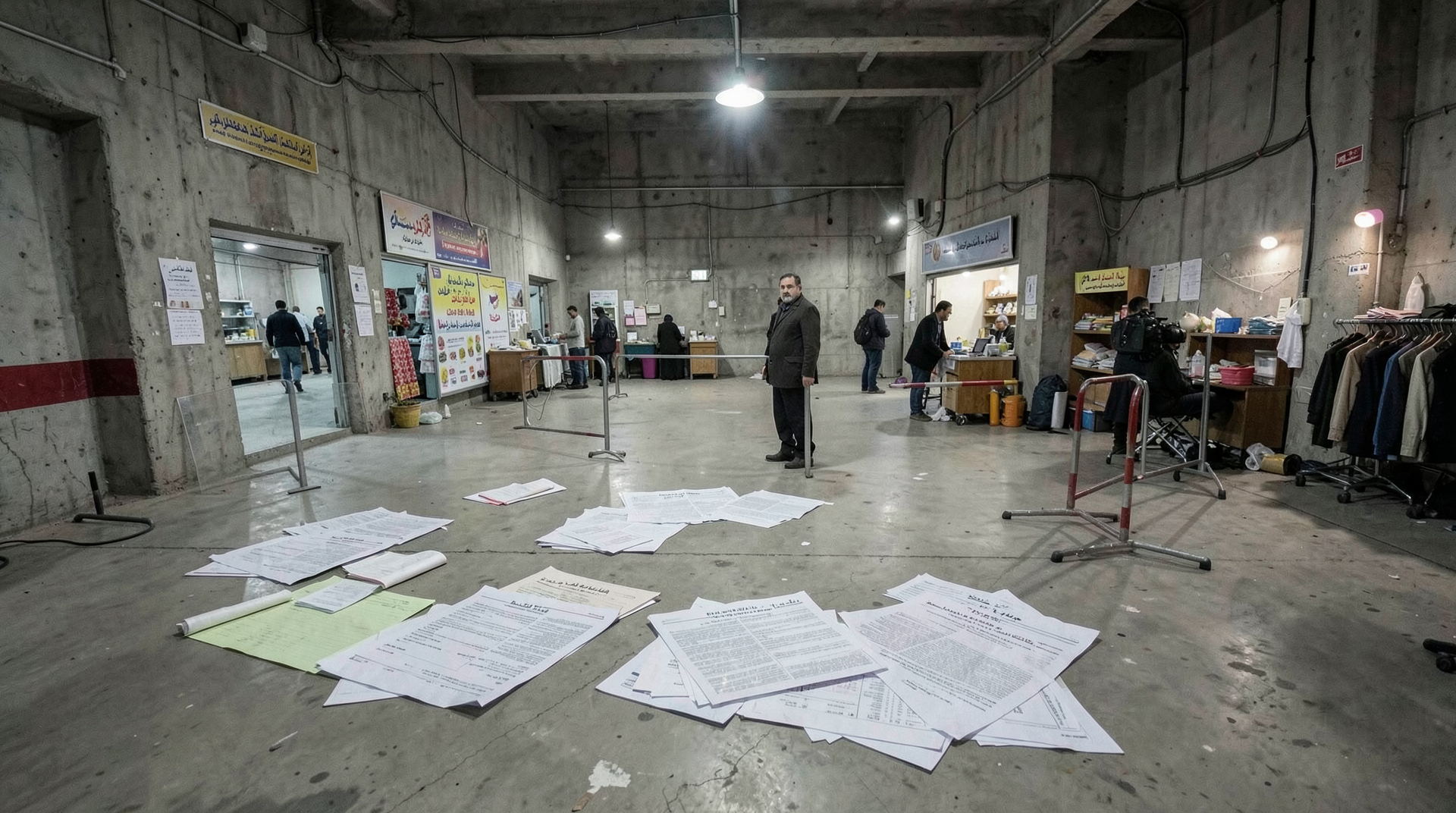
Iran described Hormuz management as coordinated with Oman, while searches found no Muscat confirmation or denial. [1][2][3][4]
The paper's May 16 coverage of irans tanker ledger is now a us affiliated list not a sample and trump xi summit hormuz promise failed its first twenty four hours set the continuity test for Sunday: a preview only matters if the next public artifact confirms, revises, or falsifies it.
That is why the Sunday version is not a recap. The live verification target from Saturday produced silence, and that silence is now the story. The artifact matters because it narrows what the paper can responsibly claim next.
The divergence is visible in the way the story is already being sorted. MSM treats the claim as diplomatic language; X treats it as the real operating agreement. The paper's job is to keep the instrument in view: the vote total, filing, docket, schedule, roster, label, release, table, or price that a reader can check.
The caution is equally important. A search result is not a verdict, a statement is not an implementation channel, and a market price is not a policy. Sunday's edition treats the new fact as a document with edges, not as a slogan that can absorb every prior claim.
The next test is therefore concrete. If another source publishes a filing, a second-source confirmation, a buyer, a roster, a case table, or a vote audit, the story moves. Until then, the responsible frame is the one the sources support today.
The first discipline is scope. Oman Stayed Silent While Iran Wrote the Strait Rules is not an invitation to make every adjacent argument fit one headline. It is a record of what moved, what did not move, and which public document would change the story next. The article stays with that boundary because readers can only trust a paper that distinguishes evidence from appetite.
The second discipline is timing. Sunday produced enough receipts to tempt a newspaper into premature conclusions, but the stronger move is to name the calendar. Some stories now have results. Others have a filing window, a vote date, a public-health table, a market open, or a promised roster. The date is not decoration; it is the claim.
The third discipline is consequence. A reader who follows only mainstream coverage may see this as one desk item among many. A reader who follows only X may see it as proof of a sweeping theory. The paper is interested in the middle distance: what the artifact lets institutions do tomorrow that they could not credibly do yesterday.
That middle distance is why the section assignment matters. In world, the same fact can be treated as spectacle, process, service, balance sheet, or public power. The edition uses the category to keep the story honest. The section is not a shelf; it is a promise about what kind of consequence the article is asking the reader to notice.
The fifth question is who now owes the next document. Sometimes it is a broadcaster, sometimes a regulator, sometimes a company, sometimes a public-health agency, sometimes a league office, and sometimes a court clerk. The answer matters more than the loudest reaction because obligation is where the story either advances or collapses.
The final check is humility. This article names a live public record, not a completed history. If a later audit, filing, schedule, roster, case count, verdict, contract, or statement appears, the paper will owe readers a correction of emphasis or a follow-up. That is not weakness. It is the operating method of a newspaper built around divergence rather than certainty.
The practical consequence is not abstract. Oman Stayed Silent While Iran Wrote the Strait Rules changes what editors, officials, investors, fans, patients, agencies, leagues, or companies can plausibly say next without producing another receipt. That pressure is the story underneath the story: once a public number or silence exists, the next actor inherits it.
The article therefore resists the easy ending. A neat conclusion would flatten the evidence into a mood. The better ending leaves the reader with a named next test and a standard for judging it. That is how continuity works: yesterday's position becomes today's burden of proof.
-- YOSEF STERN, Jerusalem