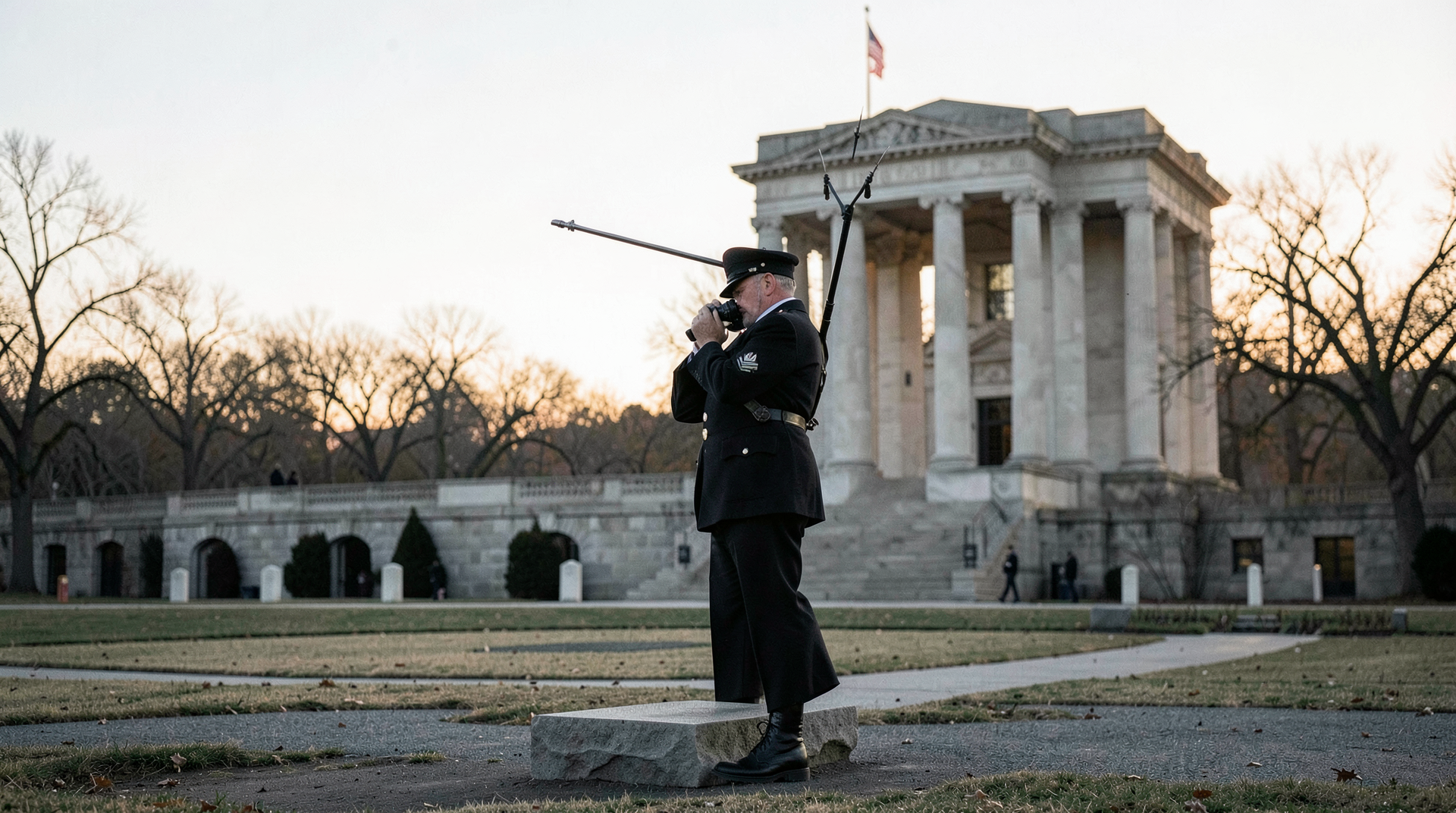
President Trump's Memorial Day 2026 proclamation, signed May 22 and posted to the White House Presidential Actions feed, reads in its operative paragraph: "Today, we especially remember the 13 members of the Joint Force who have fallen in support of Operation Epic Fury to defend our national security and preserve the blessings of liberty for future generations. These warfighters lost their lives for freedom's cause and we will never forget the cost." [1] It is the first time a presidential document names the Iran war operation by its CENTCOM designation and the first time the American military cost of the operation is counted in a White House publication. The proclamation also calls the day a "day of prayer for permanent peace" and designates 3:00 p.m. local time as the National Moment of Remembrance, per the 1950 congressional joint resolution it cites. [1] The Arlington National Cemetery wreath-laying ceremony at the Tomb of the Unknown Soldier was scheduled for noon, the standard presidential timing.
The naming is the political document. Senator Bill Cassidy had used "Operation Epic Fury" at the senator level for weeks in floor statements and committee hearings; CENTCOM has used the term operationally since the operation commenced in late February. [2] What was not in any presidential publication before Friday's signing was the operational designation in a White House voice, paired with a presidential count of American dead. The operation's military objectives — degradation of Iran's conventional missile capacity, destruction of "90% of its defense industrial base" per Navy Admiral Brad Cooper's May 14 Senate Armed Services Committee testimony [3] — have been described in War Department releases and CENTCOM updates throughout the spring. None of those carry a presidential signature. The Memorial Day proclamation does.
This matters for the war-authorization-clock the paper has tracked through May. The Sunday standard read Trump's "largely negotiated" Truth Social post on Iran as producing procedural ambiguity for the June 1 War Powers Resolution vote: the framing positioned the war as winding down through diplomacy, which the YOLO caucus could either treat as moot (and skip the vote) or treat as evidence the war ran for months without authorization (and force it). Cassidy was quiet through Sunday; no flip count surfaced. Monday's presidential proclamation does something different from the Truth Social post: it puts the operational designation and the cost in the form of a White House document. The proclamation reads as commemorative; the structural function is that it converts "Operation Epic Fury" from a Cassidy-and-CENTCOM term into a presidential-record term. A future archival researcher looking for when the Iran war's American cost first appeared in a White House publication will find it dated May 22, 2026, signed by President Trump, on the Presidential Actions feed.
The "13 Joint Force fallen" count is the second-order structural artifact. CENTCOM and the War Department have released individual fatality announcements throughout the operation. The KC-135 loss over Iraq in March accounted for four crew members. [4] Individual casualty reporting has run through the standard Public Affairs apparatus. The proclamation aggregates the count to thirteen in presidential voice without footnote or list. If that number matches a CENTCOM running total, the proclamation is an acknowledgment of an existing figure. If it diverges — if CENTCOM's running count is higher or lower or if some fatalities have been reclassified as out-of-operation or post-operation — the proclamation creates the official count by issuing it. The paper does not have the CENTCOM running total at write time. The discipline question is whether the thirteen rounds with public reporting or constitutes a new accounting. That question is open in the war-authorization thread memo as of Monday.
The unresolved political question is what the wreath ceremony at noon produces. Memorial Day presidential remarks at Arlington are tradition-bound: the president lays the wreath at the Tomb of the Unknown Soldier, salutes during "Taps," and typically delivers prepared remarks afterward. In 2025 Trump began Memorial Day with all-caps Truth Social posts attacking former President Biden and federal judges, then conducted the ceremony in the standard form. [5] What the 2026 remarks contain — whether they address Iran, the encyclical the Pope publishes the same morning, the Russian attack on Kyiv overnight, or the YOLO caucus and June 1 vote — is the political content the proclamation does not yet carry. The proclamation is institutional. The remarks are personal. Both arrive on the same Monday.
The Cornyn-Paxton Texas Senate primary runoff is Tuesday, May 26. That calendar artifact sits inside the war-authorization-clock window and could pull additional Senate Republican attention to the institutional naming of the war this Monday. Cornyn has been a quiet vote on Iran posture; Paxton has been a louder one. Whichever clears Tuesday will be the Republican primary voice in the June 1 procedural sequence. The Markey-Moulton dual clock is at Day 5 with Senator Markey still functioning as press-freedom letter-writer of record and as a Democratic primary candidate; no second filing has surfaced. The procedural texture going into June 1 is unchanged from Sunday — except that the President's commemorative document for Memorial Day named the war by its operational designation and counted its dead, and that is the texture the procedural vote now sits inside.
The historical comparison the proclamation invites is structural rather than rhetorical. The paragraph beginning "From the frozen fields of Valley Forge and the beaches of Normandy to the jungles of Vietnam and the mountains of Afghanistan" reads as a standard Memorial Day catalogue of named American wars. [1] The specific naming of "Operation Epic Fury" in the next paragraph adds the Iran operation to that catalogue. The presidential voice is doing the work the senatorial voice has been doing for two months: placing the operation in the canonical list of named American conflicts. Once a war is named in a presidential commemorative document, it is harder for any subsequent administration to treat it as unnamed or unauthorized. The structural read this paper has carried — that the operation was running for months without acknowledgment of authorization status — is now answered partially. The acknowledgment is institutional. The authorization question remains open. June 1 is still the procedural test.
The proclamation's closing line — "I, DONALD J. TRUMP, President of the United States of America, do hereby proclaim Memorial Day, May 25, 2026, as a day of prayer for permanent peace" — is a juxtaposition the reader is invited to hold. The "day of prayer for permanent peace" sits one paragraph after "the 13 members of the Joint Force who have fallen in support of Operation Epic Fury." [1] The same document that asks Americans to pray for permanent peace acknowledges that thirteen of them have died in a named ongoing operation. The diplomatic substitute words ("largely negotiated") and the institutional commemorative document ("Operation Epic Fury / 13 Joint Force fallen") are operating in the same Memorial Day morning. They are not consistent. They are also not inconsistent in the way previous presidential rhetorical pairings have been; both can be true simultaneously and both are being asserted simultaneously by the same administration. The Monday morning the encyclical publishes on artificial intelligence is also the Monday morning the war that ran without authorization gets named in a White House document.
The paper's position going into Memorial Day evening is that "Operation Epic Fury" is now in the presidential record; the count of 13 is in the presidential record; the procedural June 1 sequence is the next test; the Cornyn-Paxton runoff Tuesday is the immediate primary-side test; and the proclamation's lift of the war into the canonical American-war catalogue is the longest-arc structural consequence. None of that is settled today. Today the document exists.
-- SAMUEL CRANE, Washington