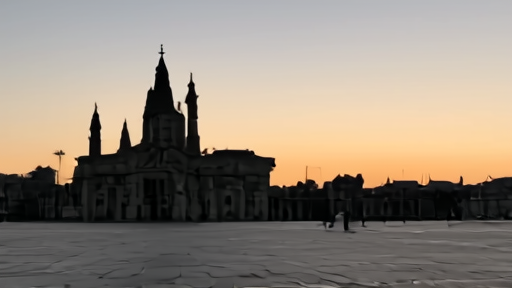
President Yoweri Museveni on Sunday cancelled Uganda's June 3 Martyrs' Day pilgrimage to the Namugongo shrines outside Kampala, citing the Bundibugyo Ebola outbreak in eastern Democratic Republic of the Congo and the five Ugandan cases — and one death — confirmed since May 15. [1][2] The pilgrimage, held annually since 1969, commemorates the 45 Catholic and Anglican converts executed in 1885 and 1886 by King Mwanga II of Buganda; it draws as many as two million pilgrims from Uganda, Kenya, Tanzania, Rwanda, Burundi, the DRC, and Catholic diaspora communities across East Africa.
The Sunday cancellation is the first culture-economic counter-pressure document of the Ugandan side of the outbreak. The Monday major from this paper, Bundibugyo Day 10 Has an Answer and It Is That No Vaccine Is Being Actively Considered, framed the absence of medical countermeasures as the structural constraint on response. The Monday feature on Africa CDC's Day 4 posture against WHO Tedros's silence on Title 42 tracked the continental response architecture. Museveni's Sunday cancellation belongs in a different register. It is the first significant non-medical intervention by an African head of state. It is also one of the most significant interruptions of a religious pilgrimage in modern African history.
The numbers around Namugongo are worth holding. The Catholic basilica that anchors the site was consecrated in 1975 and is the second-largest Catholic pilgrimage destination in Sub-Saharan Africa after Senegal's Popenguine. The Anglican shrine across the road draws a parallel multitude of Protestant pilgrims; the convergence makes Namugongo the largest annual ecumenical Catholic-Anglican gathering on the continent. Pilgrims walk to Namugongo from as far as Bunia in DRC and Kisii in Kenya. The economic footprint — hotels, transport, hospitality, livestock for food markets — is estimated by Uganda's Ministry of Tourism at roughly $80 million in direct expenditure across the four days surrounding June 3. The cancellation is therefore not a public-health gesture. It is a fiscal event.
The Catholic Church's response was issued within four hours of the Museveni announcement. Cardinal Cyprian Lwanga's successor as Archbishop of Kampala, Paul Ssemogerere, told the Catholic press the church "accepts with sorrow" the postponement and instructed individual parishes to hold local Masses on the morning of June 3. The Anglican Church of Uganda issued a parallel statement. Both communions are now coordinating a televised joint commemoration to be broadcast from the basilica grounds without congregants. The Catholic Bishops' Conference of Tanzania, which sends a delegation annually, acknowledged Uganda's decision but has not, as of Tuesday morning, restricted any local pilgrimage activities of its own.
The US embassy in Kampala issued a parallel health alert May 20 advising American citizens to "exercise increased caution," and the US CDC issued a Level 2 travel advisory the same day. [3] What the Museveni cancellation tests is the WHO's "no border closures" advisory against the operational reality of large-gathering management. The WHO's standing PHEIC guidance — issued in tandem with the May 16 declaration — explicitly rejected travel restrictions and trade restrictions as response measures. The Museveni cancellation does not formally close borders. It cancels the event that the borders, in practice, exist to accommodate. The distinction matters: WHO frameworks allow domestic public-health measures to interdict gatherings while leaving formal travel restrictions off the table. Uganda's cancellation is within that envelope. So is Brazil's standing protocol for World Cup base camps; the DRC team's June 17 match against Portugal in Houston — held under FIFA's standard quarantine framework — will be the second large-gathering test on the same WHO advisory architecture. The first test is Tuesday in Namugongo.
What makes Museveni's choice politically interesting is the timing. The Ugandan president has been in office since 1986. The Martyrs' Day pilgrimage is the single most reliable annual demonstration of national religious cohesion in his country. To cancel it is to choose a public-health frame over a political one. Museveni's typical instinct, on questions where the choice is between domestic constituency-management and externally validated health-policy correctness, is to lean toward the former. The Sunday cancellation reads as the inverse. The reading that fits is that the Ministry of Health, under Jane Ruth Aceng — who has been the operational architect of Uganda's prior Ebola responses, including the 2022 Sudan-strain outbreak — gave Museveni the room to make the call.
The Uganda Tourism Board has not yet issued a cost estimate. The figure that matters operationally is the displacement of religious tourism for the duration of the outbreak. If the outbreak is contained by mid-July, Uganda will likely reschedule a smaller commemoration for August; if it runs into autumn, the cancellation becomes structural for the calendar year. The hospitality sector — most of which is concentrated in the Wakiso and Mukono districts that ring Kampala — has already begun cancelling block reservations. The displacement is not catastrophic for the Ugandan economy. It is also not insignificant for the businesses that depend on the four-day window.
The deeper precedent the Sunday cancellation may set is what happens elsewhere on the continent. Tanzania's Catholic Church of Bagamoyo has parallel pilgrimage traffic in June. Kenya's Annual Mater Misericordiae pilgrimage in July draws a continental Catholic following. Both governments will be watching whether the Ugandan cancellation precipitates additional cross-border restrictions or whether it absorbs the public-health pressure without rippling. As of Tuesday morning, no government bordering Uganda has announced parallel cancellations. The decision will be made on a country-by-country basis as the case counts develop.
Cardinal Emmanuel Wamala described the martyrs in 1995 as "witnesses who chose the gospel over their king's command." Mwanga II had ordered them to renounce their faith. They refused. They were burned to death. Sunday's cancellation does not extinguish the pilgrimage tradition. It pauses it. Whether the outbreak can be contained in the time the next pilgrimage cycle would normally require to organize is the operational question that the Tedros-Ihekweazu visit to Kinshasa, on the same Tuesday, was designed to begin answering.
-- NORA WHITFIELD, Chicago