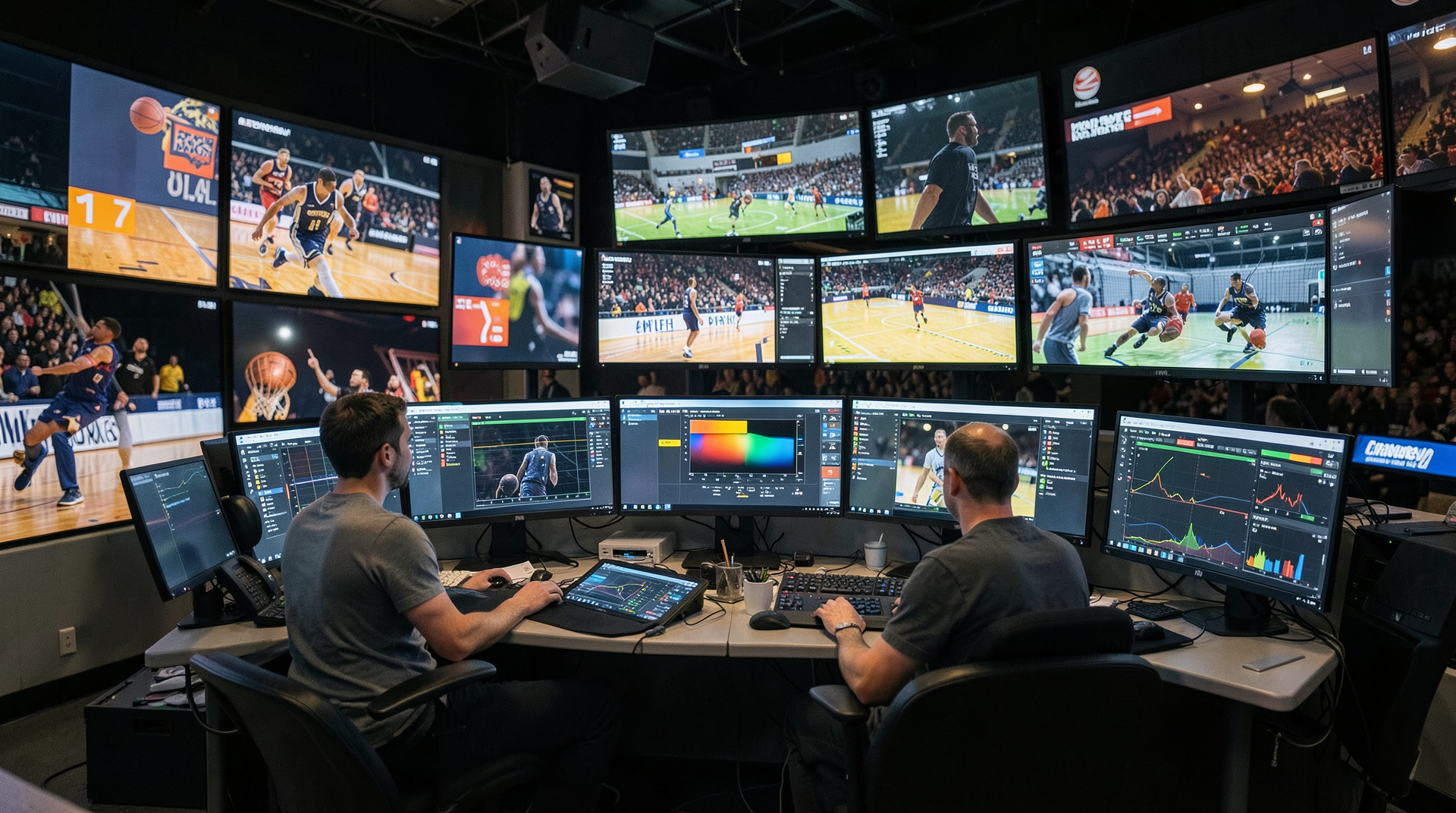
The sports ratings boom is real, but the label is part of the fact. Sports Media Watch reports NBA conference-finals audiences at multi-year highs, with NBC's Western Conference Finals combining a Nielsen-estimated linear audience and Adobe Analytics streaming data. Its ratings tracker also carries WNBA, college softball, UFL, MLB, lacrosse, and other sports numbers with caveats about out-of-home viewing, Big Data, panel-only comparisons, and platform context. Motorsport's NASCAR report shows the same lesson in one race. [1] [2] [3]
That is the sequel to Sunday's sports ratings caveat. The prior article said strong audiences should be printed with their measuring systems attached. Monday's file makes the rule stricter. A number can be true and still mislead if it hides whether Nielsen, Adobe, Big Data + Panel, panel-only, first-party platform data, a lead-out, or a broadcast window produced it. [1] [2]
The NBA supplies the cleanest example. Sports Media Watch's conference-finals report says the West finals were posting strong numbers, but the important phrase is not only the total. It is the construction of the total. NBC's figure combines Nielsen linear viewing with Adobe streaming. That is not a defect; it is how a modern audience is counted. But historical comparisons to cable-era or broadcast-era playoff windows need that construction in the sentence. [1]
The viewer does not care which vendor counted them. The business does. Advertisers, leagues, rights buyers, and networks all make decisions from numbers that look similar in headlines and behave differently underneath. A combined NBC number is not the same object as a cable-only number. A Prime Video exclusive is not the same object as a broadcast Game 7. A regional ION window is not the same object as a national ABC window. The paper's job is to keep the objects separate. [1] [2]
Sports Media Watch's tracker is useful because it resists making everything one triumphal paragraph. It lists college softball super-regionals, lacrosse championships, UFL games, MLB windows, WNBA games, and golf with their own contexts. A record softball number is a different kind of evidence from a UFL audience inflated by an Indianapolis 500 lead-out. A lacrosse record is not a WNBA platform story. A golf high since 2004 tells us something different from an NBA broadcast return. [2]
The NASCAR Coca-Cola 600 makes the methodology fight impossible to hide. Motorsport reports that the Prime Video race drew a strong number under Nielsen Big Data + Panel, while the sports research stack says the panel-only figure tells a flatter year-over-year story. Both can be true because they are different instruments. That is not pedantry. It is the difference between saying Prime changed the race's audience and saying Prime survived the transition with measurement help. [3] [2]
For athletes and leagues, the caveat can feel like someone draining joy from growth. That is not what it is. Women's college sports, the WNBA, and the NBA can all be growing in meaningful ways while still requiring measurement discipline. In fact, the growth case is stronger when the labels are honest. A league that can say exactly where the audience came from can price rights, sell sponsors, and argue for better windows with more confidence than a league that survives on screenshots. [1] [2]
The same is true for men's leagues and legacy properties. MLB on FOX, NHL on ESPN or TNT, NASCAR on Prime, and NBA on NBC all live inside a rights market that is no longer only television. The platform that carries the game changes the audience available to count. The vendor that counts the audience changes the comparison to prior years. The schedule around the game changes the number's meaning. Lead-ins, playoffs, championship rounds, star injuries, and window scarcity all belong in the explanation. [2] [3]
This is where X coverage and trade coverage often pass each other. Fans want the number to validate a star, a league, a network, or a grievance. Trade outlets want to report the rating quickly and accurately. The missing layer is method. If the same Coca-Cola 600 can produce one story under Big Data + Panel and another under panel-only, then audience discourse that quotes only the better figure is not analysis. It is marketing. [2] [3]
The most useful reader question is simple: what exactly was counted? Was it linear television? Was it streaming? Was it out-of-home? Was it first-party device data? Was the number national or regional? Did it include a lead-out from a larger event? Is the comparison to last year fair under the same methodology? If a story cannot answer those questions, the headline should not pretend the number is self-explanatory. [1] [2]
The boom still matters. Sports remain one of the few forms of appointment viewing that can pull audiences across platforms in real time. That scarcity explains why leagues and networks keep bidding for rights even as scripted entertainment fragments. But scarcity is priced from measurement. A rights package built on unclear comparisons is a negotiation hazard. A rights package built on labeled numbers is at least an argument the other side can audit. [1] [2] [3]
Monday's rule is therefore constructive, not cynical. Celebrate the audience, then print the label. Nielsen linear plus Adobe streaming is a fact. Big Data + Panel is a fact. Panel-only is a fact. Lead-outs are facts. Platform exclusivity is a fact. The sports business gets smarter when those facts stay beside the score. [1] [2] [3]
The label also protects athletes from being turned into bad evidence. A star can matter enormously and still not explain a number by herself. A playoff matchup can be compelling and still benefit from a broadcast window. A streaming debut can work and still draw a smaller or differently counted audience than a legacy television slot. Fans may want a rating to settle an argument about greatness. The business needs the rating to explain distribution. Those are different jobs. [1] [2]
Advertisers know this even when headlines forget it. A million viewers on a national broadcast, a million on a regional sports network, a million on a subscription streamer, and a million measured through a blended vendor stack do not carry identical reach, frequency, age, geography, or buying context. That is why a methodology sentence is not throat-clearing. It is the commercial meaning of the audience. When Adobe streaming data sits beside Nielsen linear data, the combined number tells a modern story only if both pieces remain visible. [1]
NASCAR's Prime example is a useful warning for every league entering a new rights window. If the best version of the number depends on Big Data + Panel while the panel-only version tells a flatter story, executives can still celebrate the deal. They just cannot pretend the comparison is simple. A platform transition often needs a new counting language before the market can decide whether the transition enlarged, preserved, or merely reclassified the audience. [2] [3]
That same caution should apply to the women's-sports boom. Softball, WNBA, and lacrosse growth deserve front-page attention because they show rights markets and audience habits changing. But the strongest case for women's sports is not that every number should be repeated without context. It is that the audiences are now large enough to deserve the same measurement rigor long applied to men's leagues. Respect means printing the caveat, not hiding it. [2]
-- AMARA OKONKWO, Lagos