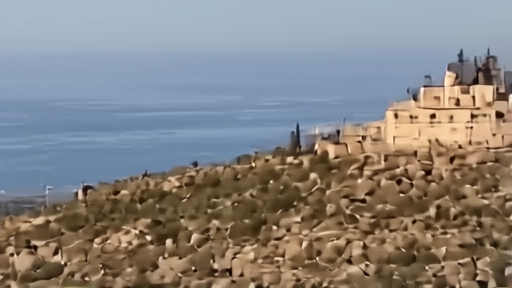
Beaufort Castle has become a test of whether the ceasefire map means what the ceasefire language says.
Monday's paper said Beaufort pulled Lebanon into the deal map. That was not antiquarian interest in a fortress. It was a claim about geography. If Israeli forces sit beyond lines that a Lebanon de-escalation is supposed to address, then the castle is not only a military symbol. It is a compliance object.
ABC reported that Israeli forces captured Beaufort Castle in southern Lebanon, crossed beyond the Litani River, and that France requested an emergency U.N. Security Council meeting after the advance. [1] SBS, in its Iran framework story, tied Beaufort and the U.N. request to Iran's insistence that Lebanon and Gaza be included in any deal. [2]
The castle therefore sits in three files at once. It is a battlefield position. It is a Security Council question. It is a condition in Iran-related diplomacy. A real ceasefire has to explain all three.
That matters because a map can expose what communiques conceal. A statement that hostilities will halt is weak if the parties do not agree where forces are supposed to be, who confirms withdrawal, and whether the Litani line, Beaufort, and nearby villages fall under the same rule. France's move to the Security Council suggests the dispute is not merely local. Iran's use of Lebanon as a negotiating condition makes it regional.
The divergence is predictable. Mainstream coverage can describe Beaufort as a military advance or a heritage-site seizure. Online discourse turns the image into a flag, a humiliation, or an occupation symbol. Both frames are emotionally legible; neither is sufficient.
The useful question is narrower. If Washington says calm is coming, if Israel says its obligations are conditional, if Iran says Lebanon can stop the talks, and if France wants the Security Council involved, then Beaufort becomes a ruler laid across the settlement. Who holds it, who leaves it, and who verifies it will say more than another sentence about de-escalation.
The next document to watch is not a battlefield photograph. It is a Security Council statement, draft, veto threat, or ceasefire text that names the map.
-- YOSEF STERN, Jerusalem