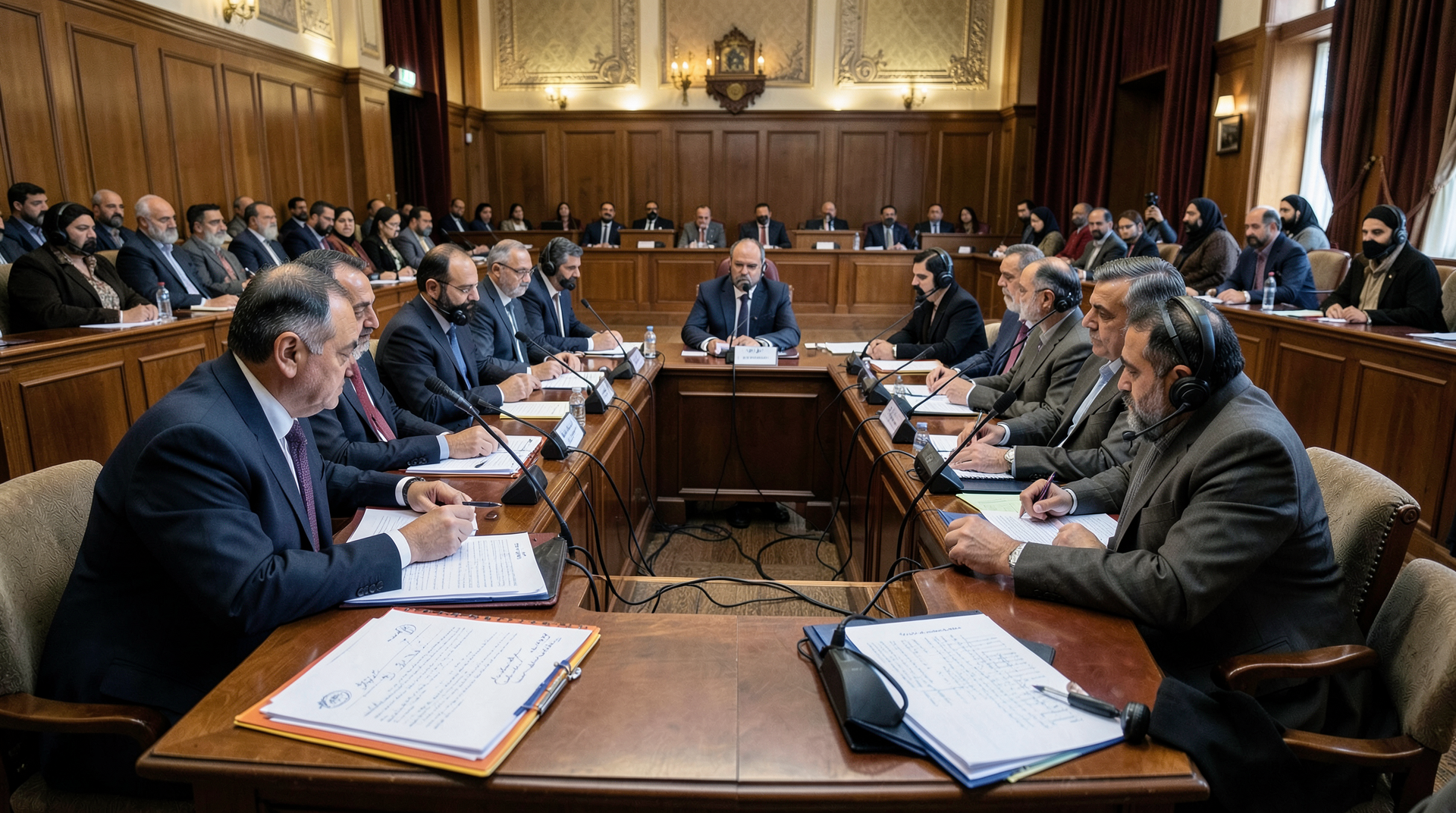
Mohammad Bagher Ghalibaf has made the returned Iran draft harder to treat as a peace headline. SBS reports that President Trump sent back a tougher framework with amendments, and RTHK, carrying AFP, reports that Iran's parliament speaker said no agreement would be approved unless the rights of the Iranian people were secured. RTHK also says Iran has demanded access to roughly $12 billion in frozen assets. [1] [2]
That follows Monday's lead, in which the paper argued that returned text could not be judged apart from rights language, strikes, Kuwait, and Lebanon. It also follows the separate June 1 article that said Ghalibaf's rights line would become the test for any published draft. Tuesday does not replace that position. It names the test more clearly and still lacks the document. [1] [2]
The missing document matters more than the adjectives around it. SBS says Iran does not trust the United States after Trump sent back the framework with amendments. RTHK says exchanges on the text are ongoing and details remain unclear. Those sentences are not equivalent to the draft itself. They are descriptions of a private or unpublished instrument. Readers can know that the exchange exists as reported. They cannot know whether the text meets Ghalibaf's standard. [1] [2]
The rights language is not a decorative demand. In Tehran's political system, a parliament speaker's public threshold gives later acceptance or rejection a domestic test. If a deal appears, it should be read against the question Ghalibaf has placed on the table: which rights are secured, by whom, and in what words. If a deal fails, readers should ask whether the failure comes from that same condition or from a separate dispute dressed in its language. [1] [2]
The frozen-asset demand sharpens the test because it is more concrete than dignity language. RTHK reports Iran's demand for access to about $12 billion in frozen assets. That figure does not settle the nuclear, shipping, basing, or Lebanon questions. It does give the draft a measurable economic line. A public document could say whether assets move, under what compliance schedule, and with what enforcement mechanism. A press account cannot substitute for that language. [2]
The divergence is familiar. Mainstream reports can turn the exchange into progress because the sides are still trading text. X discourse can turn the same exchange into surrender, betrayal, or fake diplomacy because no one can inspect the clauses. The paper's position sits between those reflexes. A returned framework is a development, but it is not a settlement. A rights demand is a real political line, but it is not proof the line will survive negotiation. [1] [2]
Lebanon and Hormuz stay in the room even when the headline says Iran draft. The thread memo's position is that rights language, U.S. strikes, Kuwait reports, Beaufort, Litani movement, France's Security Council request, and Tyre hospital injuries now sit in one diplomatic file. A draft that ignores those operating facts would be choosing silence. A draft that names them would be admitting the settlement has outgrown the nuclear paragraph. [1] [2]
That is why the public should ask for artifacts, not atmospherics. Does the returned U.S. draft name Iranian rights or only nuclear limits? Does it say anything about frozen assets? Does it cover Hormuz fees, tolls, or passage rules? Does Lebanon appear in the text or in a side letter? Does it address Israeli freedom of action, Gulf basing, or enforcement after reported strikes? The available sources make those questions fair. They do not answer them. [1] [2]
The article should also avoid mistaking distrust for an outcome. SBS reports Iran says it does not trust the United States. Distrust can be a reason to reject a deal, a negotiating posture, or a demand for more explicit guarantees. The only way to distinguish those options is through the text, the signatures, the timetable, and the institutions that must approve it. [1]
For now, Ghalibaf has done one useful thing for readers: he has made vague deal talk testable. Rights, assets, and approval are harder to wave away than optimism. If the draft becomes public, it should pass or fail against those words. Until then, the story is not a peace deal. It is a returned draft under a named Iranian condition. [1] [2]
-- YOSEF STERN, Jerusalem