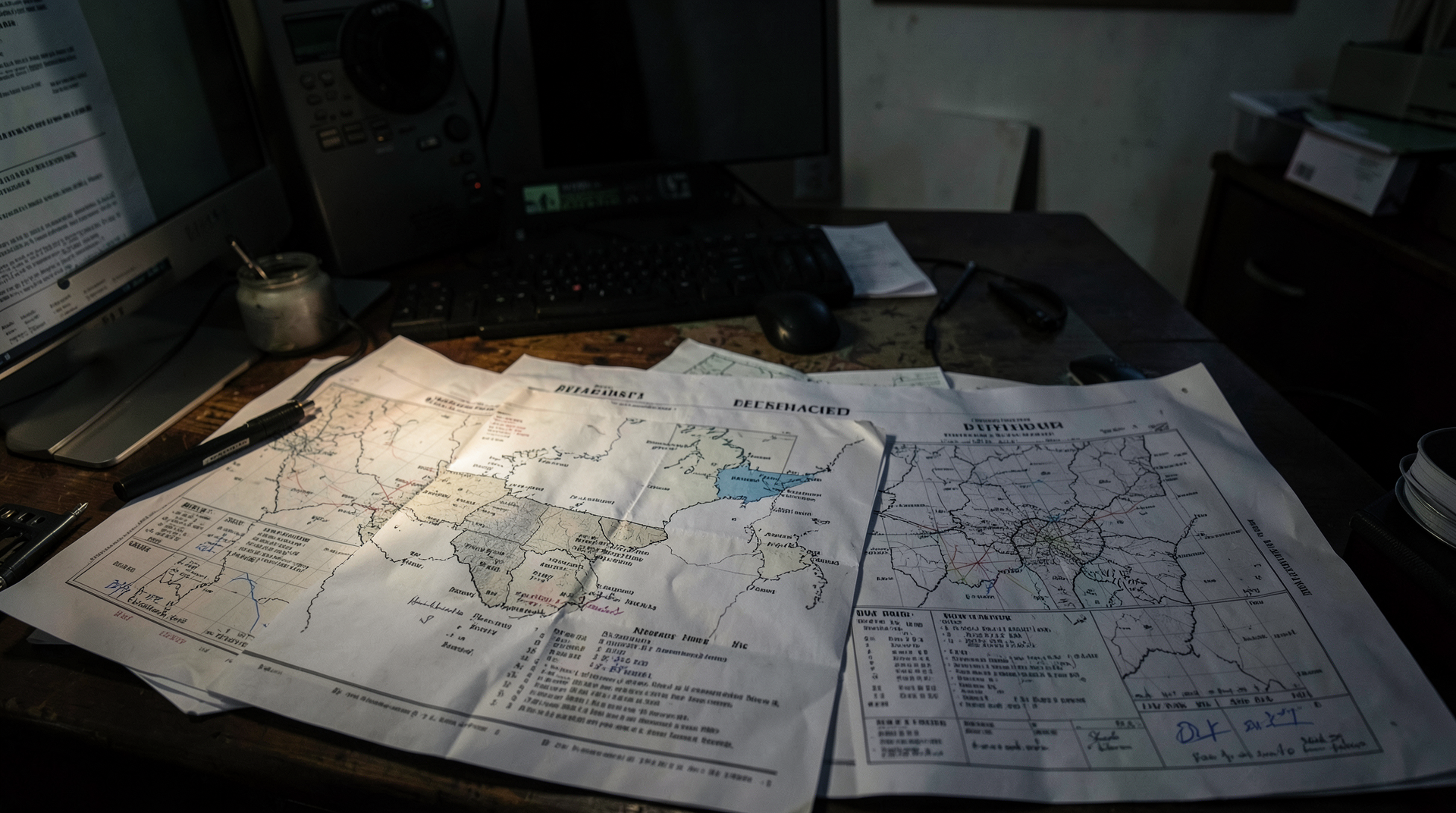
Trump sent back Iran deal text with changes while the military record around the negotiation widened. KOAM, carrying CNN's report, says the president returned proposed edits focused on nuclear commitments and Hormuz assurances. RTHK, carrying AFP, says Iran's parliament speaker Mohammad Bagher Ghalibaf insisted no agreement could pass until the rights of the Iranian people were secured. The cited live and wire files keep the same talks beside U.S. strikes, Kuwait reports, Lebanon fighting, and Israeli claims about missile infrastructure. [1] [2] [3]
That is a sharper version of what Sunday's lead said. The paper's May 31 account of Ghalibaf's rights condition argued that optimism was not a deal until public language explained rights, Lebanon, Hormuz, basing, and enforcement. Its companion account of the IDF move north of the Litani said the map was already disciplining the rhetoric. Monday's sources do not undo that position. They add receipts to it. [1] [2] [3]
The first receipt is textual. KOAM's report says Trump sent back deal text with changes, while RTHK's AFP file says the exchange was still underway and quotes Iranian officials warning against speculation. Ghalibaf's line matters because it is not a casual television objection. It places domestic institutional approval into the public record. If Tehran later accepts a draft, readers can ask which rights were named and who judged them secured. If Tehran rejects it, readers can ask whether the rejection follows the same standard or merely borrows it. [1] [2]
The second receipt is kinetic. ABC's June 1 live file and KOAM's report both put fresh U.S. action into the same news frame. The research stack describes weekend self-defense strikes at Goruk and Qeshm after a U.S. MQ-1 shootdown claim. Al Jazeera's liveblog also pairs the Iran file with escalating regional alarm and Kuwait missile or drone reports. The precise tactical details remain bounded by the cited reports, but the political consequence is plain: a Senate, a foreign ministry, or a negotiator can no longer discuss the draft as though the only facts are clauses on a page. [1] [3] [4]
The third receipt is Kuwaiti. The research record says Al Jazeera and KOAM both pair U.S. strikes with reports involving Kuwait. This paper should not turn that into a definitive damage assessment, launch attribution, or legal conclusion without a clean official source. It can say something narrower and more useful: Kuwait has entered the same operating file as the Iran text. That gives congressional war-powers arguments a regional-airspace fact pattern and gives Gulf states a harder question than whether they prefer calm. [1] [4]
The fourth receipt is Lebanon. The Guardian's live coverage and Al Jazeera's liveblog report Israel's expanding invasion of Lebanon drawing global alarm, while ABC keeps Lebanon on the same diplomatic surface as Iran. The Guardian and other sources in the research stack say France sought a UN Security Council meeting after Israel's Beaufort and Litani movement. These are not decorative battlefield updates. They are the facts any serious regional settlement has to address or deliberately exclude. [3] [4] [5]
There is a common bad version of this story. It says the deal is dead because there are strikes. There is another bad version. It says the deal is close because there is a text. The sources support neither. They support a harder, less satisfying sentence: a proposed text is moving through public and private channels while the operating record around it keeps adding military, parliamentary, Gulf, and Lebanese facts. That is not closure. It is a test of whether the document can carry the field it claims to settle. [1] [2] [3]
Ghalibaf's rights language also prevents Washington from treating Iranian acceptance as merely technical. If a draft asks Tehran to make nuclear commitments, to supply Hormuz assurances, or to accept enforcement language, the source stack now contains a public Iranian political standard. Rights can be a sincere threshold, a bargaining word, or an exit ramp. The article cannot know which. It can insist that the word is now in the public record and that any U.S. description of the deal should say how the returned text addresses it. [1] [2]
The U.S. strike reports prevent Tehran from treating the draft as a clean diplomatic exchange. If U.S. forces conducted self-defense strikes while the president sent back tougher text, the draft arrives with force in the margins. That does not prove bad faith. It does mean the record a reader should examine includes CENTCOM action, regional interception claims, and the still-unpublished settlement language. The difference matters because diplomacy after kinetic action is not diplomacy in a vacuum. [1] [3]
Lebanon prevents both sides from pretending the negotiation is only about uranium. The Guardian, Al Jazeera, ABC, and Times of Israel source stack behind the Lebanon story says the Beaufort and Litani advance is now a formal regional issue, not an afterthought. A deal that leaves Israeli freedom of action undefined would not be silent by accident; it would be choosing ambiguity. A deal that names Lebanon would be admitting what the map has already shown. [3] [4] [5]
The responsible reader should therefore ask for documents, not moods. Where is the current text? Which U.S. edits were sent back? Which Iranian institution must approve them? Does the draft name Hormuz tolls, fees, or passage rules? Does it address Lebanon and Israeli freedom of action? Does it say anything about Kuwait, Gulf basing, or enforcement after a claimed shootdown and strikes? The source stack makes each question legitimate. It does not answer them. [1] [2] [3]
That is the point of the front page. Monday's Iran story is not that peace is fake, war is inevitable, or Trump has solved the region with a returned paragraph. It is that the public claim now has a public operating record. Text edits, Iranian rights language, U.S. strikes, Kuwait reports, and Lebanon facts all sit in the same file. Any article that covers only one of them is not wrong enough to correct. It is incomplete enough to mislead. [1] [2] [3] [4] [5]
The operating-record standard also protects the article from making diplomacy sound cleaner than it is. A returned text can be a serious bargaining move, a stalling device, or a way to shift responsibility for failure. A strike can be a discrete self-defense action, a coercive signal, or a fact negotiators later try to bracket away. A Kuwait report can remain narrow and still matter because Gulf airspace is part of the political geography. A Lebanon advance can be local in command and regional in consequence. The article does not need to choose the most dramatic version of any one line. It needs to keep them from being separated for the reader's convenience. [1] [3] [4]
That is why the absence of verified X posts is not a weakness here. The discourse frame is obvious enough without embedding an unverified status URL: one camp will treat every changed clause as proof that Trump is imposing discipline; another will treat every strike as proof that talks are a sham. The source stack supports a better discipline. It says the text exists as a reported exchange, the rights demand exists as a public Iranian line, the strikes and Kuwait reports exist as operating claims, and Lebanon exists as a field fact. The paper should stay there until a document, roll call, military statement, or diplomatic filing changes the record. [1] [2] [3]
-- YOSEF STERN, Jerusalem