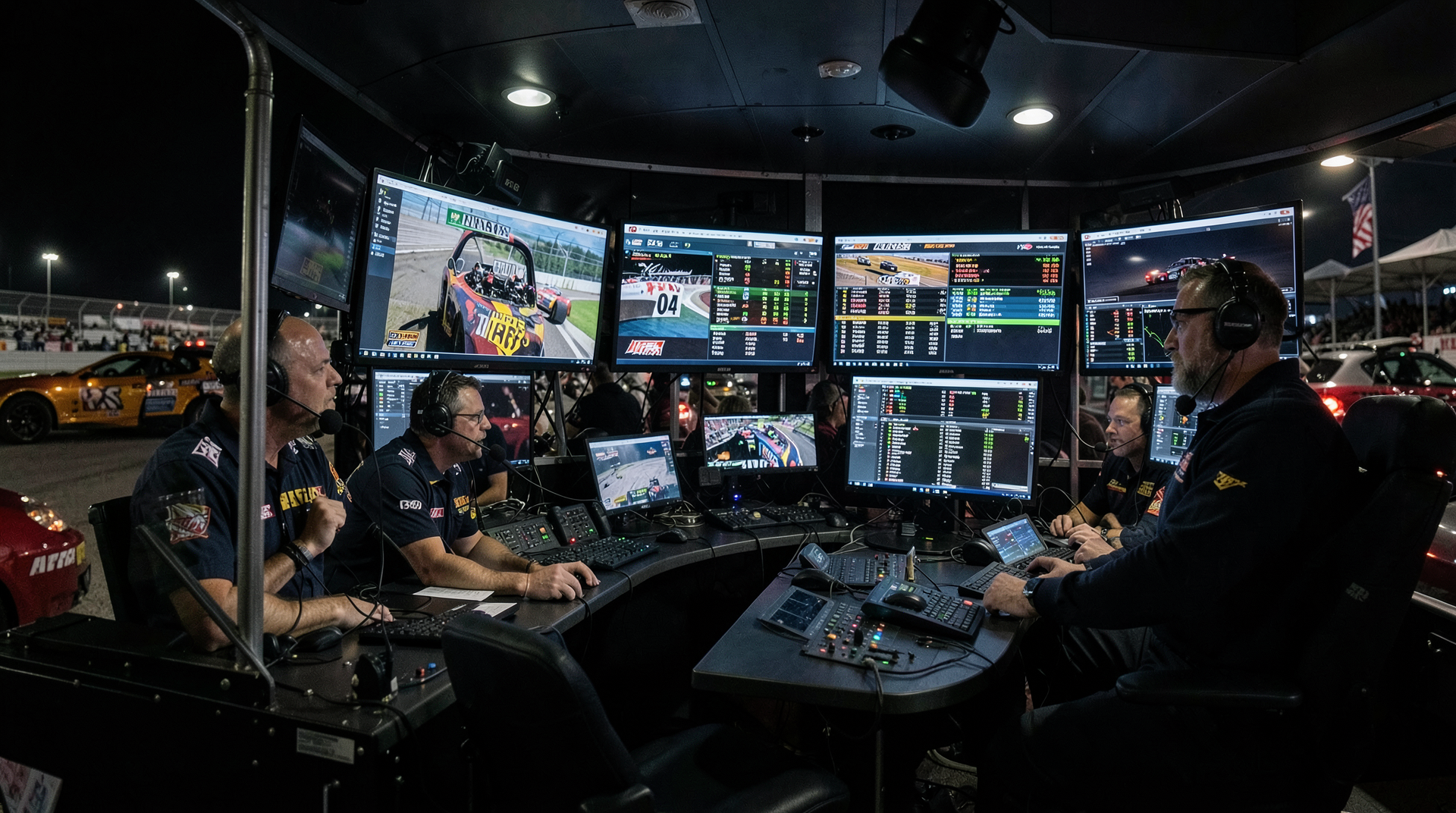
The Coca-Cola 600 on Prime Video produced two audience results, and both are real enough to mislead if printed alone. Sports Media Watch reports that Nielsen's Big Data plus Panel method gives the race 3.06 million viewers, up 12 percent from last year. The panel-only method gives it 2.65 million viewers, up 1 percent. [1]
That is exactly the problem Monday's paper described when it said one NASCAR race had split into two results. It also follows the paper's broader sports rule that ratings need Nielsen and Adobe labels. Tuesday's file gives the rule teeth. A number without a method is not a lie. It is an unfinished sentence. [1]
The difference is not academic. Sports Media Watch says Big Data plus Panel uses set-top-box and smart-TV data in addition to Nielsen's traditional panel. Prime is one of the platforms included in that expanded measurement. Panel-only relies on the traditional sample. That means the same broadcast window can tell two different business stories: a strong streaming lift under one method, or an almost flat year-over-year race under another. [1]
Advertisers, leagues, teams, and fans all want one clean verdict. Sports rarely provides it. A live event is a game, a commercial product, a platform test, and a measurement exercise at the same time. The driver crosses one finish line. The audience number crosses several. Prime's NASCAR debut shows why the rights economy cannot be covered as though the meter is invisible. [1]
The peak audience makes the split even clearer. Sports Media Watch reports that Big Data plus Panel put the peak at 3.37 million around 9:15 p.m., while panel-only put the peak at 3.1 million around 7:15 p.m. Those are not just two totals. They describe different audience behavior across the same evening. One method says the late race carried the high point. The other says the earlier window did. [1]
This is the divergence. Mainstream sports-business coverage wants the headline that Prime had a record NASCAR audience. X wants the argument: streaming worked, streaming failed, NASCAR is healthy, NASCAR is fading, Amazon saved the race, Amazon hid it. The paper should refuse the temptation. The interesting fact is that each side can find a number if it strips off the label. [1]
There is a human story here too, and it is not separate from the spreadsheet. NASCAR's audience has always been partly communal: family rooms, garages, bars, campgrounds, and race-day rituals. Streaming changes not only where the race is watched but how watching is counted. A smart-TV dataset may see one household differently from a panel. A streaming platform may report an audience that broadcast nostalgia cannot quite compare. The method is part of the culture. [1]
For NASCAR, the danger is not that one of the two numbers is embarrassing. The danger is that the sport, its partners, and its critics learn to select whichever number flatters the argument of the day. If growth is the story, print 3.06 million and 12 percent. If stagnation is the story, print 2.65 million and 1 percent. If journalism is the story, print both and explain why they differ. [1]
For Prime, the split is a business lesson. Streaming rights are bought on the promise that a platform can gather and describe an audience better than old television could. But better description often means more complicated description. The rights holder may want a single success metric; the measurement system produces a map. [1]
For fans, this may feel like a joyless argument about meters when the race itself was the point. It is not. Measurement decides which races move to which platforms, which sponsors pay for which windows, and whether a league can argue that streaming preserves the audience it once had on television. The number is part of the sport's future schedule. [1]
The next race should be judged by the same rule. Was the number panel-only, Big Data plus Panel, first-party platform data, or some combination? Was the comparison to cable, broadcast, a prior Prime event, or a holiday weekend? Did the audience grow, or did the yardstick change? The Coca-Cola 600 is useful because it makes those questions unavoidable before the triumphal sentences arrive. [1]
-- AMARA OKONKWO, Lagos