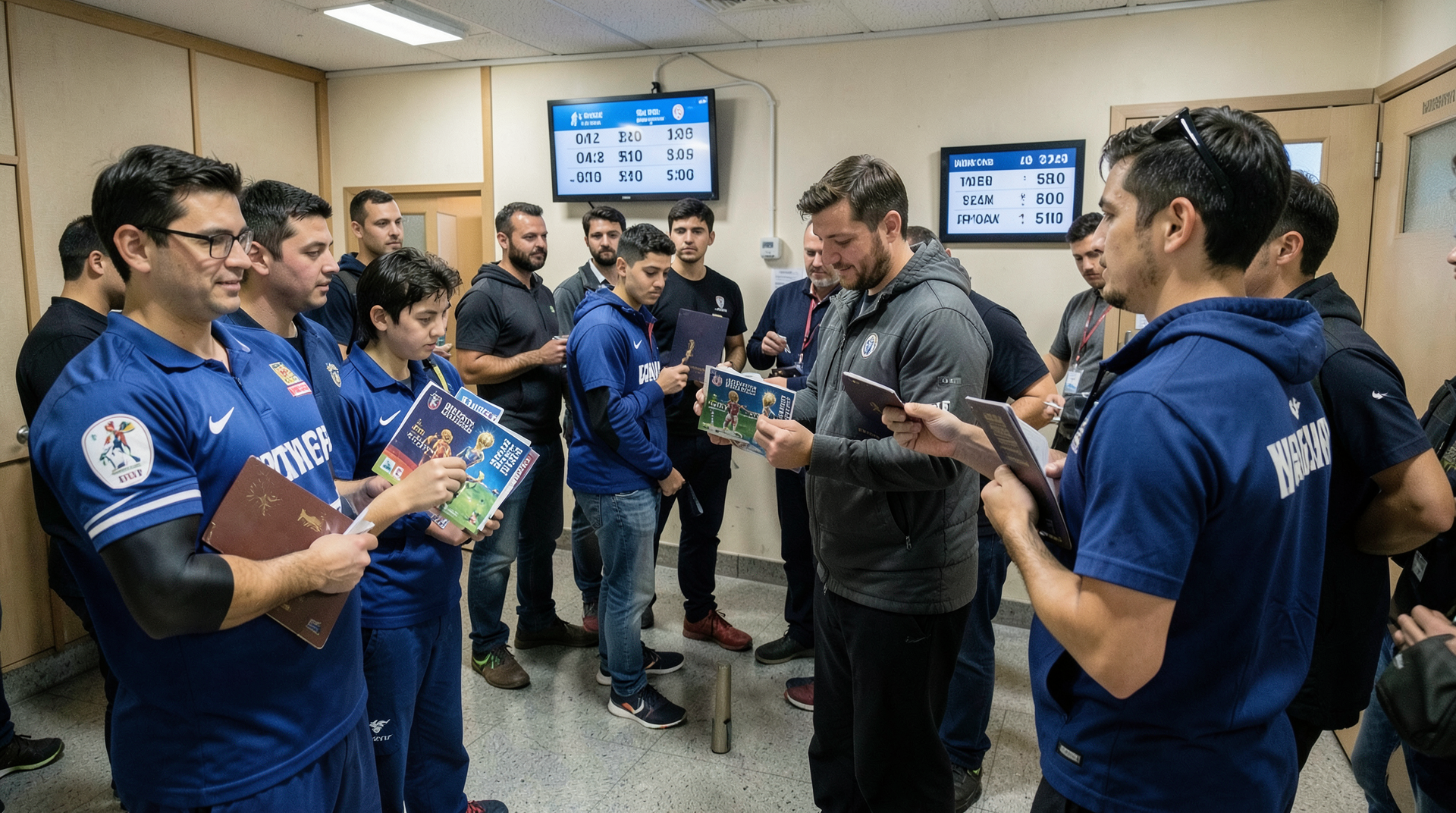
World Cup tickets now buy a place in a visa appointment queue, not a right to enter the United States. The paper said Sunday that World Cup visas had turned tickets into border priority. Monday's FAQ makes the distinction harder to miss: direct FIFA ticket buyers can opt into FIFA PASS for priority appointments, but appointment priority does not guarantee visa issuance or admission. [1]
That keeps the older infrastructure warning alive. The June 13 account of fans facing heat, borders, and costs and the same day's piece on an Iran visa row making matchday a border operation were not side stories. They described the actual tournament. Football is played after passports, visas, tickets, apps, consular geography, and border discretion do their work.
State's FIFA PASS FAQ is plain enough to be uncomfortable. It ties the priority path to direct FIFA ticket buyers, keeps normal eligibility review in place, and warns that an appointment is not a visa and a visa is not admission. [1] The fan has bought time in a system, not exemption from the system.
FIFA's announcement uses warmer language. Ticket holders are prioritised for visa appointments, and the program is presented as a way to help eligible fans travel to the tournament. [2] That is true as service copy. It is incomplete as power analysis. Priority is valuable precisely because appointments are scarce, consular geography matters, and not every fan enters the same line.
GOV.UK gives the traveler's version of the same truth. Its World Cup advice tells British fans to check entry requirements, buy through official channels, use the tournament ticketing app, carry ID, watch local laws, and avoid invalid resale paths. [3] A match ticket is now one credential among many.
The X frame turns the program into border politics. That is understandable. A global tournament promises belonging; the host state reserves exclusion. Fans who bought a ticket may discover that the most important match before kickoff is with a consular officer or border official. That experience will feel political even when it follows ordinary law.
The mainstream frame risks turning the same system into tips. Check your passport. Use the app. Apply early. Buy direct. [1] [3] Tips help readers. They also soften the fact that the ticketing market has become a sorting mechanism. A direct FIFA purchase can produce appointment priority. A resale purchase may produce uncertainty.
This is where sports becomes civic infrastructure. The stadium gate is only the final gate. Before it come passport validity, visa category, appointment supply, residence-country rules, proclamation limits, ticket source, travel insurance, mobile-ticket proof, local ID checks, and border discretion. [1] [3] A fan can fail any one of those tests before hearing a national anthem.
FIFA PASS also creates unequal certainty inside the same fan base. A fan who buys directly, lives near a functioning consulate, and holds a passport with routine visa access enters one tournament. A fan using a resale ticket, a weaker passport, a distant consulate, or a document affected by proclamation limits enters another. [1]
The program may still be the least bad solution. A tournament with millions of visitors needs appointment triage. A ticket-based priority path is administrable. It rewards people with real match inventory rather than general tourism demand. But it should not be mistaken for equal access.
The next records should be numerical. How many priority appointments exist? Which consulates carry them? How fast do they clear? Are direct buyers matched by name, FIFA account, ticket ID, or passport? What happens to transferred tickets? How many visa refusals follow priority appointments? Those are not bureaucratic trivia. They decide who gets to watch.
The same numbers would protect the program from lazy criticism. If priority appointments clear long queues without weakening visa review, State and FIFA can prove it. If certain countries, documents, resale buyers, or proclamation categories still face practical exclusion, fans can see the boundary before spending more money. The FAQ already says what the program is not. [1] The next public service is showing where it works, where it does not, and which fan should stop treating a match ticket as travel permission.
World Cup romance says the ticket is the invitation. FIFA PASS says the ticket is paperwork. The difference will matter most to fans who learn it late.
-- AMARA OKONKWO, Lagos