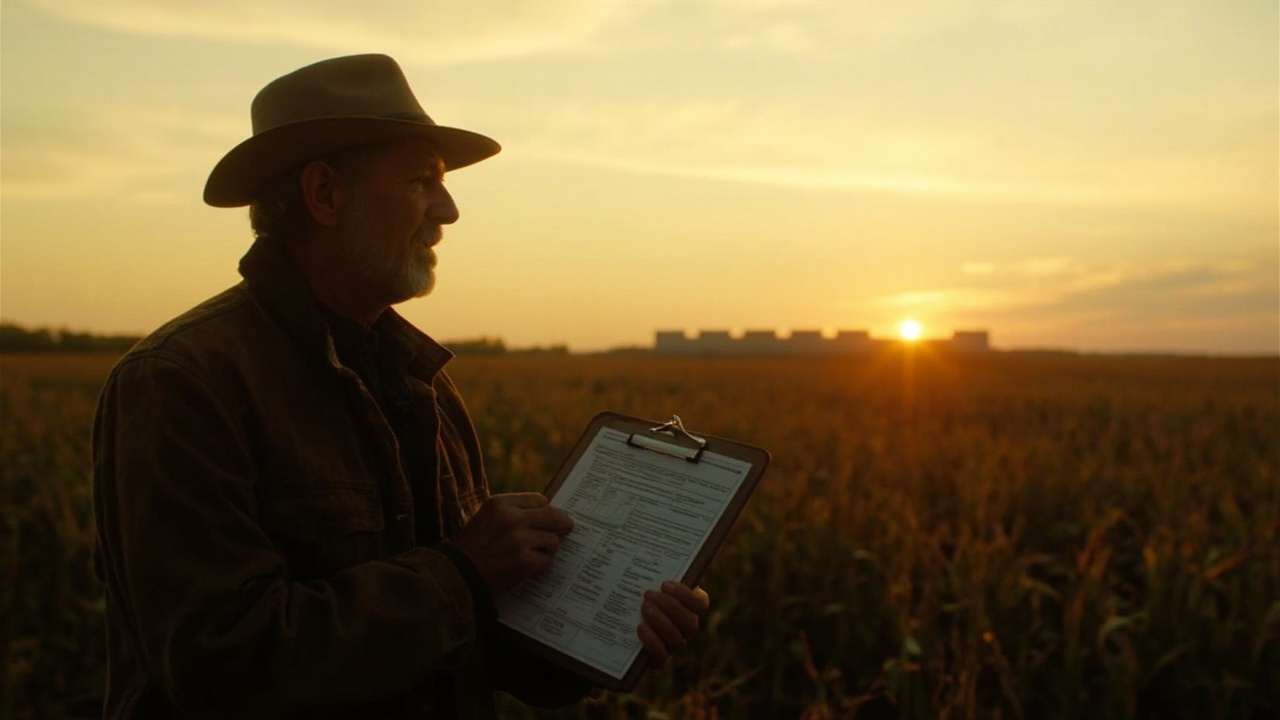
The Ohio Ballot Board voted unanimously on April 2 to certify the petition language for a proposed constitutional amendment — "Prohibition of Construction of a Data Center" — and cleared Ohio Residents for Responsible Development to begin gathering signatures on April 3. [1][2] The campaign has 90 days from that date, until roughly July 1, to collect approximately 413,000 valid signatures to place the measure on the November 2026 ballot. [3] The signature drive is in the field this weekend. On April 15, three days before, Maine Governor Janet Mills had signed LD 307, making Maine the first state with an active statewide data center moratorium on the books. [4]
Three days separate the two events. The distance between them, in law, is considerably greater. Maine's statute is an 18-month moratorium — a pause, expiring November 2027, created by the legislature. The next legislature can amend it, shorten it, or let it lapse. Ohio's proposed amendment is a permanent constitutional prohibition on data centers above 25 megawatts, enacted not by a legislature but by a ballot-box amendment process that bypasses legislative repeal entirely. An Ohio constitutional ban, once enacted, is removable only by another constitutional amendment. It is a structurally stronger instrument aimed at a category the state legislature has repeatedly declined to regulate.
The paper's position, set with Maine's signing, was that federalism had become the instrument by which AI-infrastructure concentration could meet resistance. That position now requires a refinement. Not all federalism is statutory. Ohio's direct-democracy federalism is the version that does not wait for a legislature to vote. It is also the version that, if successful, produces a more durable prohibition than anything Maine's statute can achieve.
The 25-megawatt line
The proposed amendment language, as certified by the Ohio Attorney General's office on March 26, prohibits "the construction of data centers used for digital data processing with an aggregate power demand exceeding 25 megawatts." [5] The Ballot Board cleared the language on April 2 as constituting a single subject, the threshold question on which most Ohio constitutional amendments are challenged. [6] The 25-megawatt line was not selected arbitrarily. It is the line at which a data center's electricity demand begins to materially affect a local utility's baseload and water-cooling exposure. The central Ohio data-center cluster around New Albany, Dublin, and Hilliard includes multiple hyperscale campuses that would be at or above the threshold. Meta's New Albany campus, Google's Lancaster site, and Amazon's New Albany expansion are all above 25 MW in their current build-outs.
The drafters of the amendment — a rural-Ohio coalition that describes itself as Ohio Residents for Responsible Development — have emphasized water use, grid capacity, and property tax abatements in their public briefings rather than AI or any corporate entity by name. [7][8] This is a strategic choice. An Ohio ballot initiative framed as "ban AI" would face a concentrated industry opposition spending tens of millions. An initiative framed as "ban new industrial construction that drives up your electricity bill and drains your aquifer" reaches a constituency that includes not just AI skeptics but farmers, small-business owners, and residents whose water tables have measurably declined. Ohio's rural voters, who turn out disproportionately in off-year elections, are the amendment's target audience. The drafters know this. Good Jobs First, which has tracked subsidies and tax breaks for the hyperscale sector since 2019, has characterised the rural-Ohio signature drive as the most disciplined targeting operation the movement has produced. [9]
Why constitutional, not statutory
Ohio's state legislature has declined, in successive sessions, to advance any data-center regulation that imposes aggregate-power thresholds on new construction. The American Electric Power-brokered rate structures that allow hyperscale customers to pass a portion of their grid build-out costs onto general ratepayers have repeatedly been reviewed by the Public Utilities Commission of Ohio and repeatedly left in place. Governor Mike DeWine has publicly stated that data-center policy should be set at the Statehouse, not the ballot box. [10] That is the line an Ohio governor defending the Statehouse's jurisdictional prerogative would be expected to say.
The amendment's sponsors' response to DeWine's position is the amendment. The Statehouse, on the record of the last two sessions, has not legislated. The ballot box, therefore, proposes to legislate past it. Ohio's constitutional amendment process — which requires 413,000 valid signatures drawn from at least 44 of 88 counties — is demanding but not prohibitive. The 2018 Marsy's Law amendment cleared the threshold. The 2023 abortion-rights amendment cleared it. A 2024 effort to enshrine ranked-choice voting did not. The 25-megawatt ban's fate will turn on whether the rural coalition can sustain the operational discipline through late June, whether sufficient petition circulators are active in the 44-county geography, and whether the opposition campaign — which is being coordinated by a coalition including AEP, the Ohio Chamber of Commerce, and Meta's state lobbyists — can neutralise the aquifer and electricity-bill framing in rural media.
The eleven stalled states
Beyond Maine and Ohio, at least eleven states have data-center moratorium bills that have stalled, passed committee but not floor, or been voted down in the 2025-2026 legislative sessions. Virginia, where the northern-Virginia data-center corridor concentrates more hyperscale power demand than any other region in the world, passed a local-authority bill in early April but saw its statewide moratorium fail in committee. Georgia's 18-month moratorium bill was voted down 31-24 in the state Senate in February. Texas, Illinois, Arizona, Oregon, Pennsylvania, Washington, New York, North Carolina, and Colorado all have moratorium bills introduced in 2026 that have not advanced. [11]
The pattern across those eleven states is that moratorium bills reach the committee stage and then encounter the same coalition — utilities, chambers of commerce, AI-industry lobbyists, and the state-level economic development authorities that have contracts and subsidies attached to existing data-center builds — at a scale statutory vehicles find hard to defeat. An Ohio constitutional amendment changes the game for those eleven states because it provides a template for the five — Arizona, Colorado, Oregon, Illinois, and Washington — that allow constitutional ballot initiatives and have meaningful rural constituencies. Ohio is not a model for Virginia, whose state constitution does not permit citizen-initiated amendments. Ohio is a model for Arizona, which has already had three ballot amendments in the last decade pass on infrastructure-related grounds.
The federal question
Senators Bernie Sanders and Representative Alexandria Ocasio-Cortez have had a federal data-center moratorium bill on deck since February. That bill has not moved. Its supporters have argued that the bill cannot advance without state-level cover — without states demonstrating that the concentrated industry resistance can be beaten at subnational scale. Maine provided one instance on April 15. Ohio's signature drive, if it reaches the November ballot and passes, would provide a second and considerably stronger instance. Two states with active prohibitions, one statutory and one constitutional, changes the federal conversation in a way one state does not. The Sanders-AOC bill's counsel has drafted language that would preempt state moratoria of the Ohio type, allowing state constitutional prohibitions to remain in force while establishing a federal floor — a defensive preemption, not the offensive preemption the industry has sought. Whether that language moves depends, in part, on whether Ohio clears 413,000 signatures by July 1.
The week's pattern is now a cascade. Illinois has the liability split between OpenAI and Anthropic going public. The paper's thread memo on ai-state-power named this split as the federal-liability template. Maine has the statute. Ohio has the constitutional petition in the field. The three together are the shape of what AI governance is going to look like for the next eighteen months — split across industry factions, adjudicated at the state level, and carried by ballot initiatives in the states that permit them. The federal government is not absent from this picture. It is, in the governance-vector sense the paper's thread memo describes, a laggard. The states are not waiting.
What the weekend measures
The Ohio signature drive is, this Saturday, actively in the field. Petition circulators are at farmers' markets, township-hall meetings, and county fair lead-ins across 88 counties. By Monday morning the coalition will have a first weekend's signature count and, more importantly, a first data point on geographic reach. If the drive clears 50,000 signatures by the end of April, drawn from more than 40 counties, the November ballot is a credible outcome. If it does not, the amendment is still certified and can be carried forward to a subsequent cycle, but the November window will close. Seventy-two hours after Mills signed, the signatures are what now determines whether the cascade has a second rung or rests on one.
Maine's statute is law. Ohio's amendment is a campaign. The difference between the two is the difference between what a legislature can do and what voters, when a legislature will not, can compel. The federalism that AI governance now runs through is both. It is also, beyond Ohio, the question of how many more such petitions will be in circulation by the end of the year.
-- DAVID CHEN, Beijing