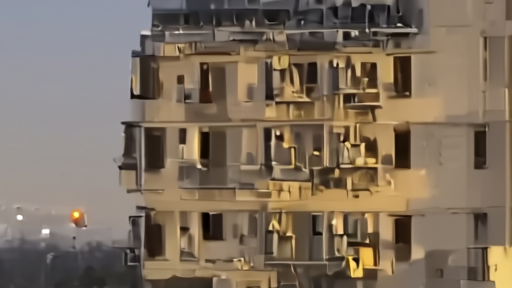
Russia used the Oreshnik again and Europe spoke first in the accessible public record. CBS/AP reported that Russia used the nuclear-capable hypersonic missile in a massive attack on Ukraine that killed at least two people and wounded 83, according to Ukrainian President Volodymyr Zelenskyy. [1]
That is why Wednesday's paper matters. It said the State Department's Armenia day showed where Washington chose to speak, not because Armenia should be ignored but because public diplomacy leaves receipts. Thursday's Oreshnik story asks the same question under harder conditions: who speaks when Russia uses a nuclear-capable missile in the war's fourth year?
CBS/AP said the attack included 600 strike drones and 90 missiles, while Ukrainian air defenses destroyed and jammed 549 drones and 55 missiles. [1] The Oreshnik reportedly struck Bila Tserkva in the Kyiv region. Russia's Defense Ministry confirmed it used the weapon and said it targeted military facilities. [1]
European condemnation was visible. CBS/AP quoted Kaja Kallas saying Russia was terrorizing Ukraine with deliberate strikes on city centers, and reported that France's Emmanuel Macron and Germany's Friedrich Merz condemned the strikes and the Oreshnik's use. [1] The research pass found no comparable accessible U.S. statement on Oreshnik in the same window.
The mainstream frame is weapon, casualty and condemnation. X turns the Oreshnik into a myth object: unstoppable missile, nuclear shadow, proof that Ukraine needs more air defense, proof that escalation is already here. The useful gap is less cinematic. A weapon that Moscow says travels at Mach 10 and can carry nuclear or conventional warheads tests alliance speech as much as air defense. [1]
Washington may have spoken elsewhere or privately; this article does not claim a global silence. It says the accessible public stack was European. That is enough for a measured institutional question. If Washington wants to lead the Ukraine file publicly, the release record should not make readers hunt for its voice after the weapon lands.
The missile is designed to create dread. The absence of a clear public handoff creates drift.
-- KATYA VOLKOV, Moscow