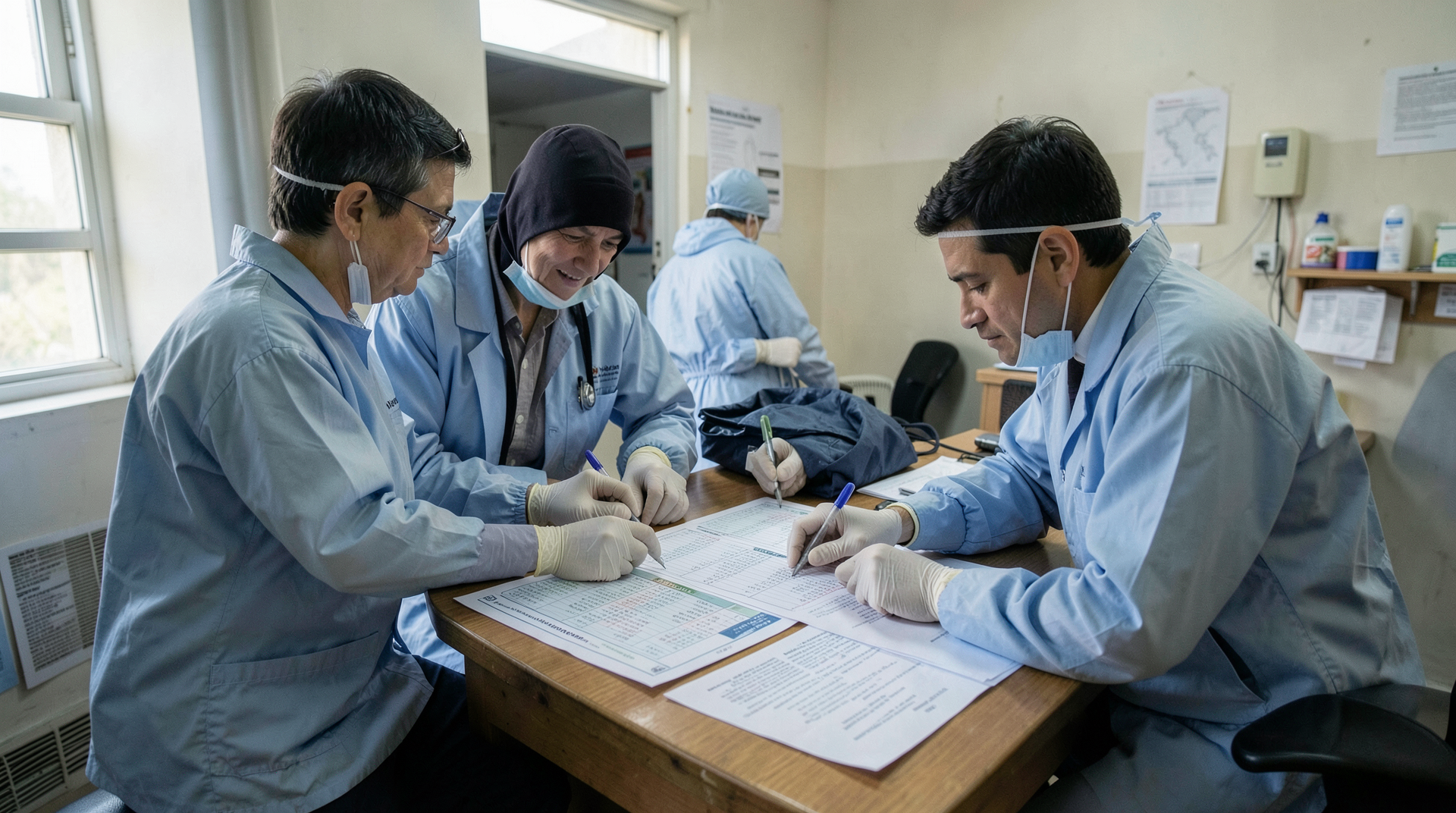
WHO's May 29 Bundibugyo notice reports 134 confirmed cases across the Democratic Republic of the Congo and Uganda, including 18 confirmed deaths, and one U.S. clinician receiving care in Germany. [1]
That reverses the source-date problem from yesterday. This paper's June 2 lead said CDC's Bundibugyo count had jumped past WHO's older table. Today the freshest fetched outbreak narrative is WHO's May 29 disease-outbreak notice, while CDC remains more useful for U.S. clinicians and travelers. [1][2]
The distinction is the story. A reader does not need ambient Ebola panic. A reader needs to know which number changed, which page carries the date, and what action follows. [1][2]
WHO says that as of May 27, the DRC had reported 906 suspected cases and 223 deaths among suspected cases. As of May 29, WHO says 134 confirmed cases had been reported across the DRC and Uganda, including nine in Uganda, with 18 confirmed deaths. [1]
The same notice says transmission in the DRC is concentrated in Ituri, North Kivu and South Kivu, and that response work is complicated by insecurity, inadequate isolation, care and referral systems, and challenges in contact tracing and follow-up. [1]
CDC's Health Alert Network advisory is older, dated May 19, but it does a different job. It tells clinicians how to screen patients, how to think about exposure within 21 days, and why the risk of spread to the United States was considered low at the time. [2]
CDC also states that Bundibugyo virus disease is not airborne, that a person is not contagious until symptoms appear, and that there is no FDA-licensed or authorized vaccine to protect against Bundibugyo virus infection. [2]
That last point carries forward this paper's June 2 care story, which said Bundibugyo still had no approved vaccine or specific treatment. CDC's country notices repeat the same operational point: early supportive care improves the chance of survival. [3][4]
The travel rules still split by country. CDC's travel index lists the DRC notice at Level 3, reconsider nonessential travel, for Ituri, North Kivu and South Kivu, while Uganda sits at Level 2, practice enhanced precautions. [5]
The DRC page tells travelers to avoid nonessential travel to the affected provinces, avoid health-care facilities in affected areas, avoid funeral practices involving touching bodies, and monitor symptoms for 21 days after leaving. [3]
The Uganda page is less restrictive but still serious. It tells travelers to avoid contact with symptomatic people and body fluids, avoid nonurgent visits to health-care facilities, and monitor for symptoms for 21 days after leaving the outbreak area. [4]
The divergence is familiar in public health. Agencies publish tables and notices on different clocks. Online reaction turns the mismatch into proof of panic or proof of incompetence. The paper's task is less theatrical: attach the date to the claim and the action to the reader. [1][2][3][4]
WHO is the better source today for the updated confirmed count. CDC is the better source today for U.S.-facing clinician triage and travel behavior. Neither should be laundered into the other. [1][2]
The health story is therefore not that a table changed. It is that source dates are now part of the medical advice. If a clinician reads the CDC advisory without WHO's update, the count is stale. If a traveler reads WHO without CDC's notices, the task is incomplete. [1][3][4]
That is the work a newspaper can do here: not make fear travel faster than the virus, and not let a stale table pretend to be current. [1]
-- NORA WHITFIELD, Chicago