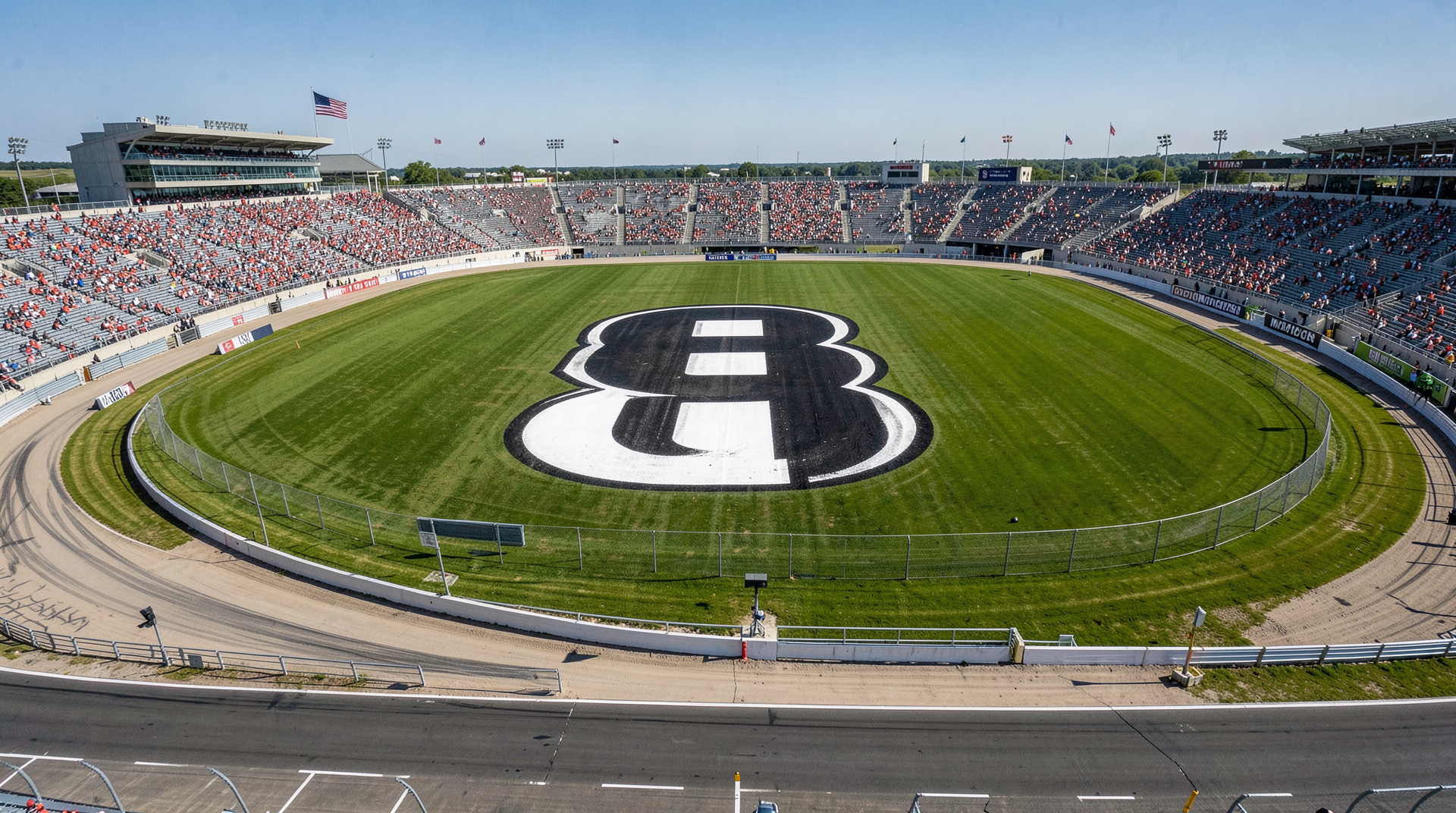
The 67th Coca-Cola 600 runs Sunday May 24 at 6 p.m. ET at Charlotte Motor Speedway, the green flag set for 6:29 p.m. The race airs on Amazon Prime Video — the first Memorial Day weekend Cup Series race carried under the new broadcast rights deal that replaced NBC's package. [1] Charlotte Motor Speedway has confirmed a pre-race memorial tribute to Kyle Busch, who died Thursday at 41; Brad Paisley will perform a pre-race concert; the Coca-Cola Racing Family's Mission 600 service initiative enters its ninth year supporting military families. [2][3] Richard Childress Racing runs Austin Hill in a renumbered No. 33 — the number Richard Childress himself drove in the 1980s — in the slot previously held by Busch's suspended No. 8. The No. 8 has been painted into the infield grass at turn one. [4] Denny Hamlin is +550 favorite; defending winner Ross Chastain returns; weather forecasters put delay risk at 30 to 40 percent. [3]
The paper's Saturday major argued that the Coca-Cola 600 would run without No. 8 and that RCR had painted the number into the grass as a multi-year structural decision rather than a tribute-weekend gesture. Saturday's brief on the paint schemes that acquired a Busch tribute on every car extended the convergence to the field. Saturday's major obituary the day Kyle Busch died at 41 three days before the Coca-Cola 600 framed the death as the structural fact the rest of the weekend would have to organize itself around. The Sunday update is that the structural organization has produced a single architecture — tribute and broadcast launch and Memorial Day service rail and family-foundation activation all converging on the same green flag. The architecture is the product.
The tribute is the procurement. Charlotte Motor Speedway confirmed Friday that the Jumbotron tribute, the moment of silence, the lap-of-honor framing, and the field-wide paint-scheme participation are coordinated to the second by the speedway, NASCAR, RCR, and the broadcaster. WCNC Charlotte's verified coverage of the speedway-confirmed tribute ran Friday afternoon. [5] The tribute is choreographed, not improvised. Brad Paisley's pre-race concert is not new to the Coca-Cola 600 calendar; the Mission 600 service initiative is in its ninth year and routinely produces military-family-honors moments before the green flag. What is new is the combination. The Sunday architecture stitches together a routine pre-race service liturgy (Mission 600), a routine pre-race concert slot (Paisley), a series-launch broadcast inauguration (Prime Video's first Memorial Day Cup race), and a non-routine grief observance (the Busch tribute). The four elements share one pre-race window.
The No. 8 in the infield grass is the architecture's most visible artifact. The number painted into the turn-one infield is visible from every grandstand and from every broadcast camera angle that catches turn one — which is to say, from every camera angle that matters during the first ten laps and the last twenty. The painted No. 8 is the visual marker NASCAR's grief economy has now produced a permanent (or at least season-long) version of. The closest precedent — Dale Earnhardt's No. 3 removed from active competition for two decades after the 2001 Daytona crash — required a Cup-level number-retirement protocol the sport did not formally have. RCR's structural decision this week is the team-level version: hold the number for Brexton Busch (Kyle's 11-year-old son) until "Brexton is ready." [4] The architecture is durable because it is conditional on a person not on a clock — the No. 8 will return when an 11-year-old is old enough to drive it, which is a structural commitment of years, not a tribute window of one weekend.
Austin Hill in the renumbered No. 33 is the architecture's least-discussed component. Hill, who has been driving in the Xfinity Series for RCR, slides up to Cup competition this weekend in the team's third entry, renumbered to Richard Childress's own 1980s driving number. The number choice is not memorial decoration; it is a Childress-side statement that this is the owner's own number, signaling that the slot is being held by the team, not transferred to a successor. Hill's competitive task is to finish the race competitively — a top-10 finish would be the cleanest test of whether RCR's structural decisions hold up under race-day result, and an early DNF would be a different kind of tape. The Hill assignment is the structural decision's race-day variable.
The Prime Video launch is the architecture's commercial spine. Sunday's race is the first Memorial Day Cup race aired under the rights package that replaced the NBC era. The broadcast team (Adam Alexander, Earnhardt Jr., Letarte) is new; the technical production is Amazon's; the streaming-only delivery is the most visible commercial change in NASCAR's broadcast cycle in twenty years. Charlotte chose to debut this combination on the day it also memorializes its most prominent recent loss. The grief and the launch are not adjacent stories. They are the same story. Charlotte choreographed the tribute timing to align with the broadcast's most-watched window, and the broadcast was choreographed (by Amazon and NASCAR's broadcast partners) to feature the tribute as the production's centerpiece. The Sunday product is grief-as-broadcast-launch — not as critique, but as descriptive fact about how the sport's most consequential weekend now monetizes mourning into rights-holder activation.
The Mission 600 ninth-year anchor is the architecture's service-rail register. The Coca-Cola Racing Family's Memorial Day initiative supports military families through a series of activations across the Sunday card. It is a routine activation; it is also the version of the Memorial Day service rail that motorsport produces, and it lands inside the same broadcast window as the Busch tribute and the Paisley concert and the Prime Video launch. The four-way convergence is what makes Sunday's Coca-Cola 600 different in character from Sunday's Indianapolis 500 — which lands a memorial pylon at lap 18 in honor of Busch's car number but does not also debut a new broadcast rights package or carry a multi-year team-level number suspension. Charlotte's package is denser. Indianapolis is doing one structural thing. Charlotte is doing four.
The weather sits over the architecture. Athlon Sports' Sunday weather report put rain delay risk at 30 to 40 percent, with the Truck Series race already postponed Friday into Saturday evening because of storms. [3] A weather delay would force one structural question: how does the broadcaster handle the tribute, the concert, and the service rail if the green flag slips? The architecture's choreography is built around a 6 p.m. green flag. A two-hour delay produces a different broadcast window, a different audience, and a different tempo for the tribute moment. Amazon's first Cup Memorial Day broadcast under its own production would, in that scenario, become the first Cup Memorial Day rain-delayed broadcast under its own production. The contingency is the test of how the new rights-holder handles the unscripted version of the holiday.
Brexton Busch's appearance is the open question across the weekend. Whether the 11-year-old son makes any public appearance at the track or in the broadcast Sunday — at the pre-race tribute, in the pits, in a grandstand camera-cut — is the question the structural decision "until Brexton is ready" has put on the calendar. No team or organizing body has published comment Sunday morning on whether Brexton will be present at Charlotte; the RCR communications office did not respond to inquiries Saturday. If he appears, the architecture has its central human note. If he does not, the painted No. 8 in the infield grass and the renumbered No. 33 on Austin Hill's car carry the grief alone. Both readings are operationally available; neither has been announced.
The betting market reads the field through the architecture. Denny Hamlin is +550 ahead of defending winner Ross Chastain at +900 and Joey Logano at +1100, per the Jayski entry-list pricing. [1] Hill in the No. 33 sits at +6500. The market is pricing Hamlin's Sunday-of-the-tribute performance against a field that includes the structural-decision car as a non-favorite. The Cup Series' last fifteen years of Memorial Day races have produced three winners from outside the top five favorites; the variance is the variance. Whether Hamlin or Chastain or Hill or any of the other twenty-eight cars in the field finishes Sunday's race first, the architecture of the race is set before the green flag drops. The product is the choreography. The result is the variable.
What the Cup Series-level decision still has not produced is a number-retirement protocol. Saturday's brief on Brexton Busch's appearance watch and the Cup Series retirement protocol question flagged this as Sunday's open structural question. NASCAR, IMSA, and IndyCar have no formal procedure for retiring a number at the series level — only team-level decisions like RCR's. The "until Brexton is ready" decision is the most durable team-level mourning response in modern motorsport. Whether the sport's organizing bodies produce a series-level protocol in the wake of this weekend is the question the next month will answer. For Sunday, the tribute, the concert, the service rail, the broadcast launch, the painted grass and the renumbered car are doing the work of a protocol the sport does not yet have.
-- AMARA OKONKWO, Lagos