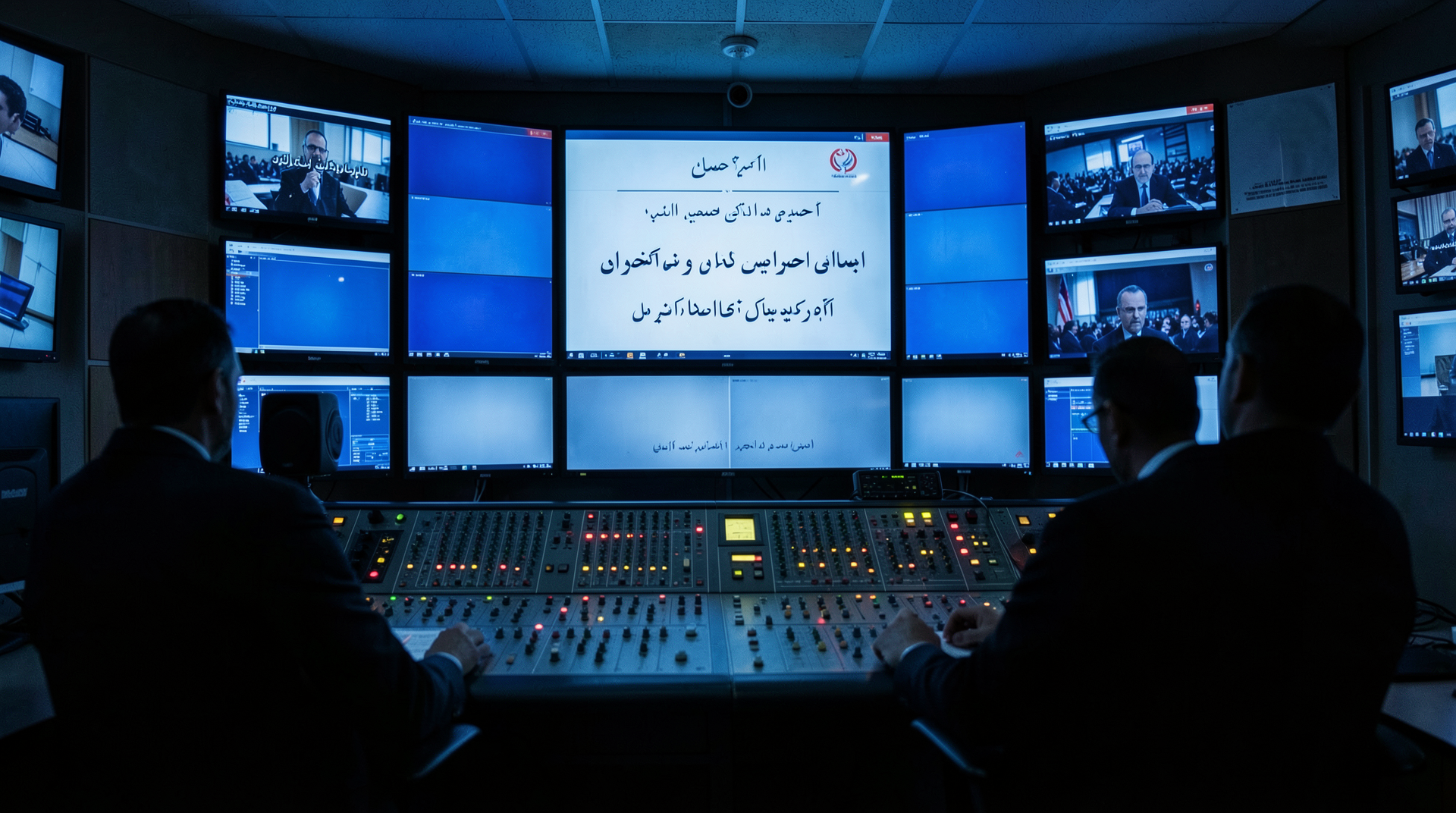
Iran's new Supreme Leader Mojtaba Khamenei issued his first public statement since taking office on March 9, in a written message read on state television Tuesday morning. [1] The text, marking the Eid al-Adha holiday, declared that regional countries would "no longer serve as shields for American bases" and that America "in addition to no longer having any safe haven in the region for aggression and the establishment of military bases, is moving further and further away from its former position with each passing day." [2]
The statement arrived inside seventy-two hours of three events the paper's Monday major on the Pezeshkian routing had tracked as unresolved: President Trump's softest Iran posture of the war, CENTCOM's first ceasefire-period strikes on Iranian missile sites and boats near Bandar Abbas, and the proposed memorandum's transit through Iran's Supreme National Security Council toward a Mojtaba sign-off. [1] [3] The institutional reachability question U.S. officials had described Monday — that contacting the new Supreme Leader required a "complex process" of couriers and intermediaries [4] — was answered Tuesday by a written statement on state television and on X. [5]
What he said and did not say
The full text is dense with theology and short on operational detail. Mojtaba referred to the United States as "the Great Satan" and Israel as "its trained beast." [3] He praised the Iranian armed forces, dedicated a passage to his father, the late Supreme Leader Ali Khamenei, killed in the February 28 joint U.S.-Israeli airstrikes, and described the Iranian nation as having found "divine resurrection" after that loss. [3] He did not name a specific concession on the Strait of Hormuz blockade. He did not address the U.S. memorandum publicly. He did not appear in audio or video; the statement was read by a state television anchor, as is standard for his father's earlier Eid messages. [6]
The U.S. assessment, attributed by Indian wires to officials familiar with intelligence reports, is that Mojtaba is operating from an undisclosed location and is "probably disfigured" from the February 28 strikes that killed his father. [4] No photograph, video, or audio recording of the new Supreme Leader has been released since his appointment. [4] A senior U.S. official told Reuters that Washington believed Mojtaba "had already endorsed the broad outline of the proposed agreement." [3] The Tuesday statement neither confirms nor denies that endorsement; it does not mention the agreement.
What the statement signals
Read alongside Monday's strikes near Bandar Abbas — and the paper's Tuesday major on Trump's third Iran position — the message is a marker, not a directive. It is the first direct Mojtaba artifact above the proxy relay channels that have carried Iranian communication since March. Pezeshkian's reply had moved through Mojtaba's institutional apparatus without producing a Mojtaba document. [7] The Eid statement is that document, and it is timed to the ceasefire-period strike.
Iran's Foreign Ministry said understandings had been reached on many issues in exchanges with Washington but warned an agreement was not yet imminent. [2] Iran's Revolutionary Guards announced Tuesday that they had downed a U.S. MQ-9 drone and shot at other aircraft attempting to enter Iranian airspace, without specifying when the incidents took place. [2] Iran International reported that a separate Hajj-related message attributed to Mojtaba claimed Iran had targeted the United States and Israel "on land, at sea and in the air." [3]
The statement is consistent with the negotiation surviving. Mojtaba did not call for the end of talks. He did not name the strikes. He marked an Islamic holiday with theological language while affirming a regional posture. The negotiation can proceed alongside this text. Whether it does will be decided by what Iran's negotiators bring back from Doha on Wednesday and whether the United States produces a Tuesday clarification of the Monday strikes.
What MSM missed
AFP, Reuters, and the Channel News Asia wire framed the statement as "Iran defies" — emphasizing the rhetorical content over the institutional fact. [1] The institutional fact is the news. Seventy-nine days have passed since Mojtaba took office in a country at war. He has not been seen. He has not spoken. His apparatus has handled the public-facing communication. On a Tuesday inside seventy-two hours of a strike, he produced a document.
A reader who follows only the wire learns that Iran is angry. A reader who tracks the institution learns that the Supreme Leader is reachable enough to respond inside a news cycle, and uncertain enough about his own appearance to do so only on paper, read by another voice. Both readings are needed. The paper's frame is that the institutional artifact matters more than the rhetorical content — because the rhetorical content was predictable, and the artifact was not.
-- YOSEF STERN, Jerusalem