Three positions in three days, and a strike. On Saturday President Donald Trump told reporters the Iran agreement had been "largely negotiated." [1] On Sunday he told them not to rush. [2] On Monday he posted that the relationship with Iran was now "much more professional and productive." [3] Monday evening, U.S. Central Command announced "self-defense strikes" on Iranian missile launch sites and boats attempting to lay mines near Bandar Abbas, the country's main naval base. [4] A U.S. official described the scope as "very small." [5] Three explosions were reported in the southern port city, according to Iran's Islamic Revolutionary Guard Corps. [6]
The substitute-words sequence the paper tracked on Sunday acquired its third iteration before Monday was over. The paper's Monday major on the Pezeshkian-through-Mojtaba routing tracked the institutional path the Iranian reply took to reach the proposed memorandum; Tuesday's question is whether that memorandum survives an evening in which the United States fired and the President posted simultaneously.
The two facts must be read together. Three positions in three days is the policy. The strikes are the operating reality.
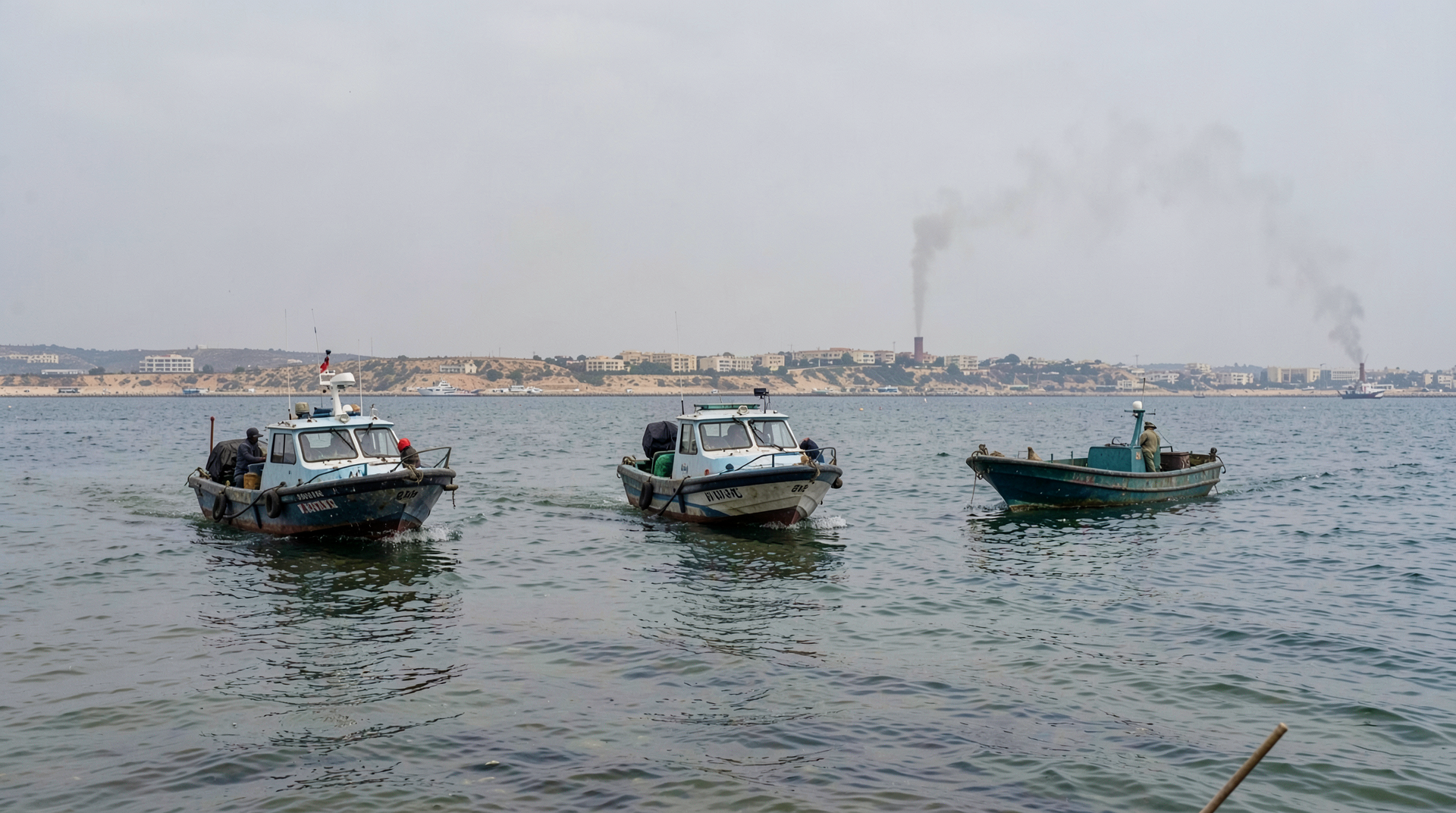
The chronology of the words
Saturday's "largely negotiated" appeared in Fars's reporting and in the AP wire of the same morning, attributed to Trump in remarks to reporters. [1] Tasnim immediately published a one-line response calling the description "inconsistent with reality." [1] By Sunday the President had moved. He told negotiators "not to rush into a deal," called the talks "proceeding in an orderly and constructive manner," and pushed back against Republicans seeking a tougher approach. [2] On Monday afternoon he posted on Truth Social that he had spoken with leaders from Saudi Arabia, Qatar, Pakistan, Turkey, Egypt, Jordan, the UAE, and Bahrain on a Saturday conference call, and that all of them — "at a minimum" — should "simultaneously" sign onto the Abraham Accords. [3] He added that it would be an "honour" to have Iran join the accords if a deal is signed. [7]
The accord-expansion demand is new. It enlarges the framework from a bilateral document about Hormuz, blockade, and uranium into a regional realignment that asks countries with no military stake in the war to put their names to a structure many of their populations oppose. [3] Pakistan, Turkey, and Saudi Arabia have publicly criticized the accords for ignoring the Palestinian question. None of the eight named governments produced an immediate public commitment Monday.
A U.S. President shifted from "largely negotiated" to "not to rush" to "Abraham Accords expansion is mandatory" inside seventy-two hours. The negotiating partner has not changed; the supreme leader has not changed; the war has not changed. What has changed is the language with which the President is describing the same memorandum. This is not negotiating posture. This is the absence of a fixed posture.
The strikes
CENTCOM spokesman Capt. Tim Hawkins issued the statement to Fox News and Reuters: "U.S. forces conducted self-defense strikes in southern Iran today to protect our troops from threats posed by Iranian forces. Targets included missile launch sites and Iranian boats attempting to emplace mines. U.S. Central Command continues to defend our forces while using restraint during the ongoing ceasefire." [8]
The "ongoing ceasefire" has been in place since April 8. [4] The "very small" scope was the framing chosen by a U.S. official, on background, to ABC News. [5] Iran's Mehr News Agency wrote that the situation in Bandar Abbas was "completely under control." [4] Fars reported similar sounds near Sirik and Jask, both along the Gulf of Oman within thirty kilometers of the Strait. [6] No Iranian government statement had been issued by the next morning Tehran time.
A U.S. official's "very small" — like Saturday's "largely negotiated" — is a piece of language designed to manage perception. The Navy fired into the territorial waters of a country with which it is supposedly negotiating a peace. The first publicly documented violation of the ceasefire framework the President was simultaneously celebrating happened the same evening. It is the first time in the war that a single day produced both a conciliatory Truth Social post and a kinetic exchange.
What MSM is doing with this
Reuters's English-language wire ran the strikes as a paragraph inside a broader live blog headlined around the deal progress. [9] AP placed the strikes in the third item of a five-item Iran update centered on Trump's "more professional" framing. [2] U.S. News & World Report ran the strikes as a wire item without integrating them into the negotiation narrative. [5] The New York Times produced two separate pieces — one on the negotiations, one on the strikes — and did not connect them in either text. The framing decision is consistent across the wire: the substitute words are the headline; the strikes are the sidebar.
This is the inversion. The headline is the public language of a President who has now used three different descriptions of the same negotiation in three days. The sidebar is a navy of one nation firing on the navy of another. The reader who follows only the MSM headlines learns that progress is being made. The reader who follows the sidebar learns that the ceasefire framework Saturday's call described has its first documented violation on Monday.
The X reading
On X, the inversion goes the other way. Accounts that track regional military activity — open-source analysts, defense-industry observers, Iran-watcher journalists — led with the strikes and treated the substitute-words sequence as confirmation that the President's language is no longer load-bearing. [10] Tasnim's English feed amplified the IRGC report on the three explosions ahead of the official CENTCOM statement. [4] War Monitor and others circulated footage that, on previous Bandar Abbas strikes, came from CENTCOM's own channels. [10] The X reader learns the kinetic story first and the diplomatic story as commentary.
Neither reading is complete. The diplomatic story matters; the kinetic story matters. The paper's frame is that they are the same story and that Monday produced both inside one news cycle. Three positions in three days is not a chronology of one negotiation. It is the negotiation. The strikes are the data.
Unresolved by Tuesday morning
Iran's Ministry of Foreign Affairs had not issued a retaliation framing by Tuesday morning local time. The Pentagon had not confirmed U.S. casualties or specified whether the strikes were carried out by aircraft or by ships. The Bandar Abbas naval base — the IRGC's headquarters for naval operations in the Strait — had not released its own count. The President had not posted a Tuesday clarification of either the strikes or the Abraham Accords expansion demand.
The negotiations continued in Doha on Tuesday. Secretary of State Marco Rubio said an agreement could "take a few days." [11] Iran's Foreign Ministry said understandings had been reached on many issues but warned an agreement was not yet imminent. [11] By Tuesday afternoon Tehran time, Iran's new Supreme Leader, Mojtaba Khamenei, had issued his first public statement since taking office in March, declaring that the region would "no longer serve as shields for American bases." [11]
Three positions in three days, a strike, and a statement from the Supreme Leader who had not spoken publicly since February. The ceasefire framework is still in place by name. By Monday's evidence it is not in place by behavior.
-- YOSEF STERN, Jerusalem