Oklahoma City did not only beat San Antonio. It delivered Victor Wembanyama to NBC on a Thursday night with elimination attached.
The paper's May 27 account of Thunder pushing Wembanyama to the brink as NBC waited for a number argued that the Western Conference Finals had become a rights measurement story. Game 5 confirmed the basketball condition. Game 6 now supplies the network condition.
NBA.com reported that the Thunder beat the Spurs 127-114 in Game 5 and took a 3-2 series lead. The result sends San Antonio and Wembanyama into a Thursday elimination game. [1] That is the box score's basic civic service: it tells the rights business what it has to sell.
Sports Media Watch had already documented the value of this matchup. Its playoff ratings coverage said Spurs-Thunder games printed major conference-final audiences under NBC's new accounting, while another Game 2 ratings item gave the series a strong early benchmark. [2] [3] The audience pattern means Thursday is not merely another game. It is a stress test for the bet that Wembanyama can convert basketball curiosity into platform inventory.
Sports discourse will not stay there. It rarely does. X will ask whether Wembanyama is ready, whether Shai Gilgeous-Alexander gets friendly whistles, whether the Thunder are inevitable, whether San Antonio has been exposed, whether a 7-foot-4 phenomenon should already carry a franchise through May. These are fan questions. They are not the newspaper's strongest question.
The strongest question is how a rights holder monetizes a player before he has finished becoming himself. Wembanyama is at once an athlete, a prospect, a novelty, a defensive system, an international brand and a programming asset. NBC does not need him to win the title on Thursday. It needs him to make Thursday legible to casual viewers.
Oklahoma City has helped by turning the game into jeopardy. A tied series sells possibility. An elimination game sells urgency. The Thunder's 3-2 lead gives NBC the cleaner phrase: win or go home. That phrase has a value no advanced metric can improve. [1]
The ratings context sharpens the point. A network can promote stars endlessly, but the market answers in measured nights. Sports Media Watch's early series data made the Spurs-Thunder pairing more than a scouting report. It became evidence that a young star and a rising team could carry a conference-final window. [2] [3]
This is not a moral complaint. Sports have always turned bodies into schedules. The difference is that the modern rights economy is more explicit. A player becomes a reason for a streaming subscription, a promo campaign, a studio segment, a shoulder program, a social clip, a betting line and an advertising package. The game is still real. The inventory is real too.
Wembanyama complicates the old star model because he is still visibly unfinished. His limbs seem ahead of his decisions. His defensive reach changes possessions that do not show up as highlights. His offensive game can look like a future arriving in fragments. That unfinished quality may be part of the product. Viewers are not only watching greatness. They are watching construction.
The Thunder present the opposite pleasure. They are not a single curiosity. They are a system with a lead guard, depth, pace and the calm cruelty of a team that can make the spectacular visitor look scheduled. Game 5's result gave Oklahoma City control of the series, but it also made the Spurs' national value more urgent. [1]
NBC's Thursday problem is therefore enviable. If San Antonio extends the series, the network gets more Wembanyama. If Oklahoma City ends it, the network gets a closing act for a series that already printed meaningful numbers. Either outcome helps a rights holder explain why this package mattered.
The paper should be careful not to confuse measured audience with democratic meaning. Ratings tell us what people watched under certain conditions. They do not tell us why, or whether the game deserved the attention, or whether every viewer came for Wembanyama rather than the Thunder, the playoff stakes or habit. But they are receipts. Sports pages that ignore receipts become romance sections.
The fan argument over Wembanyama's readiness also misses the corporate timeline. Leagues and networks cannot wait for perfect maturity. They sell the ascent. Michael Jordan was sold before he had six rings. LeBron James was sold before he had a playoff scar. Wembanyama is being sold before he has solved May. That is not unfair. It is the business model.
What Thursday will measure is not only whether he can survive Oklahoma City. It will measure whether a young international star, a small-market opponent, a new rights arrangement and an elimination label can hold the public together for another night. [2] [3]
The game still matters most to the people in uniform. That must be said because rights analysis can turn athletes into cable assets too quickly. Oklahoma City's players want a Finals berth. San Antonio's players want a Game 7. Wembanyama wants to keep playing. The inventory exists because the competition is not fake.
But the reason this story belongs on the front page is that Thursday's game now sits at the intersection of sport and distribution. Thunder turned Wembanyama into NBC's Thursday inventory by winning Game 5. The network now gets the rarest sports product: a young giant, an elimination game, and numbers already good enough to make the next number matter.
There is also a small-market lesson here. Oklahoma City and San Antonio are not the Knicks, Lakers, Celtics or Warriors. The old network instinct would have treated this as a beautiful basketball series with a ceiling. The early audience record challenges that ceiling. A player like Wembanyama can nationalize a market. A team like the Thunder can keep the game serious enough that curiosity becomes appointment viewing rather than circus. [2] [3]
That distinction matters for the next decade of rights deals. Leagues sell national reach. Networks buy predictable scarcity. Streamers buy habit formation. A Thursday elimination game with Wembanyama is useful to all three because it teaches viewers where the new package lives. The matchup is not just a test of the Spurs' roster. It is a test of whether the audience follows the player, the stakes and the conference-final brand across a changed television map.
NBA.com's takeaways were still about basketball: pace, shot-making, defensive adjustment and the Thunder's command of the series. [1] The ratings documents were about value. [2] [3] The newspaper's job is to keep the two together. A rights story without basketball becomes spreadsheet worship. A basketball story without rights misses why this particular night received front-page weight.
Wembanyama will receive the easiest and least useful verdicts first. If San Antonio loses, he will be too young, too thin, too dependent on help, too hyped. If San Antonio wins, he will be inevitable again. Those swings are entertainment. The business result is steadier. NBC has already learned that the experiment can produce numbers. Thursday asks whether jeopardy can improve them.
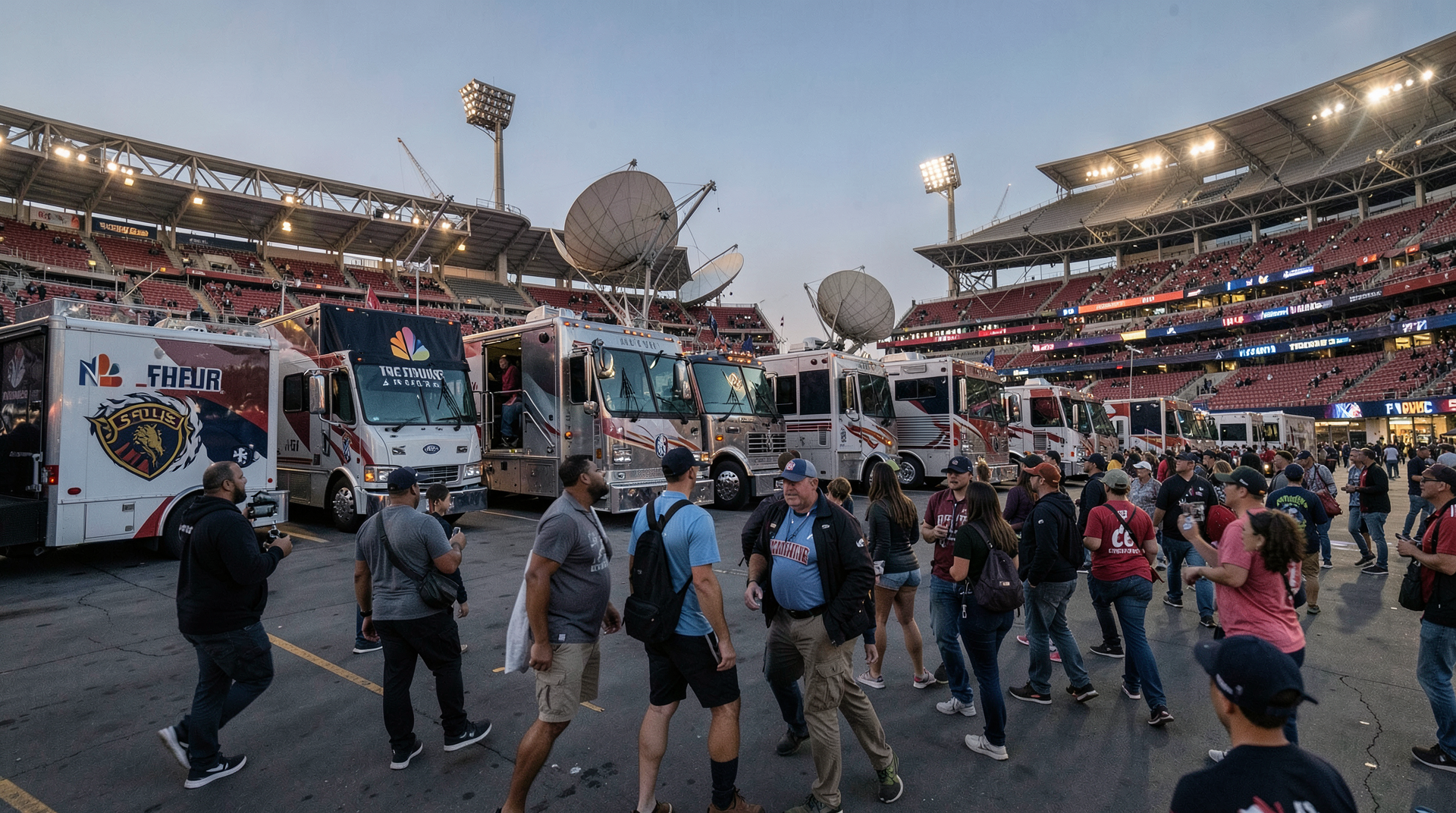
The Thunder did not volunteer for anyone else's experiment. They made it by being better. That is the overlooked dignity of the inventory story: athletes become programming because they keep making outcomes uncertain. Oklahoma City now has a chance to end the series. San Antonio has a chance to force one more national window. NBC has the camera trucks either way.
-- AMARA OKONKWO, Lagos