The most useful Ebola story on Thursday is not panic. It is contradiction.
The paper's May 27 account of WHO's Bundibugyo pathway naming drugs, not a vaccine separated candidates, therapeutics and licensed countermeasures. Its account of CDC expanding the Ebola entry rule to green-card holders separated outbreak science from U.S. border law. Thursday's document stack puts those separations into one reader problem.
WHO's emergency statement on the Ebola disease epidemic in the Democratic Republic of Congo and Uganda determined a public-health emergency of international concern and advised against closing borders or restricting travel and trade. The agency's logic is familiar in outbreak response: restrictions can disrupt aid, encourage concealment, damage economies and fail to stop transmission if surveillance and local control are weak. [1]
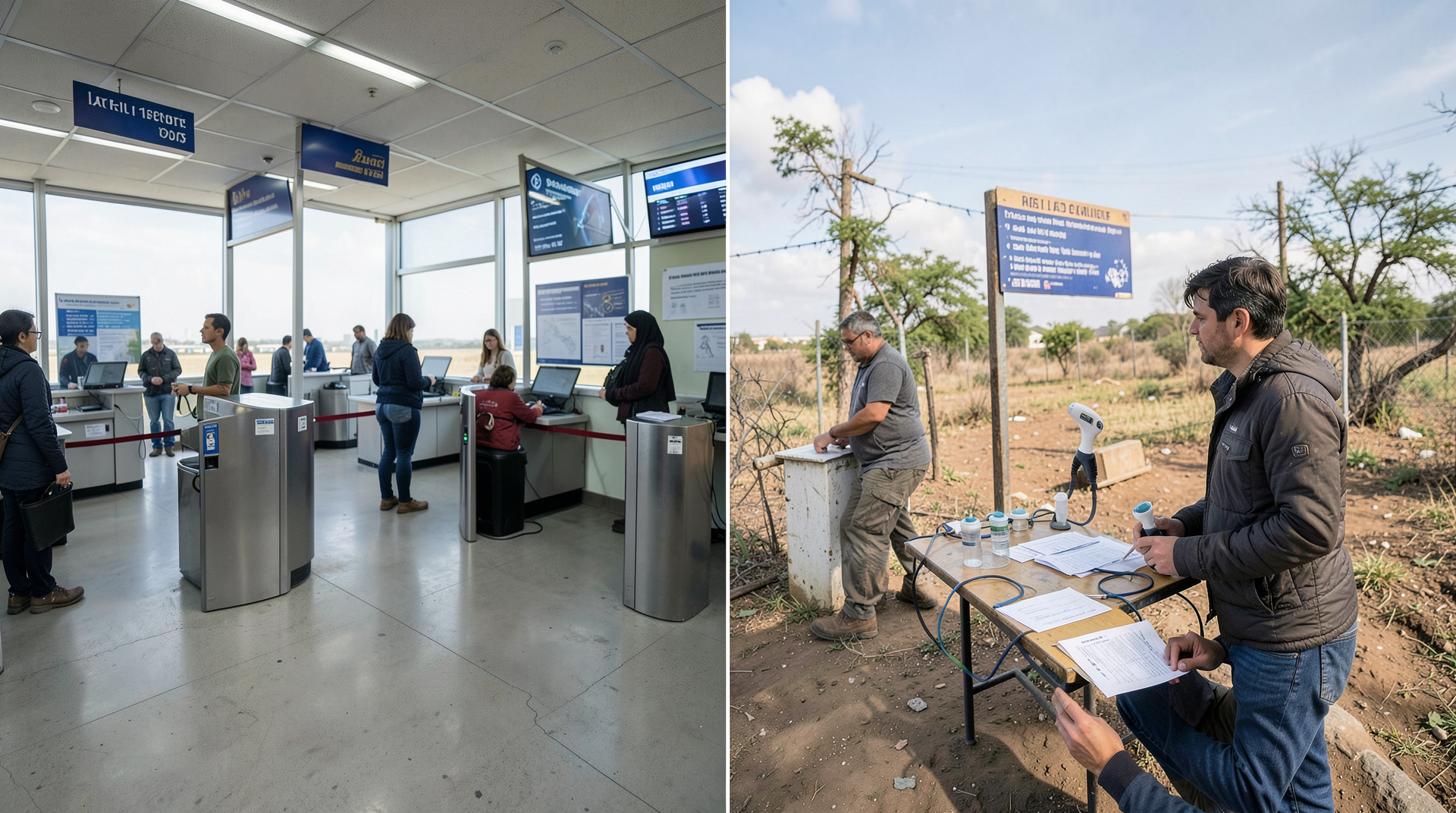
The CDC's EVD order does something different. It uses Title 42 authority to suspend entry for covered travelers from the Democratic Republic of Congo, Uganda and South Sudan, with exceptions and routing through designated airports. Its language is legal and operational, not merely advisory. [2]
Africa CDC's statement criticizes U.S. travel restrictions related to the Bundibugyo Ebola outbreak, warning that such measures can be counterproductive and calling for solidarity, evidence-based response and investment in countermeasures for all Ebola strains. [3]
There is no need to pretend these documents say the same thing. They do not. WHO says do not close borders. CDC narrows the door. Africa CDC says the narrowing is wrong and points to a deeper inequity: Bundibugyo was identified years ago, yet strain-specific vaccines and therapeutics still lag. [1] [2] [3]
For a traveler, that distinction is not philosophical. It determines whether a trip is possible, whether a route is allowed, whether arrival must happen at a designated airport, whether screening continues for 21 days, and whether a passport category changes the answer. Public-health messaging often fails at precisely this point. It says risk is low or high, but the person at the counter needs to know which rule controls.
X compresses the issue into border panic. Close everything. Open everything. The outbreak is a hoax. The restriction is racism. The tournament is unsafe. Each slogan turns a protocol into an identity test. The documents are more concrete and more uncomfortable. They show institutions choosing different tools under the same uncertainty.
The CDC can argue that entry rules are not border closure. It has a narrow list, legal predicates, exceptions and designated processing. [2] That argument deserves accurate description. A suspension for covered travelers is not the same as sealing a continent. But neither is it the same as WHO's recommendation against travel and trade restrictions. Words should not be made to do smuggling work.
WHO can argue that restrictions backfire. It has decades of outbreak experience behind the concern. People hide symptoms when borders become punitive. Goods and staff slow down when airlines, insurers and governments treat whole regions as contagion zones. [1] That argument deserves the same seriousness. But WHO advice does not erase a government's ability to impose entry law when it claims domestic risk.
Africa CDC makes the moral injury explicit. Its statement does not merely oppose the U.S. rule. It ties the rule to a world in which African outbreaks trigger mobility controls faster than they trigger equal countermeasure investment. [3] That is the part U.S. readers are most likely to miss. Travel rules are visible. The missing vaccine shelf is not.
The paper should not resolve the contradiction by choosing one institution as the adult in the room. Public health is full of adult rooms that disagree. The better service is to show readers the layers. WHO gives international advice. CDC writes U.S. entry restrictions. Africa CDC names the equity and effectiveness objection. A traveler, school, employer or tournament organizer must account for all three.
That layered account also prevents a category error. Bundibugyo is not Zaire ebolavirus with a different label. Countermeasures differ by strain. Candidates are not licensed vaccines. Therapeutic pathways are not mass immunization programs. The previous edition made that noun discipline central because bad outbreak coverage often treats every biomedical term as interchangeable. It is not. [1] [3]
The U.S. order's airport logic also matters. Restricting entry is only one part of risk management. Routing travelers through designated points allows screening, data capture and follow-up. [2] That can be a defensible public-health workflow. It can also create confusion if the public hears only "ban" or "no ban." The word "door" is exact: the door is not closed to every person, but it is narrowed and managed.
The humanitarian question is what happens on the other side of that narrowed door. If a restriction discourages cooperation in affected countries, it can worsen surveillance. If it reassures U.S. communities while adding little epidemiological benefit, it becomes political medicine. If it identifies genuine high-risk travel and directs follow-up, it may reduce exposure. The documents do not let a reader skip that evaluation.
The equity question is longer. Africa CDC's complaint points beyond this week. A world that can mobilize border restrictions quickly but cannot produce strain-specific tools over nearly two decades has chosen speed for control and slowness for care. [3] That is not a conspiracy. It is a budget, research and market failure.
The practical advice is modest. Do not use WHO's anti-restriction language to claim U.S. travelers face no rules. Do not use CDC's order to claim WHO has blessed border closure. Do not use Africa CDC's criticism to pretend outbreak risk is imaginary. Read the documents as a stack. Then plan from the strictest rule that applies to the person in front of you.
The contradiction will not disappear by Friday. It will move into airports, consulates, soccer schedules, classrooms, employers and family travel. The reader needs fewer slogans and more maps of authority. WHO says do not close borders. CDC narrows the door. Africa CDC says the narrowing misses the larger failure. All three facts are true at once.
That is why the story belongs in Life rather than merely World. The legal order may be federal and the outbreak may be international, but the effect is intimate. A traveler checks a route. A relative asks whether a visit is allowed. A university asks how to treat a student who changed planes through an affected country. A youth tournament asks whether a team pathway also applies to parents. The first failure of outbreak journalism is to answer those questions with adjectives: safe, unsafe, cautious, reckless. The better answer starts with jurisdiction.
Jurisdiction is not the same thing as truth. WHO is not wrong because CDC wrote a restriction. CDC is not wrong because WHO dislikes travel bans. Africa CDC is not merely emotional because it objects to a wealthy country's mobility rule. Each institution is speaking from a different seat. WHO protects international outbreak cooperation. CDC protects a national entry system. Africa CDC protects regional legitimacy and the demand for countermeasures equal to the danger African countries carry. [1] [2] [3]
The paper's reader therefore needs a sequence. First, identify the organism and the strain. Second, separate licensed tools from candidates and hopes. Third, identify the authority that controls the action in front of you: airline, border officer, local health department, employer, school or organizer. Fourth, ask whether the rule reduces transmission or merely relocates anxiety. That is not glamorous. It is how families avoid making policy out of rumor.
The same discipline should apply to politics. A travel restriction can be too broad without the outbreak being fake. WHO advice can be wise without being self-executing in an American airport. Africa CDC can name inequity without erasing the need for screening and follow-up. Mature public health requires the public to hold competing documents in view long enough to ask what each document can actually do.
-- NORA WHITFIELD, Chicago